Online Reporter
Zimpapers Writer
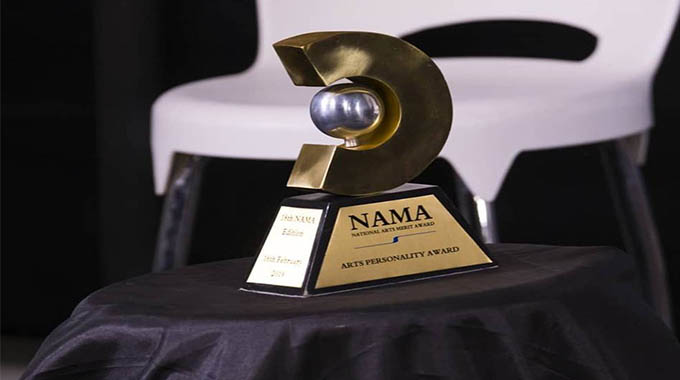
THE National Arts Merit Awards (Nama), once hailed as Zimbabwe’s proudest celebration of artistic brilliance, now finds itself bathed in a harsh, unforgiving spotlight.
What was meant to be a beacon of creativity has been recast as a stage for whispers of nepotism, quiet corridors of favouritism, and the unsettling sense that the curtain has been pulled back on a rigged performance. After 24 years of existence, the institution’s legacy trembles under the weight of accusations that refuse to be ignored.
What began as murmurs has swelled into a storm. A damning investigation by this publication — fuelled by leaked internal documents and testimonies from insiders who speak with the fatigue of people long disillusioned — paints a portrait of an adjudication process that feels anything but impartial. The revelations hint at predetermined outcomes, provincial bias, and ethical breaches so striking they threaten to dismantle what credibility the awards still command.
And at the centre of this gathering storm is the now infamous “Fashion show that never was” — a shambolic episode that has become the emblem of everything critics say has gone wrong.
Nama’s much-celebrated debut in the Fashion and Digital Arts categories in 2026, initially presented as a triumph of inclusivity and public responsiveness, now looks more like a Trojan horse rolled into the arena under the cover of applause.
What was promised as a widening of opportunity instead appears to have been compromised from the moment the idea left the boardroom. The winners, insiders whisper, “seemed to have been there before the nominees were even out.” What should have been a celebration felt, instead, like “a carefully orchestrated charade.”
The flames were fanned further when this publication obtained the explosive document titled the “Nama Fashion Designer Information Pack.” Its contents spelled out plans for a fashion showcase meant for 31 January 2026 — nearly two weeks before the nominees were officially announced.
The event was said to be “proudly presented by Scarlet Studios & Events Evolution and curated by Nama and Haus Of Stone Showroom.” The detail that set tongues wagging was that Haus Of Stone Showroom belongs to Danayi Chapfika Madondo.
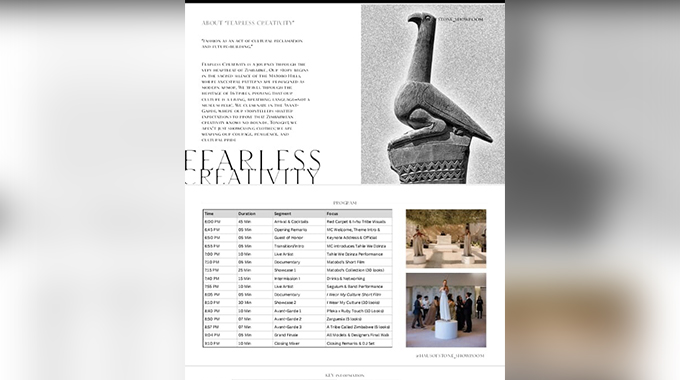
The document assigned designers to specific segments: Avant Garde 1 featuring Pfeka x Ruby Touch; Avant Garde 2 showcasing Ishmael Tsakatsa, also known as Zargue’sia; and Avant Garde 3 spotlighting “A Tribe Called Zimbabwe,” a collection by Nomakhosazana Khanyile Ncube, widely known as Zana Kay.
When the winners were eventually announced, the overlap felt impossible to ignore. Danayi Chapfika Madondo emerged as Outstanding Female Fashion Designer, while Zargue’sia claimed Outstanding Male Fashion Designer.
In the aftermath, the “fashion show that never was” sent shockwaves rippling through the artistic community. Those who dared question its integrity found themselves sidelined, while those originally slated for the cancelled runway walked away clutching awards.
Organisers later scrapped the showcase, citing “potential risks…to the awards ceremony’s integrity,” a quiet acknowledgment of the ethical minefield beneath their feet — made only after the damage had seeped deep into the selection process.
But the fashion debacle is merely the beginning. The choice of hosts for the 24th Nama ceremony raised yet more eyebrows. Yahya Goodvibes (real name Mitchell Mutongwizo), unveiled as one of the hosts, is a central figure in “The Ollah 7 Podcast” — the very podcast that would go on to win the Outstanding Podcast award.
To many, this felt like a storyline too implausible even for fiction. What chance did competitors truly have? “My heart goes out to Zigo Podcast and Pass and Move Podcast — their fate was sealed the moment Yahya got that hosting gig,” an industry watcher lamented.
The web only tangles further. Napoleon Nyanhi, Executive Director of the National Arts Council of Zimbabwe (NACZ), made an exclusive appearance on The Ollah 7 Podcast. Meanwhile, other media houses struggled to secure interviews or engagement from Nama organisers unless the request came from that same podcast. The air grew thick with the suggestion of preferential treatment.
Then came the baffling award for Outstanding Music Video in 2024, handed to Tahle We Dzinza for “Damage” — a video that, to this day, remains mysteriously unavailable to the public. Matters were muddied further by revelations that Tahle We Dzinza had also been slated to perform at the cancelled fashion showcase, adding yet another layer to the growing sense of a blurred line between nominee and favoured insider.
Artists from outside Harare added more heartbreak to the tale. Many confided, quietly but candidly, that provincial talent has long been pushed to the margins. Reports of red carpet coverage overwhelmingly favouring Harare-based artists were all too familiar.
One nominee put it with stinging clarity: “They call it National Arts, but it feels like a Harare Arts Merit Award. Unless you’re based in the capital or connected to the right people, your chances feel slim.”
Each new detail adds brushstrokes to a troubling mural: a system captured by insiders, shaped by friendships and networks, propped up by selective visibility and conflicting interests. The leaked fashion show document hints at pre-determination.
The podcast hosting and victory exude cronyism. The provincial bias speaks of exclusion. The “Damage” award whispers of secrecy. And through it all, Nama appears to stand defensive, its governance structures wrapped in opacity rather than accountability.
The botched fashion show is not a bizarre one-off mishap; it feels like a symptom of long-ignored ailments finally breaking through the surface. And unless meaningful, transparent reforms are enacted — independent oversight, strict conflict of interest protocols, equitable provincial representation — the Nama may soon find its once proud reputation reduced to a hollow echo of what it could have been. Years of dedication risk being, as one disillusioned insider put it, “thrown down the drain.”
The “Fashion show that never was” has laid bare the rot. The question that lingers now, heavy as smoke after a fire, is whether anyone within the institution has the courage — or the will — to cleanse it.