


 Vusumuzi Dube
Background information
The Ndebele State came into being as a result of Mfecane wars generated by Shaka, the Zulu King in Nguniland, South Africa.
The Ndebele was regarded as a migrant state because most of its people became part of the state during their migration process from South Africa and they were assimilated into the original Khumalo clan.
The groups included the Sotho and Tswana who formulated their distinctive class known as the Enhla while the original ruling class was described as the Zansi.

The final group to be absorbed when the Ndebele finally settled in the present day Zimbabwe were the Shona and Kalanga, who were referred as the Hole.
Thus, the Ndebele society was stratified with distinctive social classes of different cultural backgrounds.
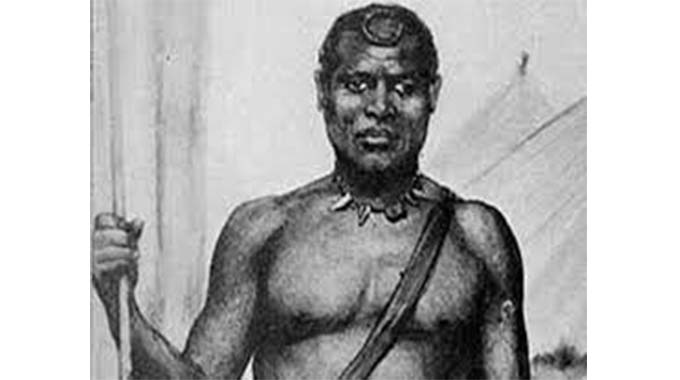
King Mzilikazi, being the leader of the group managed to cement these different groups despite their different cultural backgrounds into one state and unified them following the Ndebele culture though they adopted some cultures of other absorbed groups.
Branches of Ndebele economy
Most European scholars had deliberately distorted the basis of the Ndebele economy. They argued that the Ndebele were nomads and their survival essentially depended on raiding.
It must be noted that the society was based among other things and raiding was used as a way of life since the days of King Shaka.
The end of raids would mean the change of Ndebele society based on raiding for food and cattle which was rather difficult to achieve.
The end of raids might mean the end of both Mzilikazi and Lobengula’s power and authority. This implies that raiding as an economic system of the Ndebele economy was part and parcel for its survival.
Raiding was done to re-assert their power. It can be inferred that raiding though not their backbone of their economy, was essentially part of its economy.
However, the assertion that raiding was essentially the backbone of the Ndebele economy is not true because the basis of the backbone of the Ndebele economy was agriculture and cattle keeping.
Raiding was only carried out during the migration from Zululand to the present day Zimbabwe and again raiding was carried out in the initial years of the Ndebele settlement in the 1840s and later on the Ndebele developed a mixed economy where cattle keeping and agriculture were the backbone to their economy.
Raiding was simply a way of life of Nguni groups and it was done out of need, for example they raided cattle to supplement their loss of cattle due to lung diseases, they raided young men in order to build their Ndebele army which was more instrumental in maintaining order, peace and stability within the state as well as used in raiding expeditions.
They also raided young women in order to build their state. Grains were raided in order to supplement their food. Again, raiding was condemned by both Mzilikazi and Lobengula because it disrupted peaceful co-existence with their neighbours.
It was not done regularly but sometimes was used as a punitive measure to those people who refused to pay tribute to the state. Therefore, raiding played various functions and in that it cannot be viewed much as one of the backbone of the Ndebele economy.
Other forms of trade and economy were tribute payment, hunting and gathering, mining, fishing and basketry.
The above economic activities became central after they settled in the western part of the present day Zimbabwe, for example, raiding was done during agriculture off season when the Ndebele were not busy with their farming activities.
It must be noted that Ndebele economy was highly diversified. For instance, both men and women were actively involved in crop farming where they grew crops like beans, sorghum, groundnuts, melons, maize et cetera.
Men cleared the fields and looked after cattle while women cultivated the fields. Cattle being the main basis of the economy was highly valued for example cattle was a symbol of wealth and was used in marriage ceremonies, rituals and special occasions like inxwala ceremonies. Above all, cattle was a source of meat, milk and skins.

By 1893, the Ndebele King had large herds of cattle and were being loaned to his people. This signified that cattle keeping rather raiding was essentially the backbone of Ndebele economy.
Ndebele-Shona relations
Relations between Ndebele and Shona can be analysed from a mythical perspective and also from a realistic perspective.
The initial relations of the Ndebele soon after their arrival in Zimbabwe were largely depended on raiding the Shona for cattle, grain and manpower.
Raiding was rampant during Mzilikazi’s reign but later on their relations greatly improved as evidenced by the following: Assimilated Shona were no longer raided. Shona chiefs could freely pay tribute and were not raided but the defiant ones like Chivi and Nemakonde were punished.
Those on the periphery of the Ndebele state were left alone on condition that they respected the call by the Ndebele king to provide labour. Some areas in the region did not experience any raids from the Ndebele.
The Ndebele depended on the Njanja for iron implements and muthi or medicines from Mberengwa. However, the Ndebele were not very superior especially after long hours of walking on foot for example episodes of the Ndebele defeats in Chirumanzu.
Ndebele-Shona relations also proved to be cordial when they both fought against imperialist presence in 1896, that is. Chimurenga 1.
Dr Manners Msongelwa is the president of History Teachers of Zimbabwe and a Teacher at Camelot College in Kwekwe.



 Bongani Ndlovu
 Online Reporter