admin
admin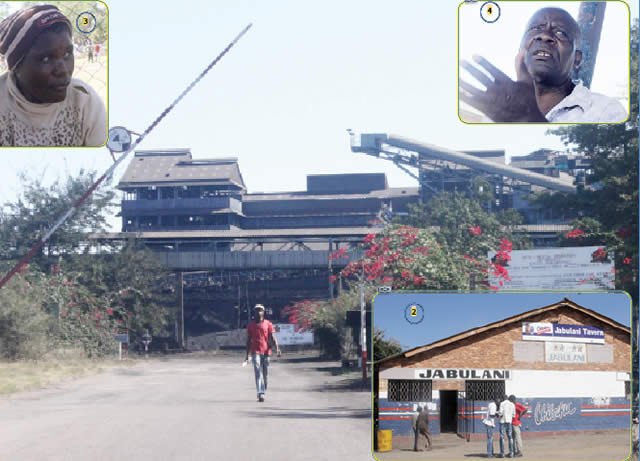

Yoliswa Dube recently in Hwange
THE coal mining town of Hwange is slowly becoming a white elephant as its major employer, Hwange Colliery Company Limited, struggles to deliver services it used to with ease. A recent announcement to retrench half of the 3,200 workers at HCCL in the second half of the year was blocked by the government with Mines and Mining Development Minister Walter Chidhakwa saying the HCCL board should seek other ways of resuscitating the company to avoid the retrenchments.
However, despite this, morale in Hwange is low. Workers have gone for about 10 months with no salary while those who retired as far back as 2012 still await their severance packages.
“I started working at Hwange Colliery in 1975 and things were great then. Everything was readily available to us. We used to get free treatment at the Colliery hospital and many other free services.
“There were about four compounds some kilometres apart and people could travel to these compounds all day long for free on the company’s buses. We would pay school fees but didn’t have to worry about accommodation, water or electricity. Amanzi ayengalala evuza ubusuku bonke (You could leave the tap running all night).
“Things just took a turn for the worse and conditions started changing. People last got paid in April of 2013 and they continue to live in uncertainty,” said Moses Ngwenya, a former HCCL worker.
“I retired in 2012 and only got my salary for the last month I worked. No package whatsoever,” he said.
Ngwenya attributed the problems at the coal mining company to corruption in high offices saying the systems being used by those in authority were at the detriment of the ordinary worker.
“I honestly don’t know how people are surviving but it’s tough. We’re still unsure about retrenchments because we’ve been hearing rumours that they’re no longer going ahead with them.
“It’s ironic though how they speak of retrenchments yet we hear of more people getting jobs at the company. At the moment, we filed a lawsuit at the courts to try and get our benefits from the company,” he said.
Foreigners employed at the mining company have vowed that they would not leave the country until they are given their dues in full.
Free service delivery over a protracted period of time has come under the limelight for not making good business sense.
It does not work providing a service that people do not pay for. HCCL workers were privileged with free accommodation, free water and electricity, free transport and the provision of free medical attention among other services.
This is believed to have been an unsustainable system, which was bound to cause problems in the long haul.
One processing plant worker who spoke on condition of anonymity said he believed management was lying about the state of affairs at the company.
“We no longer have adequate equipment to use. Management is stifling money through contractors and suppliers. They buy equipment which is not durable and breaks down within a short space of time.
“For example, instead of an opencast conveyor belt, we’re now using diesel which is more expensive. We use side tippers which bring about 60 tonnes of coal in about an hour yet the conveyor belt takes about 200 tonnes in less than an hour,” he said.
The bitter worker alleged mismanagement of funds and corruption was bringing the company to its knees.
“They claim the workforce is 3,200 yet we are 1,600. I believe the difference is ghost workers. Those that retired have not been replaced, those that died have also not been replaced yet the wage bill remains the same. It doesn’t make sense.
“If the biggest department has 500 workers, the next about 400, the next 200 and the last 70, where are those to be retrenched coming from? Abanye abantu laba siyabadinga, they are ghost workers. Dead people and retired workers still appear on the pay roll. I believe they should appear on other registers not the pay roll.
“Morale is so low, we can’t pay school fees or settle our bills,” he said.
The processing plant worker who had just finished his shift at 6AM when a Chronicle news crew met him at around 9AM said they had a shortage of manpower on that particular shift yet those in authority say they want to retrench.
“As far as salaries go, we’re actually owed 10 months worth of salaries. As soon as that money comes into the pocket, it’s out quickly because of the debts we have.
“Management has failed to get us out of this impossible mess. Our children are being chased away from school every term due to fees arrears. Life has become so tough such that if things continue like this, there might be serious industrial action,” he said.
The miner said water and electricity were still available at no charge but he had to meet hospital bills when the need arose and rentals worth $5 per month.
“I just think this whole retrenchment thing was a gimmick to get rid of ghost workers. We were surprised about who they wanted to retrench. Minister Chidhakwa met with the leadership of the company and said they should make a payment plan to normalise everything and be up to date with our salaries. We’re waiting for them to do just that.
“The other problem is that the plants are now old and it has become increasingly difficult to meet targets. Something should be done to upgrade them,” he said.
Jabulani Tavern, which seems to be the place to be in this mining town, was packed to the brim by 12 noon on a Friday. Captivatingly, 99,9 percent of the population in the bar, including women, drank opaque beer.
It is where both current workers and pensioners of the Colliery meet every day, yes, everyday to share their sorrows and play a game of draughts.
A man who identified himself only as P Nyoni said he retired in 2012 and still had not received anything from the company.
“More than 200 workers were retrenched some time back and they still haven’t received anything. They’re threatening to throw us out of the company houses but I’m going nowhere. We’ve children that are in school and they’re in constant arrears. We’ve even started receiving letters of final demand from these schools that we owe fees.
“The problem now is we also have to take care of our grandchildren as well. We’re required to pay for health services, what do we use to pay since we’re not getting any money? You can’t go to the hospital on credit because they know you won’t be able to pay back,” said the Nambya speaking Nyoni.
He narrated how he had worked for HCCL for 40 years and did not receive anything on his retirement.
“40 years is no joke for one to leave a company empty-handed. However, the company shouldn’t close down. They should instead find ways of normalising things,” said Nyoni.
Out of curiosity, we sought to find out where the money to buy beer on a daily basis came from considering that most people said they did not have money to buy mealie-meal at the least.
Said Nyoni: “Why should you care about my drinking habits? I have friends. My friends will never let me suffer. I’ve friends that work elsewhere other than HCCL and they give me money for one or two.”
One woman who could not be drawn to comment much on the issue said she was tired of suffering and needed those in authority to make haste in addressing their plight.
“I’m tired of talking. I’m tired of complaining. I’m tired of suffering. This is now beyond me. All I need is a solution,” she said as she roasted some peanuts for sale.
Minister Chidhakwa said he was not for the idea of retrenchment and following discussions with employees, retrenchment would be shelved and the board was tasked to find other ways of resuscitating the company.
In June 2012, the company in which the government is the majority shareholder, retrenched 304 employees and up to now, they are yet to be paid their benefits.
In an update to shareholders recently, HCCL board chairperson Farai Mutamangira said the company would implement a raft of measures aimed at turning around the fortunes of the beleaguered coal giant.
However, Minister Chidhakwa said even if the company was to lay off some workers as it did in 2012, there was a high probability that the measure would not solve its problems as there are other matters that needed to be addressed such as the issue of debts and liabilities.
“Looking at this retrenchment — where you say let’s reduce the number of workers and reduce cost of labour — will you (HCCL) get the results you are looking for? There’s another way of increasing production. Let’s sell more coal and let’s look after our costs,” he said.
Minister Chidhakwa said the company had the mineral and what was needed was to do the right things, such as restructuring its balance sheets.
He said the government was fully behind HCCL’s recapitalisation and as such it would continue providing guarantees for borrowings.
HCCL owes its present and retrenched workers nearly $19 million.


 Online Reporter