Tinaye Agere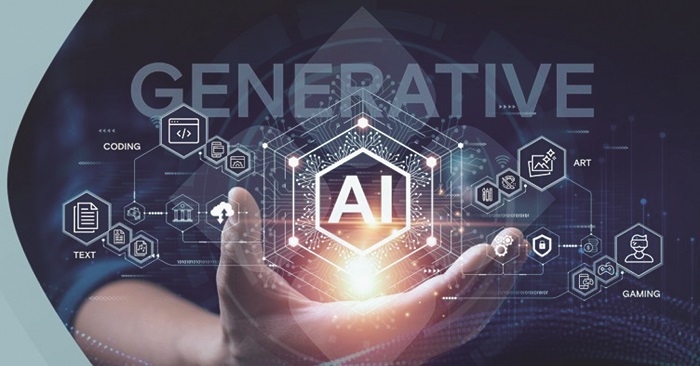
4IR Simplified
John Tseriwa
ChatGPT has already made waves by reaching a staggering 100 million active users by January 2023, just a few short months since its launch.
This remarkable success story continued to unfold as the ChatGPT website achieved over a billion monthly visits by April 2023, consolidating its place as one of the most popular AI-powered chatbots on the market.
Google, the search engine giant, was not to be left out as it launched Bard AI in February 2023, a powerful generative AI platform that has already made waves in the tech industry.
Over the past few months, we have witnessed an acceleration in the pace of development of new forms of generative AI. There is no doubt that AI is revolutionising the world.
And generative AI has catapulted AI into the public domain.
Generative AI is a form of AI that uses deep learning algorithms to analyse patterns in data and generate new content based on those patterns.
This technology can be used for various applications — including text generation, image creation and music composition.
Gartner, a global research and advisory firm, compares the transformative impact of generative AI and groundbreaking inventions like the steam engine, electricity and the internet.
Foundation models such as generative pre-trained transformers, which power ChatGPT, represent a significant breakthrough in AI architecture.
These models have the potential to automate tasks, enhance human and machine capabilities, and independently carry out business and IT operations.
The true impact of generative AI lies in its ability to go beyond rule-based algorithms and generate new content, ideas and possibilities.
It appears technology never leaves out the healthcare industry.
By analysing large amounts of patient data, AI systems could help doctors diagnose diseases and develop customised treatment plans.
They can even predict the likelihood of future medical issues and prevent them before they occur.
This could significantly reduce healthcare costs and improve patient outcomes.
Businesses spend billions of dollars on marketing and advertising campaigns to reach their target audience.
With generative AI, marketers can create personalised and targeted advertising campaigns that can relate to customers more deeply.
Since generative AI can understand natural language, AI systems can converse with customers and answer their queries.
This could save companies significant amounts of money by reducing the need for human customer service representatives.
Generative AI can also generate new and unique content, potentially revolutionising how an artist creates their work.
Imagine, as an artist, being able to feed the AI system with your artistic style and it creates new pieces of art that are uniquely yours.
Generative AI, just like any other technology, comes with concerns and risks.
One of the most significant risks is the potential for the technology to be misused or abused.
For example, AI-generated content could be used to spread fake news and propaganda, manipulate public opinion and even create convincing deepfakes.
A deepfake is a type of fake video made using special computer programmes that can make it look like someone is doing or saying something they did not really do or say.
This is scary.
Imagine innocent people being incriminated or having their reputations badly damaged!
Ethical concerns around the use of generative AI are a major issue.
For example, should AI-generated academic work be considered authentic or original if a machine created it?
How can we ensure AI systems are not biased or discriminatory in their decision-making?
These questions highlight the need for careful consideration and regulation of the use of generative AI.
As I conclude, it is crucial to bear in mind that AI is a powerful tool and, like any other tool, it requires careful and responsible use.
John Tseriwa is a tech entrepreneur and digital transformation advocate focusing on delivering business solutions powered by 4IR technologies. He can be contacted at: [email protected] or +263773289802.



 Online Reporter