admin
admin
Fortious Nhambura
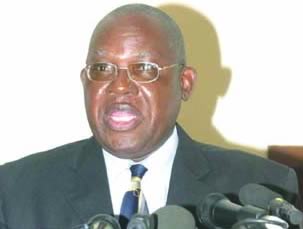
President Mugabe is scheduled to open the First Session of the Eighth Parliament on Tuesday where unlike previous sessions this time a much enlarged legislature convenes in the Lower House where space constraints are set to pose major challenges. Senior Features Writer Fortious Nhambura (FN) caught up with Clerk of Parliament Mr Austin Zvoma (AZ) to talk about this and other issues
FN: Mr Zvoma, can you comment on the Parliament administration’s preparedness for the official opening of the Eighth Parliament?
AZ: We are more than ready for the official opening of Parliament because this is something that we do every year and have gained a lot of experience. Our biggest challenge, however, is one of the capacity of the chamber of the National Assembly to accommodate all the members.
This the first time that we will have this enlarged chamber from 214 to 270 members but we have put in place strategies to manage that challenge on this big occasion. Rehearsals have been done and everything is in place, we now wait for the opening of Parliament on Tuesday.
FN: You touched on one important thing, the issue of space, what do you envisage being the decent and proper sitting arrangement in the National Assembly Chamber in light of the space constraints?
AZ: Sitting is just sitting. In the chamber we use benches so people have to sit rather squeezed because we want to accommodate as many as possible. We have done it before and so there is no change in as far as managing that problem. It will remain with us until there is an alternative venue or in the form of a new parliament building and new chambers. So there will be nothing new in the sitting arrangement.
FN: Are you already looking at an alternative chamber for Parliament or are stuck with this for some time?
AZ: The Government has been talking about a new Parliament building since independence. There has been increased appreciation of the space constraints and the need for a new building to accommodate the growing Parliament.
The increase in Parliament starting in 2005 when we went back to the bicameral legislature it learnt an increase to the number of senators that were elected at the end of 2005, then there was yet another increase brought about by Constitution of Zimbabwe Amendment (No 18) that increased the size of the then House of Assembly to 210. That brought even more pressure in terms of space and facilities.
Then there was Amendment 19 which brought in a few positions about five appointed in the House of Assembly and about eight in the Senate and now the new Constitution has increased the number of legislators to 270.
The question of a new Parliament building is present with us and I think there will be more focus on that project but that is driven by the executive. As Parliament we are only the user client as all state buildings are the responsibility of the executive.
We only give design specification, what building we want, and what is the capacity and the number of offices we want and the executive engages the designers and architects.
We have already done that and we wait further developments in that regard.
FN: What should we expect from the new Parliament?
AZ: I don’t have a crystal ball to look into. What can be expected will come out in greater detail in the Speech of His Excellency, the President because in terms of the Constitution it is the President who summons the Parliament to meet and declares the causes of his summoning the House or what Parliament is expected to do.
In our Constitution the relationship between the executive, judiciary and legislature is that the executive is responsible for determining and implementing public policy and programmes.
Those public policies sometimes come in the form of legislation and are expected to be passed by Parliament, there are also executive programmes passed on a budget approved by the National Assembly, so the role of Parliament is to exercise oversight. So, therefore, the programmes that Government wants to initiate and implement will be outlined in the President’s opening speech and we can only wait until them.
But one can only guess that from recent speeches after the elections at different forums that the programmes will be designed around the manifesto of Zanu-PF the party that won the harmonised elections.
So when we look at those areas one can be wrong to think that there will be focus on indigenisation and empowerment; that is exploitation of natural resources and ownership of the means of production.
You know recently when President Mugabe announced the Cabinet he was talking about. So one can expect that these are issues that the Eighth Parliament will be seized with in terms of debating Government programmes but there could be many others and that we cannot wait until Tuesday.
FN: Coming to the administration side of Parliament, what is your vision for improving service delivery to your stakeholders? In fact you have done a lot but what else can we expect?
AZ: We already have a vision which is to champion the integrity of Parliament regionally by 2018. Champions run in front in their fields, they are the best. So we say in terms of service delivery we want to be in front and I think we are already there in terms of the ISO certification.
Integrity is again a loaded term. We are talking of how we want to do things. We do things in a professional manner, we are driven by honesty, accountability, professionalism and transparency and respect.
We have espoused what we call quality management system which emphasizes doing this systematically and producing the best. We promise to offer service that meets and exceeds stakeholder expectation. We have a strategic plan covering the life of this Parliament.
We are also on the Balanced Scorecard Performance Management System that is the best and the most objective of any of the performance management systems. We have progressed to higher level to what we call the Blue Ocean Strategy which entails closing the space that other competitors may want to occupy.
For instance there are a lot people who may want to write about Parliament and yet they may not be conversant with Parliamentary practice and procedure. Of course it is their right as citizens to want to contribute but in the process we are mindful of the fact that they can misinform or mislead the public so as part of service delivery emphasis is on educating the public on how things are done in Parliament. So if we do that from an authoritative point and when people read anything about Parliament they want to check whether something is correct.
An interesting experience is the misinterpretation of the Constitution alleging that elections could be delayed by as much as four months after the dissolution of Parliament. Naturally we were concerned that the public was being misinformed and so challenged that position.
Eventually the Constitutional Court made a pronouncement that agreed with ours. So basically when talking about the Blue Ocean Strategy, it is creating an uncontested space in the area of your operations. We have also published the Guide to Parliament and we will be starting the second phase which is to align that guide to the provisions of the Constitution. We will also be publishing a journal on authoritative thematic issues that we can inform the public as part of our service delivery.
FN: Parliament continues to use colonial relics such as the Mace and regalia for Presiding Officers, among others issues, can’t we have anything that reflects Zimbabwean culture?
AZ: This again is a rather sad observation that up to now we are still at that. We had it in starts and stops and we as the administration will brief the incoming presiding officers to drive this process and see it through because we cannot be talking indigenisation of the economy without removal of the trappings of colonialism and things like. So this will be addressed in the coming Parliament.
FN: How far have the renovations of the Quality International Hotel gone?
AZ: The Quality International project is a cost cutting initiative for Government and Parliament. It was seen fit as a Parliament hotel and not because there are no hotels.
The model is that the hotel will be run on a cost recovery basis, charging rooms and meals at a rate the enables you to finance your operations and continue to maintain and finance operations. It is not a profit-making venture but meant to reduce the burden on the fiscus where instead of paying whole amount you will be paying 3/5 of that cost, and that could be quite a reduction.
That is the purpose of the project. Other countries have similar facilities; in Zambia and Botswana they have parliamentary motels. So when members come they have rooms there and when they are not there those rooms are let out to the public. It is a project of Government and not Parliament.


 Online Reporter