Online Reporter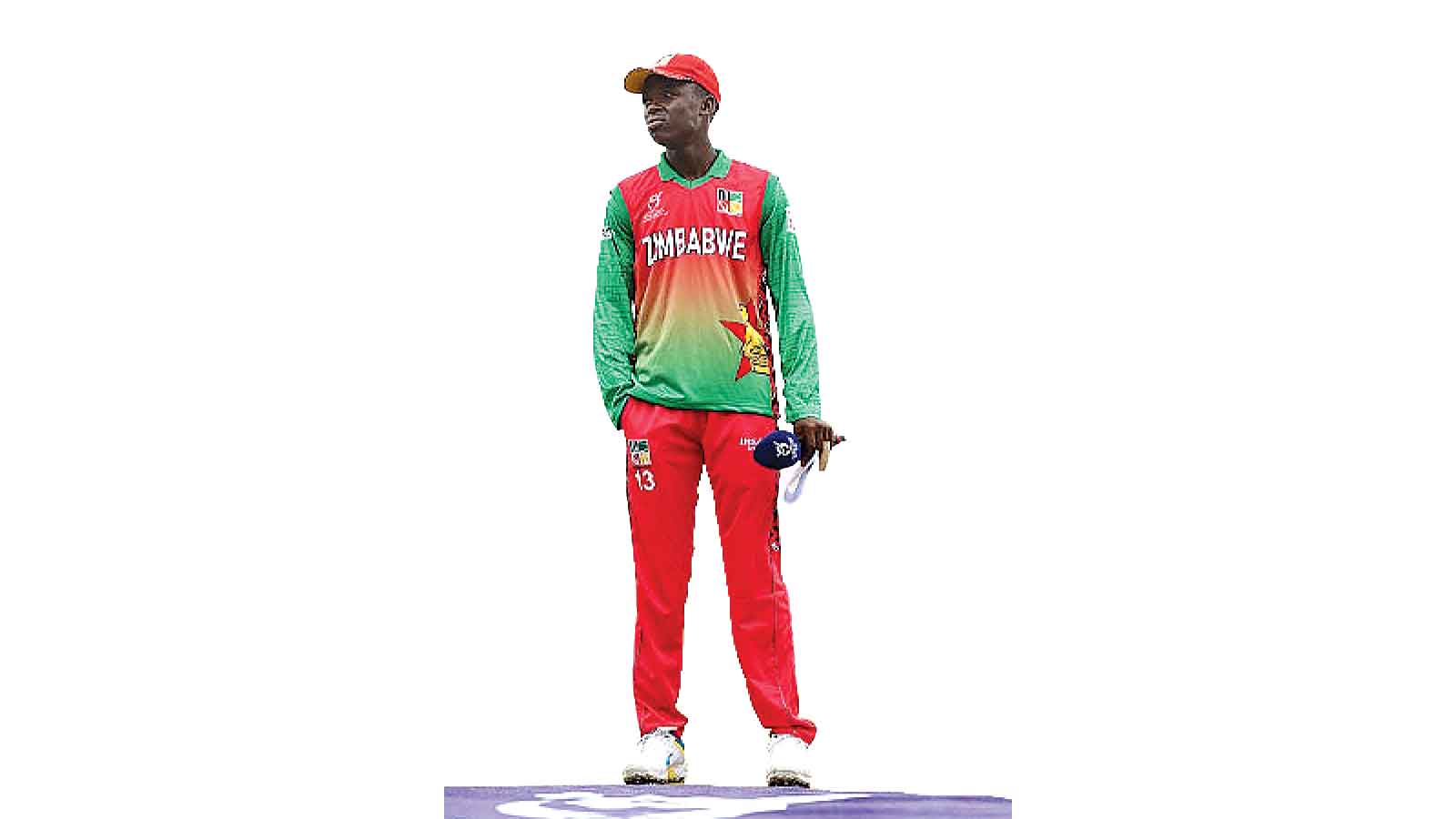
Tinashe Kusema-Zimpapers Sports Hub
AT a glance, Simbarashe Mudzengerere does not look like the kind of leader you spot from the stands.
He does not strut. He does not bark. He does not audition for attention.
If anything, he feels like the sort of presence you only register once you have watched long enough, the quiet figure who keeps returning to the centre of things without ever announcing himself.
“Withdrawn, quiet, someone who often sinks into the background,” one fan quipped during Zimbabwe’s tense group match against Pakistan at the Under-19 Cricket World Cup.
It sounded like a quick judgement, the kind people make when the scoreboard is squeezing the air out of everyone’s lungs. Zimbabwe were being pushed hard, boundaries were flowing, and with every run conceded their chances of making the Super Six phase felt like they were slipping away.
In moments like that, the crowd wants visible defiance. They want fists clenched, shoulders squared, a captain who looks like he is arguing with fate.
Mudzengerere offered none of that. Not the theatre, not the extra.
What followed was qualification, the sort that arrives without fireworks, and still changes everything.
Zimbabwe edged through Group C on net run rate, alongside Pakistan, at the expense of Scotland.
Pakistan chased down a modest target of 129 at Takashinga Cricket Club, but slowed deliberately from the end of the 14th over onwards and ultimately got there in 26.2 overs.
Had they finished earlier, Scotland would have advanced. Instead, Zimbabwe did.
The merits and morals of that chase will live in cricket’s long corridors of debate, where people argue about what rules allow and what the game should refuse.
Mudzengerere chose not to hang his story on that afternoon. He refrained from commenting on it and when he spoke about the tournament, he spoke like someone trying to understand the bigger patterns, not the loudest controversy.
For him, it was never only about one match or one outcome. It was about learning how to stay present when control feels elusive. About reading situations. About accepting that sport, like life, does not always reward the team that deserves it most; it rewards the team that survives the moment it is given.
That mindset comes from somewhere unexpected.
“One of my favourite hobbies is playing chess,” Mudzengerere says. “I like to play chess a lot. It puts me in the right frame of mind and that helps when you get into tricky situations during games.
“You have one objective, which is to win the game by putting the king on checkmate. The game also teaches one to think fast on your feet and adapt to situations,” he says.
He does not describe it like a harmless pastime. He describes it like training.
And that is where the method behind the so-called madness begins to make sense, because chess is not loud. It is not chaotic on the surface. It is quiet pressure. It is the discipline of holding your nerve while your mind is racing. It is knowing that panic creates blunders, and that blunders often look obvious only after the damage is done.
In cricket, especially at a World Cup, the blunders come in bright daylight.
A rash shot when the team needs a partnership. A lapse in the field when the bowler has fought for every dot ball.
A moment of impatience because the scoreboard feels like a closing door. The game punishes the mind as much as it punishes the technique.
Mudzengerere rejects the idea that his calmness is passivity. He does not see himself as withdrawn. He sees something else.
“Unlike what’s mentioned, I see myself more as disciplined, humble and hardworking,” he says. “I’m sure that most people don’t know this, but I am rather talkative.
“This might seem a little bit awkward, but I like to make noise a lot, both on the field and in real life.”
It is a revealing contradiction, the kind that tells you how easily the outside world can misread a young athlete.
A quiet face becomes a quiet personality. A measured presence becomes “withdrawn”.
Yet Mudzengerere insists there is a difference between being calm and being absent. He is not disappearing; he is choosing his moments. He is learning when to speak and when to let the game speak.
Leadership, in his view, does not require constant display. It requires clarity. It requires the ability to separate emotion from decision, and to make choices that serve the team even when the moment is uncomfortable.
That separation is something he admires in one of his role models, India’s Shubman Gill.
“I just like the way he plays,” Mudzengerere says. “Most of the shots I play like the cut or pull shot and the drive, I get from him.”
But it is not only about batting. The part that truly stays with him is how Gill balances responsibility.
“I also like how he separates the captaining badge and the batting badge. He separates those two departments very well,” he says.
That is a heavy sentence for an 18-year-old captain to carry, because it hints at what young leaders often battle with in sport.
The temptation to do everything. The pressure to carry the team with the bat, with the ball, with the voice, with the mood. The fear that if you do not perform in every department, you have failed as captain.
Mudzengerere is already learning the opposite. He is learning that responsibility can swallow you if you do not draw boundaries.
The tournament itself was unforgiving.
Zimbabwe struggled with the bat, a weakness that exposed the gap between them and the traditional powerhouses. England, Pakistan, India and Bangladesh won convincingly, often without being truly stretched.
Zimbabwe’s bowlers were left with little to defend. Starts were wasted. Partnerships failed to grow into something that could breathe.
From the outside, the verdict felt harsh and final.
From the inside, Mudzengerere saw a more precise problem.
“You learn more after a loss than winning,” he says. “We played well, but the problem was that we did so in patches. We could not carry on our good starts or bat for long periods of time.
“The batting was the area we did not give ourselves time on the crease, especially the top order.”
He does not deflect. He does not soften the truth. He includes himself. Despite contributing with both bat and ball across the tournament, he is unsparing in his self-review.
He simply notes that he could have done more, played better, stayed longer, helped his team cross lines that kept shifting.
It is the language of someone already measuring himself against higher standards, not the soft comfort of “experience gained.”
The tournament ended but the questions it raised did not. What does Zimbabwe’s pathway look like after the Under-19s? How quickly can the gap close? What does it take for a teenager to step from promise into real senior contention?
Maybe that is why a moment elsewhere in the tournament resonated so sharply with him.
The semi-final between England and Australia, where Thomas Rew and Oliver Peake traded centuries, stood out.
Rew top-scored with 110 off 107 balls as England made 277 for seven.
Peake’s 100 off 88 balls dragged Australia into the fight, even as they fell short by 27 runs.
Those were innings built on time, trust and belief. The kind of performances that grow from staying in the game long enough for it to open up.
The kind that remind a young captain what patience can buy you when your instincts are screaming for escape.
Now the World Cup is in the rearview mirror and Mudzengerere is already looking ahead.
The academy beckons. Beyond that, the Chevrons remain the long-term ambition. There are steps to take, gaps to close, lessons to absorb.
He will not rush them. Chess teaches you that panic is a mistake. Cricket, at its best, teaches the same thing.
Mudzengerere may never look like the loudest leader in the room. He may never satisfy those who equate command with noise.
But there is a method in how he moves through the game, quietly, deliberately, one decision at a time.
And sometimes, the most effective leaders are the ones who think three moves ahead, while everyone else is still reacting to the last ball.