

 Online Reporter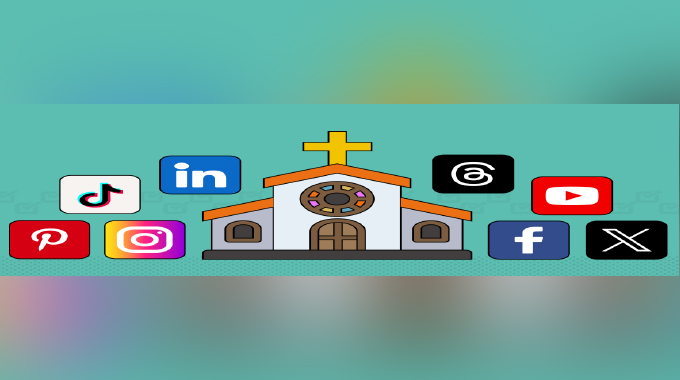
Mashudu Netsianda, Deputy National Editor
FOR centuries, the church was anchored to brick and mortar. The physical gathering of congregants on worship days was sacred — woven into tradition, ritual and community life.
But in the years following the Covid-19 pandemic, something remarkable has taken place in the religious landscape: the pulpit has gone digital.
When lockdowns forced church doors shut, faith leaders across the world faced an urgent question: How do we shepherd our flocks when we cannot stand before them? The answer, reluctantly at first, was technology.
What began as an emergency response — sermons streamed on Facebook, prayer meetings held on Zoom, and WhatsApp devotionals shared in family groups —has evolved into a permanent transformation.
The digital pulpit is no longer a stopgap; it is now part of the church’s architecture.
The pandemic did not invent digital religion; it accelerated it. From Rome to New York, Lagos to Harare, churches were compelled to confront a simple reality: the Gospel now travels at the speed of a data bundle.
In Zimbabwe, where physical fellowship has always been central to worship, the shift was particularly striking. Sanctuaries fell silent, but sermons did not. Mainline churches such as the Roman Catholic began live-streaming Masses, with priests preaching to empty cathedrals while thousands followed online.
The Zimbabwe Council of Churches co-ordinated virtual prayer services, while the Evangelical Fellowship of Zimbabwe encouraged digital evangelism to maintain spiritual connection.
Pentecostal and charismatic churches moved even faster. Prophetic Healing and Deliverance (PHD) Ministries, United Family International Church (UFIC), Spirit Embassy and Harvest House, among others, already had strong online footprints before Covid-19, but the pandemic turned livestreaming into the primary mode of worship. Sunday services, midweek teachings and even counselling sessions shifted online, attracting audiences far beyond Zimbabwe’s borders.
Indigenous churches, often perceived as resistant to modernity, also embraced the digital turn. Zion Christian Church (ZCC) services, Johanne Masowe gatherings and apostolic movements began appearing on Facebook Live, YouTube and TikTok. Smartphones replaced loudhailers, and open-air sermons were now accompanied by ring lights and tripods.
The rise of the digital pulpit is a global phenomenon, reshaping how faith communities worship, communicate and imagine their place in an increasingly interconnected world.
Across Bulawayo and its outskirts, rival camps of the Apostolic Faith Church, founded by Reverend Morgan Sengwayo in 1955, offer a vivid illustration of this transformation. Their annual camp meetings — once deeply physical pilgrimages—have become global broadcasts. They have embraced technology to reach a worldwide audience through live-streamed services.
Rival factions now livestream parallel camp meetings on Facebook, YouTube and TikTok, turning spiritual gatherings into online spectacles watched far beyond canvas tents and prayer circles.
Long before the camps opened in mid-December, professionally designed posters flooded social media timelines. Each carried the portrait of the founder alongside that of a faction’s current leader, with carefully curated themes, preaching schedules and broadcast times.
Platforms meant for fellowship have become unexpected arenas of visibility, where legitimacy, reach and influence are measured in views, shares and comments.
From dawn to dusk, congregants juggle hymn books in one hand and mobile phones in the other, angling for the perfect shot of preachers thundering from wooden and glass pulpits, choirs singing in unison and believers dropping to their knees in prayer.
Similar scenes play out across denominations. On Sunday, the National Thanksgiving and Dedication Service in Bulawayo was streamed seamlessly to global audiences. Zaoga Forward in Faith broadcasts teachings that unite congregants across continents. Methodist and Anglican churches, once cautious, now upload sermons and pastoral reflections weekly, recognising that digital silence risks irrelevance.
The appeal of the digital pulpit lies in its power to collapse borders. A sermon preached in Bulawayo can inspire worshippers in London, Johannesburg or Toronto in real time. For communities in the diaspora, online worship has become a vital bridge —connecting faith, identity and home across continents.
This shift has also democratised religious influence. Where once authority was shaped by geography and institutional structures, today a preacher armed with a smartphone and conviction can build a global following. Faith leaders from the Global South, particularly Africa, are now exporting theology, music and worship styles that were once confined to local contexts.
Technology has expanded access. For the elderly, the sick and those unable to travel, worship is no longer limited by distance or cost. With live streams and audio sermons accessible even on basic phones, faith now enters homes, hospital wards and workplaces.
Participation, too, has changed. Worship is no longer one-directional. Live chats, comments and online prayer requests create real-time interaction, fostering a sense of shared spiritual space despite physical separation. For the techno-savvy younger generations raised in digital environments, faith expressed through short videos, podcasts and online devotionals feels familiar and accessible.
Yet the digital church raises difficult questions. Can faith thrive without physical presence? Does online worship risk turning spirituality into content consumption rather than communal commitment? As churches build online audiences, issues of accountability, misinformation and the commercialisation of faith become more pronounced.
While the digital pulpit is powerful, it demands responsibility. Still, its benefits are undeniable. In times of crisis such as pandemics, natural disasters, conflict or economic uncertainty, digital worship has kept faith alive and offered continuity, comfort and hope.
Ultimately, the rise of the digital pulpit reflects a broader truth about religion in the 21st century: faith adapts. Just as the printing press once transformed Christianity by making scripture accessible, digital technology is reshaping how belief is shared, debated and lived.
From apostolic camps to cathedral altars, from Pentecostal megachurches to rural prayer circles, Zimbabwe’s churches are no longer confined to buildings, cities or national borders. They now exist in a boundless digital commons, where sermons cross oceans, prayers transcend time zones and worship unfolds on screens both large and small.
The challenge ahead is not whether the digital pulpit will endure — it already has — but how it will be used to deepen faith rather than dilute it, to build community rather than competition, and to speak meaningfully to a global audience hungry not just for content, but for connection and hope.




 Bongani Ndlovu