Online Reporter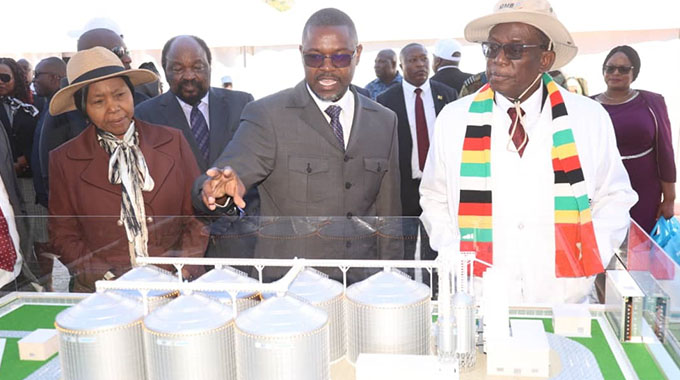
Patrick Chitumba, Midlands Bureau Chief
The commissioning of the artificial intelligence (AI)-powered grain silos by President Mnangagwa in Kwekwe, Midlands Province, on Monday generated significant public interest and excitement. Many stakeholders sought clarification on how this high-tech storage infrastructure operates.
The newly inaugurated smart silos marks a significant step in the country’s agricultural modernisation initiatives, offering farmers a more secure and efficient solution for grain storage, while reducing post-harvest losses.
This event coincided with the nation’s recovery from the effects of the El Niño-induced drought, which severely impacted southern Africa’s agricultural sector.
The Government has intensified efforts to secure the nation’s grain supplies by investing in critical post-harvest infrastructure.

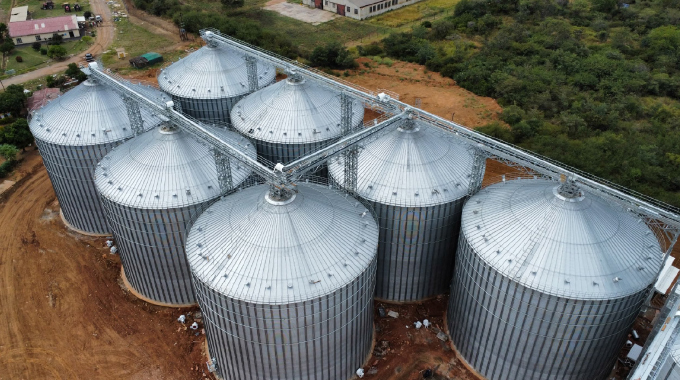
Unlike traditional storage facilities, these modern silos are equipped with advanced technologies, including AI, Internet of Things (IoT) sensors, and automated climate control systems. Together, these technologies help preserve the quality of harvested grain and significantly reduce post-harvest losses.
At the core of these systems are IoT sensors that continuously monitor crucial environmental factors inside the silos, such as temperature, humidity, moisture content and carbon dioxide levels, which can indicate spoilage or insect activity. This real-time data enables immediate adjustments to storage conditions, ensuring that the grain remains in optimal condition for extended periods.
To support these efforts, the silos are fitted with climate control mechanisms, including fans for ventilation and aeration systems that regulate airflow to reduce excess moisture. Depending on the sensor readings, the systems can activate dehumidifiers or heaters, adapting to weather conditions and the state of the grain to prevent mould growth, rot and infestations.
AI plays a critical role by analysing the sensor data and predicting potential issues before they arise. It can recommend best practices for storage, automate decision-making to maintain stable conditions and optimise energy use, ensuring the systems operate only when necessary.
When farmers deliver their grain to these facilities, the silos can automatically test for quality indicators such as moisture content and direct the produce to the appropriate storage compartments.
This process not only reduces the risk of rejection due to quality issues but also ensures transparency and traceability through digital recording of deliveries.
Additionally, the silos include integrated inventory and logistics management systems that track grain volumes, monitor conditions, and streamline dispatch planning. This helps prevent spoilage, reduces human error and combats theft or mismanagement of stored grain. GMB chief executive officer, Dr Edson Badarai informed President Mnangagwa during his tour of the facility that dust is generally removed when grain is deposited into AI silos.
Several methods are employed to achieve this, including dust aspiration systems, which capture and remove suspended dust particles at grain transfer points before they enter the silo. Furthermore, ventilation systems are implemented to ensure proper air circulation and minimise dust accumulation.
“The silos are equipped with sensors that monitor temperature, humidity, moisture levels and carbon dioxide levels, allowing for optimal storage conditions to be maintained,” he said.
“This automated monitoring system enables real-time tracking of grain quality and conditions, facilitating prompt action to prevent spoilage or damage.”
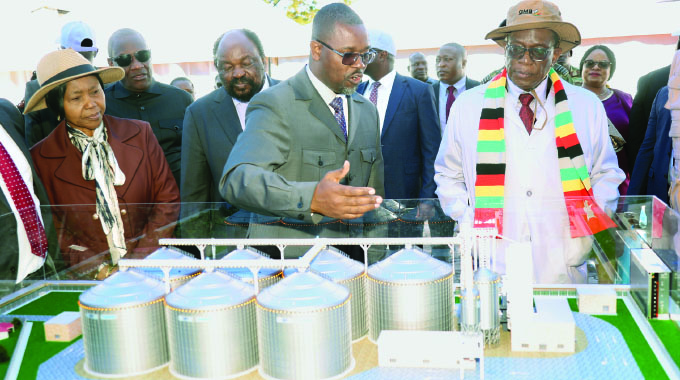
Dr Badarai said the AI-powered system adjusts environmental conditions within the silos, to maintain optimal storage conditions, reducing the risk of pest infestation and mould growth.
“By leveraging AI technology, the silos aim to enhance food security, reduce losses and improve the overall efficiency of Zimbabwe’s grain storage and management systems. This innovative approach is a significant step towards modernising Zimbabwe’s agricultural sector and improving the country’s food security,” he said.
Asked by President Mnangagwa about the capacity of each silo, Dr Badarai said each silo complex has a storage capacity of 8 000 tonnes.
“Each silo is 8 000 tonnes capacity and this is the first of its kind. The old silos we have are between 3 000 to 5 000 tonnes and here we have 8 000. The capacity here is 56,000 tonnes,” he said. Dr Badarai said the facility has been modelled to allow trucks to collect grain as well as a holding area for the packaging of grain.
“We have a holding place for trucks bringing in grain, and the most time each truck will spend before offloading is 15 minutes. Everything at the facility is computerised,” he said.
Project manager, Engineer Isaac Mashonganyika, said the silos are metal, galvanised with some water resistance features.
“They also have windshields, the idea is to protect grain from unfriendly weather phenomena. The silos have a rotational ventilation process to protect the grain. This means the grain can be stored in the silos for two years. There is also the dryer, which can dry 100 tonnes in an hour,” he said.
Grain Millers Association president, Mr Tafadzwa Musarara, said he believed the smart silos are a step forward as the country angles to attain Vision 2030.
“If you look at the World Food Programme assessment, a lot of grain in the country is lost during the post-harvest process. You also need to note that grain storage is of paramount importance when it comes to assuring food sustenance,” he said.
“What this then means is that our President is futuristic in all he is doing for the nation,” he said.
Kwekwe-based farmer Eng Sam Gomba said: “This is a historic moment we have just witnessed; it has given me the energy to do more on the farming front. We need to fill up these silos and make our President proud.”
The additional 14 sites of the silo expansion project will add to the existing silos with a capacity of 750 000 metric tonnes and will leave the nation with a total storage capacity of 1.5 million metric tonnes of grain.
This ambitious project aims to modernise the country’s grain storage infrastructure, significantly reduce post-harvest losses, and enhance food security. Under the ongoing initiative, seven silos are under modernisation and expansion at Grain Marketing Board (GMB) depots in Kwekwe, Mhangura, Mvurwi, Mutare, Rutenga, Timber Mills and Lupane.
Overall, the silo modernisation and expansion project targets 21 depots countrywide.
The Government has said it plans to build the strategic grain reserve to 1,5 million tonnes to establish buffer stocks that can provide relief during drought years.