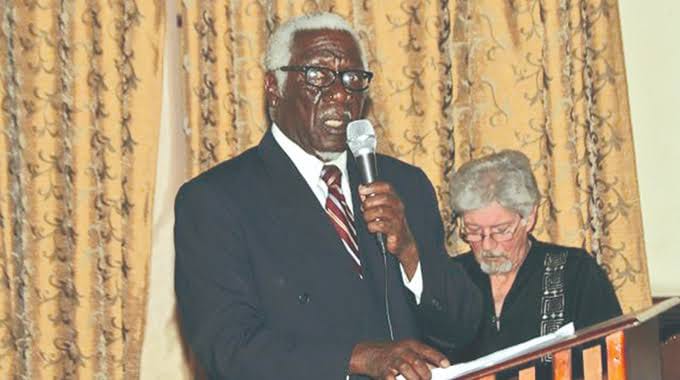
Vusumuzi Dube
By Alpha Pesanai
Correspondent
Zimbabwe, like many other countries in the global south rely on support from various development partners to address its social and economic challenges. It is important to emphasize from the start that the government of Zimbabwe takes a leading role in all arears of development in the country through the National Development Strategy (NDS) that augments inclusive development that leaves no-one behind and aims at achieving an upper-middle income economic status by the year 2030.
Development is a multifaceted concept that encompasses various aspects of progress, including economic, social, and human development within a society. Development partners are organisations including countries that provide financial, technical, and humanitarian assistance to promote development in a particular country or region. In the case of Zimbabwe, there are several development partners actively involved in contributing to its development efforts.
One of the important development partners in Zimbabwe is the United Nations Development Programme (UNDP). UNDP works in about 170 countries and territories, helping to achieve the eradication of poverty, and the reduction of inequalities and exclusion. UNDP has been working in Zimbabwe for several decades now supporting initiatives related to poverty reduction, governance, and sustainable development. UNDP assistance includes providing technical expertise, funding development projects, and facilitating policy reforms to foster social and economic progress. In July 2018, the UNDP partnered with the Ministry of Environment, Water and Climate in a project named the (Zambezi Valley Biodiversity Project) the project is aimed at strengthening biodiversity and ecosystems management and climate-smart landscapes in the mid to lower Zambezi region of Zimbabwe focusing on reducing key threats for wildlife, habitat, and livelihoods of local communities. The project is still ongoing ending 31, December 2024.
The World Bank was created in July 1944 at an international conference in the United States (in Bretton Woods, New Hampshire) is another notable development partner in Zimbabwe. The World Bank has been actively engaged in Zimbabwe through various programmes and projects aimed at addressing key development challenges. In April 2016, the World Bank partnered with the Zimbabwe National Water Authority (ZNWA) in a project named the (Zimbabwe National Water Project) that aimed at improving access and efficiency in water services in selected growth centers and to strengthen planning and regulation capacity for the water and sanitation sector in the country.
The main focus areas of the World Bank include poverty reduction, infrastructure development, and improving access to basic services such as education and healthcare. The World Bank provides financial support as well as technical expertise to help Zimbabwe achieve its developmental goals as set out in the National Development Strategy that are aimed at improving the standards of living of its populace.
The African Development Bank (AfDB) is also a significant development partner for Zimbabwe. The African Development Bank (AfDB) Group is a regional multilateral development finance institution established to contribute to the economic development and social progress of African countries that are the institution’s Regional Member Countries (RMCs). The AfDB was founded following an agreement signed by member states on August 14, 1963, in Khartoum, Sudan, which became effective on September 10, 1964. The AfDB has been involved in supporting infrastructure development, agricultural projects, and private sector growth in the country. The AfDB under the Zimfund provided development finance for the (The Urgent Water Supply and Sanitation Rehabilitation Project) UWSSRP Phase 1 project which was aimed at providing support for restoration and stabilization of water supply and sanitation services in six major cities of Zimbabwe, namely: Harare, Chitungwiza, Chegutu, Kwekwe, Masvingo and Mutare, with a combined total population of 2.5 million.
Furthermore, bilateral partners such as the United States Agency for International Development (USAID), the United Kingdom’s Department for International Development (DFID), and the European Union (EU) also play crucial roles in supporting development in Zimbabwe. These partners provide financial aid, technical expertise, and capacity-building support to various sectors, including health, education, agriculture, and governance.
In a nutshell Zimbabwe as a country benefits a lot from the assistance of numerous development partners that contribute to its developmental goals as set out the National Development Strategy (NDS). The United Nations Development Programme, the World Bank, the African Development Bank, as well as other bilateral partners such as USAID, DFID, and the EU, are actively involved in supporting Zimbabwe’s social, economic, and political progress. Their contributions are vital in supporting the quest by the government of Zimbabwe to create an upper-middle income economy by the year 2030 that leaves no-one behind in terms of development.
Alpha Pesanai is a Project and Development Management Specialist. Msc. in Public Policy and Development Management, BSc. Monitoring and Evaluation Studies, BCom. Finance and an Executive Certificate in Project Management. E-mail [email protected].



 Online Reporter