admin
adminlife but also in all creations.
Animals may not have been given words but I believe they have ways of communicating.
Here I am not focusing much on the broadest sense of communication, rather my focus is on the role that words play in leadership.
Words have the potent power to build or to destroy. The Bible talks of the power of the tongue to either build or destroy.
That potent power is the focus of this article. This is not to just give you awareness or knowledge but aims at helping you to use your words constructively, to build your institution, family, ministry or country as a leader.
Many of the problems we have today in the world emanated from misplaced words, sometimes from words that should not have been said, or should have been said in a different way, tone, pitch and as well from words that were misunderstood or misinterpreted.
Many wars emerge out of human failure to use word positively. Words, when used in the right way, can change the climate of a company, family, church, marriage or even a nation.
Good use of words is key for leaders. Words hint on intentions and people always respond to another’s’ intentions.
Words reflect the faith of a leader. Today many nations, companies and individuals endure financial challenges; words can be used to comfort, motivate and inspire people to look beyond the current crisis.
In an ailing world, only words can steer the course of change. A leader can use words to encourage his/her people. A friend from England sent me a message a few days ago and told me there is a dark cloud hovering over that nation, people are negative and pessimistic after the recession.
This is not an England experience alone; it’s a global phenomenon as we look forward to an uncertain but inevitable future as businesses, individuals and nations.
Leaders should be using words to discourage people from losing heart.
Many employees of many companies have to endure months without salaries for genuine reasons.
It is hope that’s keeping the world together, the hope for a better tomorrow, a tomorrow that is not yet known. Leaders in such circumstances should inspire hope in people.
Napoleon Bonaparte once remarked, “leaders are merchants in hope”, in a world like this, a leader who cannot express hope will ultimately fail.
Leaders can also use words to create the future, to sell a vision. No matter how good a vision can be, it’s only words that make it realise value.
A leader who cannot communicate the vision will ultimately fail.
Many people in your organisation may not be aware of the vision; this may be the reason for under-performance or lack of motivation.
The leader has to clearly articulate the vision to the appreciation of everybody.
When people understand the vision, they get meaning out of their work. No one wants to be busy doing nothing. Knowing that they are following a vision brings a sense of purpose to the organisation and those who work in it.
A leader has to articulate the vision in a compelling way, and clearly express how he/she believes the people are able to do it.
Words are used in team development. The worst word any leader can use is “I”. “We” is a good word for leaders. You are not alone.
We will help you to get people involved. “I” is a selfish word and should be avoided most of the time. We help develop the team spirit that enhances teamwork. It is a word for cooperation and collaboration.
When you use it, you undermine all personal orientation and rally everyone towards one point, which may be the vision.
Leaders can use words to mentor. Mentorship is one big domain of leadership. A leader who cannot mentor is myopic.
No leader is there forever and a wise leader prepares those who come after him/her. Words play a great role in mentorship. As the leader shares with the mentee his/her experience, words are central to that.
On the same note, words are key in praising and reprimanding.
A leader has to praise good word or achievement of those under. It motivates and gives people the recognition they need.
This brings about job fulfilment. A leader has also to reprimand, but of course in a smart way. When something is wrong or someone, a leader has to reprimand the wrong and express how disappointed they may be.
However, this has to be done for the good. Reprimand the wrong not the person.
Leaders have to know how to separate the sin from the sinner. In reprimanding, do not attack the humanity of the person. Leave them with the dignity because if you destroy it, they will suffer lack of confidence and this will cripple them from effectiveness in future assignments. This is wisdom in leadership.
Hope you were inspired to use words creatively, positively and effectively.
See you next week as we explore how we can be better leaders for our benefit, for the benefit of our institutions and for the benefit of those we lead. Be the best. Just be the best.
l Pascal Nyasha is a motivational speaker and leadership coach. He is the author of the inspirational book, ‘Reaching new horizons’, and founder of The Leadership Clinic, the training and development organisation focusing on personal and staff development for organisations. For feedback: Call: 0773 003 912 or e-mail: [email protected]. Connect with Pascal on facebook.


Online Reporter
- Chronicle , SundayNews
- September 21, 2026
- 7 views
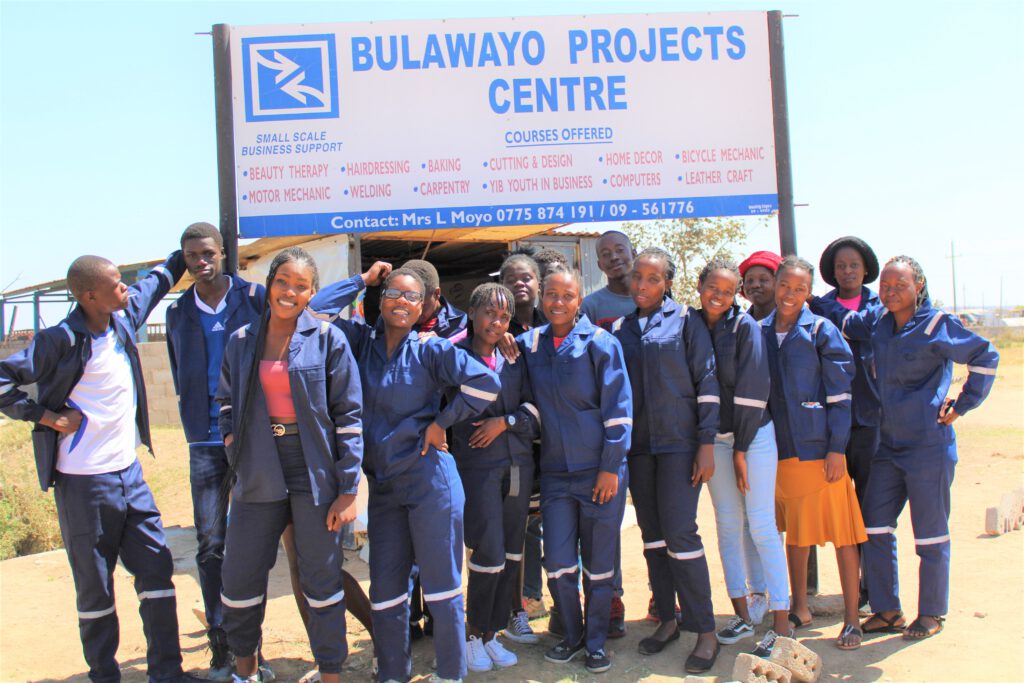
BPC opens doors for youths without O-level passes
Isaac Waniwa [email protected] ESTABLISHED by local churches in 1993 in response to a humanitarian crisis caused by massive job losses triggered by the implementation of the 1991 Economic Structural Adjustment…