Online Reporter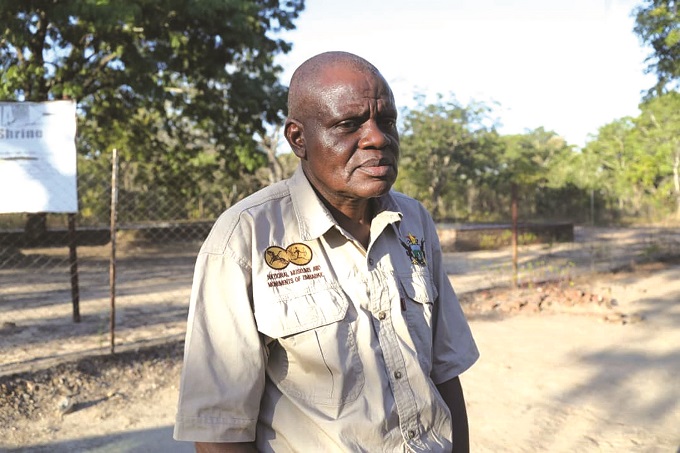
Rumbidzayi Zinyuke in MOZAMBIQUE
THE leaves still rustle gently over the quiet graves scattered across Mozambique, where thousands of Zimbabwe’s sons and daughters now rest, far from home.
The silence in these places is heavy. The sites remind one of a brutal past and the muffled cries of dreams cut short.
For decades, the names Nyadzonia, Chimoio and Doroi have stirred deep emotions in the hearts of Zimbabweans. These were not mere wartime outposts; they were cradles of resistance, sanctuaries of hope and, in the end, graveyards of the youth and promise.
Thousands of young Zimbabweans perished in these foreign lands, not for glory, not for recognition, but for the vision of a free and independent Zimbabwe.
Today, the nation lives that dream.
As the country prepares to mark Heroes Day in August, it is once again time to remember, not only those immortalised on plaques and statues, but the unnamed, uncounted many who died in exile.
Their story is etched in the landscape of Mozambique, in the mango trees planted on top of their bones, the scorched earth that soaked with their blood and the unmarked graves.
Refugee camp turned into killing field
According to history, Nyadzonia was meant to be a sanctuary, a place where fleeing Zimbabweans could find rest and regroup as the liberation war intensified.
Established in 1975 after ZANU’s shift from Zambia to Mozambique, it was primarily a refugee camp, albeit with “a small component of military training”.
“Nyadzonia was initially established as a refugee camp, where people were escaping the war from the front in Zimbabwe,” explained Mr Paul Mupira, the National Museums and Monuments of Zimbabwe eastern regional director.
“People were assembled and staying there, but there was also a small component of military training.”
But on August 9, 1976, hope was shattered. During Operation Eland, Rhodesian forces, disguised as FRELIMO troops, infiltrated the camp and launched a sudden, brutal attack during morning assembly.
“The camp was sold out by one of the former guerrillas, Morrison Nyathi,” explained Mr Mupira.
The Rhodesian soldiers disguised themselves as FRELIMO forces, so they were let through at the official checkpoints.
It was only when the enemy started shooting at people at parade that they realised the camp was under attack — and by then, it was already too late.”
The massacre was devastating.
It is estimated that over 1 300 people, mostly unarmed civilians — women and children — were killed. The attack, a combination of airstrikes and ground fire, shocked the world and drew condemnation from the United Nations, which had recognised Nyadzonia as a civilian settlement. Today, the site holds four mass graves, relocated to a central shrine after independence.
The Government has fenced the area and is working on adding interpretive panels and sinking a borehole to benefit both visitors and the local community.
Chimoio: Bombs, betrayal and resistance
If Nyadzonia was a massacre born of betrayal, then Chimoio was a direct attempt to annihilate Zimbabwe’s revolutionary infrastructure.On November 23, 1977, the Rhodesian forces launched Operation Dingo, a calculated assault on ZANLA’s largest base in Mozambique.
The camp was home to training schools,
clinics and thousands of fighters and civilians.
The Rhodesian Air Force, with support from ground troops, unleashed napalm and cluster bombs, killing at least 1 200 comrades, though it is believed the real number could be higher.
Despite the scale of destruction, efforts to redevelop Chimoio have begun.
A shrine now stands at the site and fencing has been erected.
However, the full potential of the site as a place of remembrance is still far from realised.
Doroi: Death without gunfire
Unlike Nyadzonia and Chimoio, Doroi tells a different story.
Established in 1976, the camp was not bombed.
Yet it carries a different kind of sorrow — the slow, daily death from disease and deprivation.
“There were four camps, including one for female cadres. There was also a big population of men, women and children. The people who are buried here died from various causes — malaria, scabies, tungiasis (matekenya), hunger and others. Because of overcrowding and lack of medicine, death was a daily occurrence,” said Mr Mupira.
When the toll became overwhelming, residents resorted to mass graves.
Today, more than 900 people are believed to be buried in Doroi — almost all in unmarked graves.
Preserving memory and honouring sacrifice
Nyadzonia, Chimoio and Doroi are just three of 16 documented shrines in Mozambique.
Others continue to be discovered — silent witnesses to a costly struggle for freedom.
The Zimbabwean Government has pledged to honour these heroes and ensure the sites are preserved.
“We have seen most of these shrines where our heroes lie. This shows how important it is for us as a country to recognise their sacrifices. As we approach Heroes Day, young people should remember these sacrifices,” said Mr Tinoendakudenga Madziviridze, director of coordination in the Office of the Special Presidential Advisor on Monitoring Implementation of Government Programmes.
Ms Sakhile Moyo, chief director in the same office, emphasised the importance of remembrance.
“We have all heard the history of how these heroes died. This is an emotional moment for everyone, especially for us women who bear these children. Zimbabwe did not come on a silver platter. Someone gave up their life. We want this education to reach all Zimbabweans — young and old — so they appreciate that,” she said.
“As Government, we want to continue with the vision of leaving no place behind, including these shrines.”
Mr Malvin Bere, Zimbabwe’s Consul-General in Beira, acknowledged that while progress had been made, much more still needs to be done.
“We are in touch with the Ministry of Home Affairs (and Cultural Heritage), and they have pledged to rehabilitate these graves. Almost every Zimbabwean has an attachment to these shrines. Once you come here, you see things differently — you see the suffering that brought us independence,” he said.
Work is ongoing to improve burial sites across Mozambique.
But beyond preserving the sites, a larger conversation has begun — about bringing the heroes back home.
“The ultimate option is exhuming these bodies and re-burying them in Zimbabwe. There are now huge calls to say our brothers should come back home. Our liberation fighters should be buried in Zimbabwe. There is need for a strategy and a budget to carry out such an exercise,” said Mr Bere.
Each year, Heroes Day rekindles Zimbabweans’ gratitude.
But remembrance should not be seasonal; it should be institutional, educational and generational.
The stories of Nyadzonia, Chimoio and Doroi’s unmarked graves remind us that freedom was forged by sacrifice.
As Zimbabwe raises the flag this Heroes Day, it should also raise its voice for those who lie across the border.
It should preserve their memory not only in monuments but in action.
Let the fallen know that they are not forgotten.



 Online Reporter