Chronicle Editor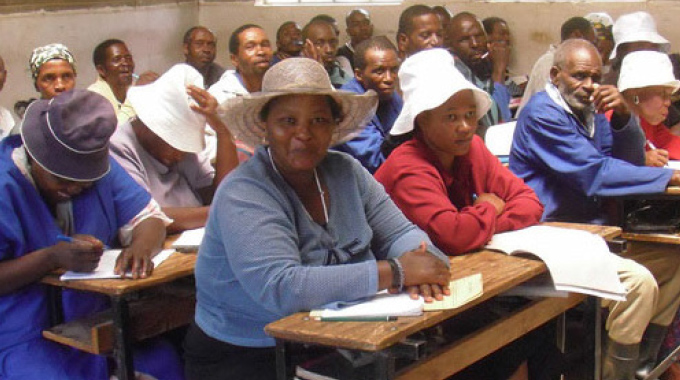
Fredrick Qaphelani Mabikwa, [email protected]
PARTICIPATORY training methods are a dynamic approach to adult education, underscoring active engagement and mutual learning.
This philosophy recognises that learning is a two-way street: learners absorb knowledge from the trainer, who also gains valuable insights from the participants.
Furthermore, learners benefit from the shared experiences of their peers, enriching the educational experience with a diversity of perspectives.
As I discussed in a previous article, adult learners come to the training room ready to share their life experiences, which can be both a rich resource and a challenge for trainers in choosing the most effective techniques.
The selection of these techniques should align with the training’s objectives — whether it’s transferring knowledge, building skills, or changing attitudes — and take into account factors such as group size, timing, venue and the audience’s preferences.
For example, semi-literate adults may not engage well with lengthy case studies heavy on theory.
In participatory learning, the trainer’s role evolves from an all-knowing teacher to that of a facilitator.
This facilitator is not a traditional teacher, but rather someone who brings learners together, fostering an environment where they can showcase their abilities.
The facilitator introduces concepts and encourages participants to lead the discussion, guiding and managing the process without dominating it.
This shift can be challenging for some trainers, who may feel their authority is being undermined, necessitating a degree of maturity and sometimes a change in attitude.
In mixed groups, it’s crucial to ensure that everyone, regardless of gender or age, has equal opportunities to participate.
The lecture method, while traditional, should not be overused. It is suitable for audiences that can actively listen and extract key points.
However, trainers should combine lectures with other techniques, such as audio-visual aids, to enhance effectiveness.
It’s important to avoid overwhelming learners with too much information at once and to allow time for reflection, questions and confirmation of understanding before proceeding.
The discussion method, on the other hand, offers a more interactive alternative to lectures. Adult learners often benefit more from the exchange of ideas and interaction with both their peers and the trainer.
Shared concepts are reinforced through analysis and discussion, with the trainer ensuring balanced participation and respect for all viewpoints.
Creating smaller groups within the larger one allows for more intimate discussions and presentations, fostering greater involvement and a deeper learning experience.
Recognition and constructive feedback are pivotal in participatory training.
All contributions, even those that diverge from the expected path, should be acknowledged and gently realigned with positive reinforcement, as adults are particularly sensitive to criticism.
Brainstorming sessions are essential, inviting learners to freely express their thoughts on discussion topics or questions.
Case studies, which are narrative examples designed to elucidate a concept or scenario, serve as a practical tool for analysis and relating to the learners’ contexts.
The “gallery walk” is an interactive technique where learners display their work on flipcharts for a walk-through critique and discussion.
Role-playing is a cornerstone of experiential learning, allowing adults to embody roles or situations for deeper understanding.
It can be spontaneous and informal, fostering quick thinking and decision-making, or it can be formal, with structured scripts and rehearsals.
Both forms encourage participants to express their immediate reactions and attitudes.
Dramatisation takes role-playing further, assigning specific roles for rehearsal and performance, potentially by an external drama group, blending learning with entertainment — an essential element in adult education.
Demonstrations are equally crucial, especially when training involves mathematical calculations. Mathematics is most effectively taught through step-by-step demonstrations, using boards or projectors for visual aid, or through hands-on practicals.
For example, a workshop on livestock management might include live demonstrations on administering vaccines and dehorning cattle, with participants actively engaging in the process.
Such practical experiences are far more memorable than theoretical explanations.
In closing, participatory training extends beyond the confines of the classroom.
Field visits allow participants to observe and engage with practitioners applying relevant skills, reinforcing the lessons learned in the training room with real-world experiences.
This hands-on approach not only cements knowledge, but also invigorates the learning journey.



 Online Reporter