Mbulelo Mpofu [email protected]
IT is award season in Zimbabwe, a period when the country’s creative economy takes centre stage as artists and cultural practitioners are celebrated for their contributions to the entertainment industry.
With the Bulawayo Arts Awards (BAAs) scheduled for November 28, the Zim Hip Hop Awards following in December and the National Arts Merit Awards (Nama) coming next year, it is an opportune moment to reflect on two hip-hop heavyweights whose music, personalities and untimely deaths continue to resonate across generations.
They are the late Bulawayo rapper Calvin Mgcini Nhliziyo, popularly known as Cal_Vin, and American hip-hop icon Tupac Amaru Shakur, affectionately known as 2Pac.
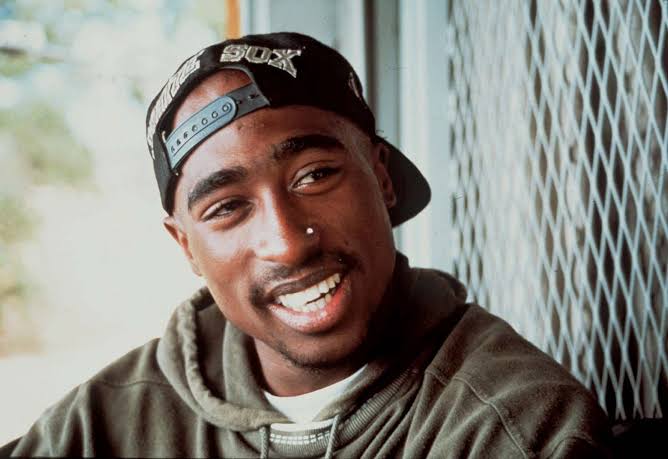
Separated by geography, culture and the scale of their respective music industries, the two shared striking similarities. Both were outspoken, unapologetic lyricists, fiercely protective of their identities, deeply attached to their mothers and unafraid to challenge people and institutions. Their music also occasionally touched on mortality in ways that, after their deaths, acquired an unsettling significance.
Recent developments in the United States have brought Tupac’s murder back into the spotlight after former gang leader Duane “Keffe D” Davis was sentenced to 40 years to life in prison in October for orchestrating the rapper’s 1996 killing. For Bulawayo, however, the circumstances surrounding Cal_Vin’s death remain unresolved.
At their peak, Pac and Vin were renegades and voices for the voiceless. Their music confronted uncomfortable realities, while their public personalities reflected a refusal to be intimidated into silence. Their fearlessness sometimes came at a personal and professional cost.
Tupac’s worldview was heavily influenced by his mother, Afeni Shakur, a former Black Panther activist whose experiences with racial injustice and political struggle informed his outlook. He immortalised his appreciation for her sacrifices in the 1995 hit, Dear Mama, one of the most recognisable songs in his catalogue.
Cal_Vin similarly demonstrated affection for maternal figures through Mama Wami, his collaboration with Skhululekile “Skhu” Mpofu, which he produced and featured on. The song expressed gratitude to the women who raised them.
Even after his death, his mother, Sinikiwe Luphahla, has remained at the forefront of preserving his legacy through merchandise sales and plans to release music from his extensive unreleased catalogue.
Another striking similarity was their willingness to reinvent themselves. Tupac adopted the alias “Makaveli” towards the end of 1995 after reading Italian philosopher Niccolò Machiavelli’s “The Prince” while in prison. The identity became particularly associated with his posthumous album, The Don Killuminati: The 7 Day Theory.
Cal_Vin also experimented with different identities before becoming a household name in Bulawayo’s hip-hop circles. He was known as C Dog, Churboy (pronounced Church Boy), Cal_Vin, Cal Vin and Lokshin Obama.
Beyond individual identities, both understood the importance of collective movements. Tupac established the Outlaw Immortalz, later known as the Outlawz, in 1995 following his release from prison. The group became an important part of his musical journey.
Closer to home, Cal_Vin was associated with Kontrol Tribe, a collective that included Cliff Jeans, KTox and Frost. Through creating music and performing together, the crew contributed to the growth of Bulawayo’s hip-hop culture.
Their influence extended beyond their immediate circles. Internationally, artistes such as J. Cole, 50 Cent and The Game have acknowledged Tupac’s influence, while in Zimbabwe, Brintz, GTi and even the Bulawayo Children’s Choir have paid homage to the Zkhuphan hitmaker.
Perhaps the most haunting parallel is how both addressed death in their music.
On If I Die 2Nite, from his 1995 album Me Against the World, Tupac confronted the possibility of dying violently, reflecting on the uncertainty surrounding his life and legacy.
Cal_Vin’s 2020 release, Thabani, carried similarly unsettling undertones. He expressed feelings of rejection and alienation in the very city that would eventually turn out in thousands to bid him farewell.
He rapped: Batshele u Cal_Vin uzokufa lonyaka / Thabani majaha / Eyi, hey wena / They wanna do me like Majaivana.
The lyrics now carry an eerie significance. Whether an expression of frustration, artistic exaggeration or genuine premonition, they have become part of the conversation surrounding his death.
Both artistes also experienced turbulent relationships with individuals and institutions in their respective industries. Cal_Vin’s differences with fellow rapper Jnr Brown and his fallout with Skyz Metro FM were notable episodes in local hip-hop.
Following the release of I’m So Bulawayo, which suggested that the station was sabotaging him, Cal_Vin called on Skyz Metro FM to stop playing his music. The station subsequently imposed a blanket ban, citing concerns over his conduct. It took the intervention of the Voluntary Media Council of Zimbabwe (VMCZ) to bring the parties together and initiate efforts to resolve their differences.
Tupac’s confrontations played out on a much larger stage. He frequently clashed with law enforcement, politicians, mainstream media and sections of the music industry, often criticising systemic racism, police brutality and poverty. His feud with The Notorious B.I.G. also became one of hip-hop’s most infamous rivalries, contributing to the East Coast-West Coast tensions of the 1990s.
Beneath their public bravado and enjoyment of the rewards of musical success, however, both displayed extraordinary dedication to their craft.
After Tupac’s release from Clinton Correctional Facility in October 1995, following his conviction on sexual abuse charges which he disputed, he quickly returned to recording. Suge Knight facilitated his bail and a deal with Death Row Records, allowing him to resume work in Los Angeles. Stories of his relentless studio sessions and remarkable recording output became part of his mythology.
Cal_Vin similarly worked consistently on his music and developed an extensive catalogue. Their work ethic reflected two artistes determined to leave as much behind as possible.
The similarities become most poignant when considering their deaths. Tupac was shot in a drive-by shooting in Las Vegas on September 7, 1996, and died from his injuries six days later, aged 25. In October 2026, Davis received a sentence of 40 years to life after being convicted of orchestrating the killing, although he has indicated that he intends to appeal.
Cal_Vin died in 2020 in a hit-and-run incident near his Luveve residence. Unlike developments in Tupac’s case, his death has not resulted in comparable legal progress, leaving his family, friends and supporters without closure.
The two deaths, despite their different circumstances, robbed hip-hop of artistes whose contributions were still evolving.
Cal_Vin’s importance was recognised in 2020 when the then Roil Bulawayo Arts Awards named its Outstanding Hip Hop category the Calvin Mgcini Nhliziyo Hip Hop Award. That same year, Namibia’s music awards honoured him with a Special Tribute Award. These gestures ensured that his name became an enduring part of the region’s creative economy.
Calling Cal_Vin Bulawayo’s Tupac Shakur is not to suggest that their careers, commercial achievements or musical journeys were identical. Rather, it acknowledges their shared fearlessness, social consciousness, maternal connections, artistic reinvention, work ethic and lasting influence on their respective hip-hop communities.
Neither man needed to be alive to command attention. Their music continues to speak, their names remain invoked and their influence is visible in the work of those who followed them.
Yet one painful difference remains. While Tupac’s family has witnessed a major development in the pursuit of justice, Cal_Vin’s family is still waiting for answers. For the Nhliziyo family, finding those responsible has become a proverbial needle-in-a-haystack exercise.
Zimbabwe celebrates its creative champions this award season, and perhaps the most fitting tribute to Cal_Vin is not simply playing his music, naming awards after him or wearing his merchandise, but preserving his artistic legacy while continuing to demand answers surrounding his untimely death.
Bulawayo may have lost its own Tupac in Cal_Vin, but it has not lost the music, the memories or the responsibility of keeping his story alive.
– Follow on X@MbuleloMpofu