admin
admin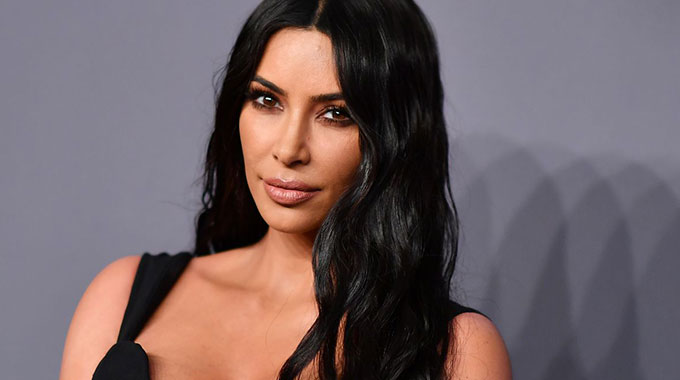
Knowledge Mushohwe
Former England defender and current Queens Park Rangers captain Rio Ferdinand recently dominated headlines in the United Kingdom after he was handed a three-match ban, ordered to pay a £25 000 fine and asked to take classes for using ‘inappropriate language’ on his Twitter account.
Rio’s crime was tweeting the word ‘sket’ — British slang for a promiscuous female.
Ferdinand is not the only professional sports person to face censure for using social networking sites to speak their mind.
Rapper 50 Cent walked into a storm in 2012 when he stated that one of his Twitter followers looked like he was autistic.
He wrote, “I don’t want no special ed kids on my timeline follow somebody else, Yeah I just saw your picture fool you look autistic”, in response to a tweet that had asked him to “release the album or get shot again.”
Activists slammed the rapper for his insensitive remarks, which led to 50 Cent removing the update from his platform.
Another rapper, The Game, attempted a prank by encouraging his twitter followers to call a phone number inquiring about an internship opportunity with the rapper.
The prank came back to haunt him because the number he left was a direct line for the local police department.
Feeling the heat from the cops who had to option but to take down the number, Game folded and ranted in, “I can see it now: ‘What u in 4 homie . . . robbery. What about u dog . . . Murder. Aye . . . What u in here 4 game . . . (Pokes Chest Out) A TWEET’ !!!”
A New York congressman named Anthony Weiner unintentionally broadcasted a picture of his private parts on Twitter for all to see.
Though he apologised for the mishap by regretting “personal mistakes (he had) made and the embarrassment (he had) have caused”, it did little to save his position in office as Weiner was forced to resign.
America’s Professional Golf Association President Ted Bishop was also forced to quit over a Twitter row with English golfer Ian Poulter.
Bishop was responding to Poulter’s criticism of the Ryder Cup captaincy of Nick Faldo and Tom Watson in the Englishman’s new book ‘No Limits’.
Comparing Faldo’s superior major and Ryder Cup record with Poulter’s, Bishop tweeted: “Yours v His? Lil Girl.”
The PGA confirmed Bishop’s exit and apologised for his “unacceptable” and “insensitive gender-based statements”, but later defended himself by saying “I created this mess — it’s my fault, (but) I don’t think the punishment fits the crime, but it is what it is.”
A clueless Kim Kardashian’s apparently had no idea about events in the Middle East but nonetheless tweeted support for Israel.
Some of her followers, clearly upset over the remarks, told her that she had “lost all respect” while others angrily said she should “die in hell”.
Her pro-Israel tweet set Twitter ablaze with angry messages and death threats, as the reality star exhibited her lack of knowledge regarding the battle between Israeli and Palestine.
Followers of the Movement for Democratic Change (MDC-T) were in 2012 outraged to find out that the political party did not “follow” a single Zimbabwean on Twitter.
The MDC-T’s official Twitter account instead tracked the updates of 32 individuals and media organisations — all from Britain and the United States of America.
Twitter, Facebook, Instagram and Blogging platforms have become accepted forms of informal communication for celebrities all over the world.
Social networking has increased both the flow and volume of information daily, but because it is unregulated with filters only available in selected countries, socially unacceptable content that is likely to offend will always be available on the Internet.
Everyone has the potential to employ inappropriate language, but celebrity mistakes are more likely to be pointed out and be widely discussed.
Social networking platforms are not ‘news’, but more as an informal gathering of strangers, families and friends.
Unlike news organisations, individuals do not have the benefit of editorial policy guidelines on social networks.
And according to Arsenal Football Club manager Arsene Wenger, big organisations have bigger worries than be concerned solely with use of ‘inappropriate language’.
“We are concerned as well about statements on Twitter, things going out of the club that should not go out. It’s important to keep that under control. In the modern world, it’s very difficult but we try”, Wenger said.
The integrity of organisations is clearly being put on the line by rich football professionals that send out information on every little thing they do or experience.
Social networking should never be regulated, but just like in the real world, ethical, moral and legal boundaries are very important.
There is no law against people being ignorant or arrogant, and Twitter will continue to spew offensive and inconsiderate remarks that intrigue some observers and offend others.
But with unedited information flowing freely on the Internet, there is no cause for alarm unless the boundaries that make us human are broken down.


 Online Reporter