


 Online Reporter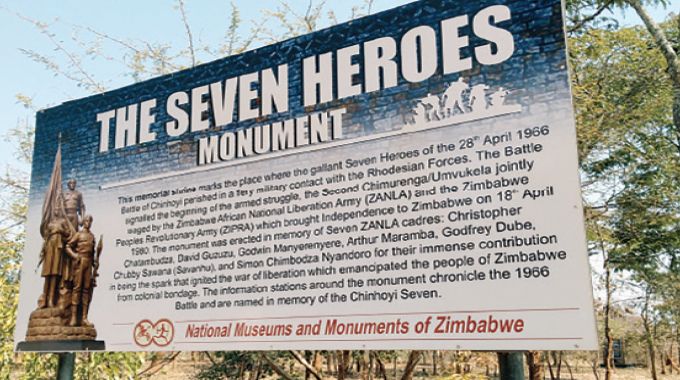
Conrad Mupesa, Features Writer
NEARLY six decades after the guns fell silent at the historic Battle of Chinhoyi, a haunting and deeply emotional question continues to linger in the hearts of many Zimbabweans: Where are the Chinhoyi Seven buried?
They are celebrated as the pioneers of Zimbabwe’s liberation struggle, the young men whose blood marked a decisive turning point in the armed fight against colonial rule on April 28, 1966.
Their names; Godfrey Dube, David Guzuzu, Arthur Maramba, Godwin Manyerenyere, Simon Chimboza, Chubby Sawana and Christopher Chatambudza, are etched into the nation’s history as enduring symbols of courage, sacrifice and defiance.
Each year, the country pauses to remember them, their story retold in schools, at national commemorations and in speeches as a tale of extraordinary bravery against overwhelming odds.
Yet beneath the ceremonies and honour lies a painful and unresolved truth: the final resting place of the seven fighters remains unknown.
As Zimbabwe edges closer to marking 60 years since that defining battle, the contrast between national pride and private grief is becoming more pronounced.
While the nation celebrates, the families of the fallen heroes continue to grapple with a deeply personal loss made heavier by the absence of closure.
For them, remembrance without a grave is not enough.
Recent efforts to honour the legacy of the Chinhoyi Seven reflect a nation determined to preserve its history.
A monument has been put at the site where the battle was fought and it is located a stone’s throw away from Chinhoyi Provincial Heroes Acre.
Families of the fallen fighters are set to receive residential stands following an offer by local developer Pure Gold Housing Trust, while the Zimbabwe Defence Forces, through Hunyani Farm and in partnership with various stakeholders, has undertaken a comprehensive upgrade of the Chinhoyi Provincial Heroes Acre to ensure it stands as a befitting shrine for the liberation war icons.
Mr Mind Musokeri, managing director of Vine City Housing Trust, said the gesture was meant to honour the lasting legacy of the fighters and ensure their families benefit from the sacrifices made.
However, for the relatives, material recognition does little to fill the emotional void left by decades of unanswered questions.
Former Zanu PF Mashonaland West provincial administrator and war veteran, Cde Fanny Chikomba, offered insight into why closure has remained elusive for so long, pointing to the circumstances surrounding the handling of the bodies after the battle.
He said the brutality of the confrontation, coupled with the conduct of the Rhodesian forces, made it difficult to account for the remains of the fallen fighters.
“The reality is that after the battle, the bodies of the seven comrades were not properly identified,” said Cde Chikomba.
“They were handled by the Rhodesian forces and there was no transparency. What we later gathered as freedom fighters is that they were buried under unclear circumstances, possibly in unmarked graves.”
He added that the colonial regime had no intention of preserving the dignity of liberation fighters, with efforts largely directed at erasing both their physical presence and historical significance.
“There were strong suspicions that some of them could have been buried in a mass grave or even moved without any record being kept,” he said.
“Up to now, there has never been any formal identification or process to establish exactly where they were buried.”
Her account underscores the enduring mystery, one rooted in the secrecy and brutality of colonial warfare, and helps explain why, nearly six decades later, the question remains unanswered.
For relatives like Mr Wise Manyerenyere, nephew to the late national hero Cde Godwin Manyerenyere, the passage of time has done little to ease the pain.
While he commended the Government for continuing to honour the liberation icons, he said the lack of closure continues to weigh heavily on the family.
“Was he buried in an unmarked grave or a mass grave? We do not know,” he said.
“Everyone wonders whether the remains were moved somewhere else or if there are records hidden somewhere that could finally give us answers.”
He shared these concerns during last year’s Heroes Day commemorations, echoing the sentiments of many families connected to the liberation struggle who continue to live with unanswered questions.
As Zimbabwe prepares to commemorate its 46th Independence anniversary, with national celebrations set for Maphisa in Matabeleland South and provincial commemorations in Siakobvu, Nyaminyami district, the story of the Chinhoyi Seven remains both a source of immense national pride and an open wound.
For the nation, they represent the beginning of the armed liberation struggle.
For their families, it marks the beginning of a lifelong search for truth and closure.
There is growing sentiment among historians, war veterans and relatives that the time has come for a deliberate and coordinated effort to uncover what truly happened after the battle, through archival research, forensic investigations or even diplomatic engagement to access historical records from the Rhodesian era.
Such efforts would not only bring long-awaited closure to the families but also deepen Zimbabwe’s understanding of its own history.
Because beyond the symbolism, beyond the ceremonies and recognition, lies a simple but profound need, the need for truth.
Nearly 60 years on, the legacy of the Chinhoyi Seven remains unquestionable.
They lit the flame of resistance and changed the course of the nation’s history.
But until their final resting place is known, their story remains incomplete.
For beneath the honour and remembrance lies a quiet, persistent question that refuses to fade with time — where are the Chinhoyi Seven buried?


