Online Reporter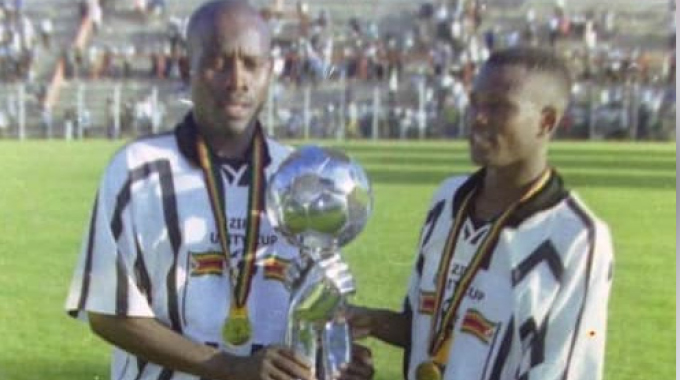
Yesteryear greats with Lovemore Dube
IF football were music, then Highlanders Football Club in the early 2000s had a Zambian quartet whose rhythm and flair turned matches into symphonies.
On this laid back Sunday, let’s rewind to the days when four outstanding players from north of the Zambezi River made their mark at one of Zimbabwe’s biggest football institutions, each leaving behind stories etched in the hearts of Bosso fans.
Among them were midfield maestro Charles Chilufya, dribbling virtuoso Dabwitso Nkhoma, the enterprising and tactically astute right back Manase Mwanza, and the dynamic wing play revivalist Kelvin Kaindu.
When Kaindu arrived at Highlanders in 1997, it felt like the spirit of classic wing play had returned. He was quick, daring, always brimming with positive energy, a refreshing reminder of legends like Doughty Sithole, Madinda Ndlovu, Morgan Phiri and Tommy Masuku. A natural winger, Kaindu brought electricity to the flanks, thrilling the Soweto end faithful with every touch.
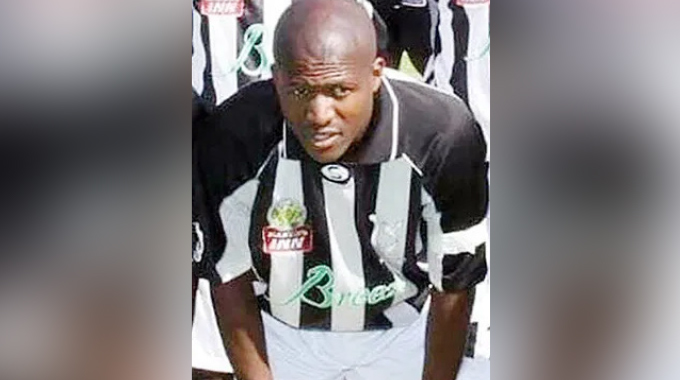
Unfortunately, his rising star dimmed prematurely. A combination of injury and a hard nosed executive led by Roger Muhlwa and Peter Dube, who couldn’t meet his wage demands, brought his Bosso journey to an abrupt end. Timing was not in his favour either; he joined at a transitional phase when titans like Willard Khumalo, Mercedes Sibanda, Johannes Tshuma and Amin Soma-Phiri were past their peak.
Yet, there’s a lingering “what if” around Kaindu. Had he stayed on with the exciting squad Madinda Ndlovu was assembling, a team that would go on to clinch four championships, his name might have been immortalised in black and white folklore.
Of the Zambian imports, Chilufya was the most decorated. He played a crucial role in Highlanders’ back-to-back league triumphs in 2001 and 2002, winning more silverware than any of his compatriots. Before his Bosso spell, Chilufya had put in the hard yards with Hwange and Railstars, teams where his brilliance often went unrewarded in terms of trophies.
At Bosso, he flourished.
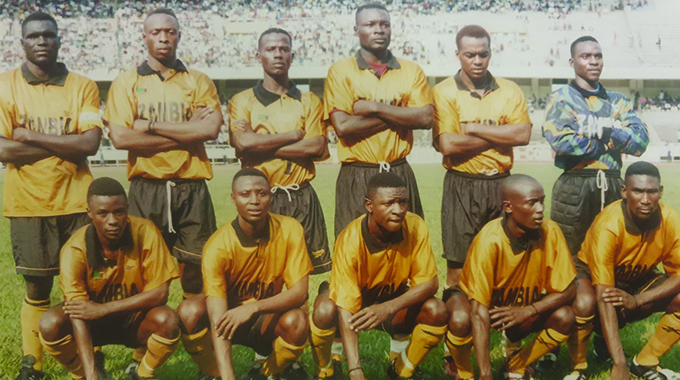
A dynamic midfielder capable of playing deep or just behind the striker, he combined seamlessly with Blessing Gumiso, Honour Gombami, Richard Choruma, and Bekithemba Ndlovu. His range was impressive: great aerial presence, powerful shots with both feet, body swerves that froze defenders and an unrelenting engine that never quit.
Chilufya embodied the kind of industrious brilliance that made him a fan favourite and a coach’s dream. If Highlanders fans were asked to name one player who dribbled purely for the soul of the game, Nkhoma would easily make the cut.
A left-footed magician, Nkhoma reminded fans of the golden era of flamboyant wing play, when artistes like Tommy Masuku, Tanny Banda, Madinda Ndlovu, and Cavin Duberley mesmerised opponents. His close ball control was surgical and his ability to glide past defenders with purpose was near poetic.
Nkhoma’s time at Highlanders didn’t coincide with trophy laden seasons, but his performances brought joy during a difficult transition period. The club was still recovering from the departure or decline of key players from its historic four title run between 1998 and 2002. While silverware eluded him, his commitment to entertaining football won him deep admiration.
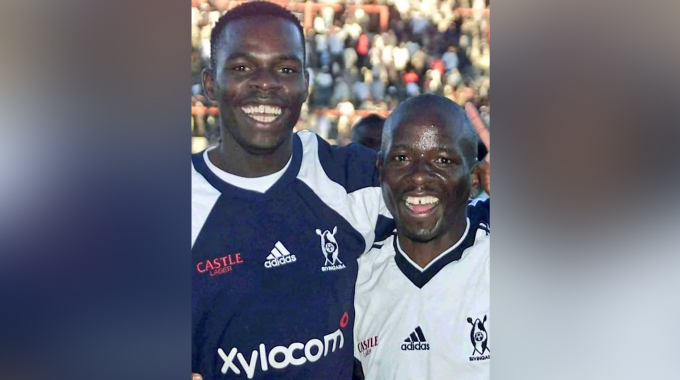
He came to Zimbabwe when Bosso was searching for its new identity. Ironically, the man who brought him in, Methembe Ndlovu, would later coach Highlanders to the 2006 league title with a more structured, tactical approach. When Mwanza arrived in Bulawayo in 2005, not many knew who he was. But within weeks, he was staking a claim as one of the best right backs to ever don the black and white jersey. Recommended by Dickson Chama, a legendary Zambian centre back and former Bosso coach, Mwanza wasted no time in showing his worth.
His name now lives among Bosso greats like Noel Kaseke, Bekithemba Ndlovu, Melusi Sibanda, Lawrence Phiri, Augustine Lunga, Fanuel Ncube, and the iconic Mercedes Sibanda, the first Highlanders player to be crowned Soccer Star of the Year.
Before coming to Zimbabwe, Mwanza had already been capped 19 times for Zambia. He had shared dressing rooms with Zambian giants like Kalusha Bwalya, Denis Lota, Andrew Sinkala, and Elijah Tana. This wasn’t just any import, he was seasoned, skilled and mentally sharp.
Born in Kitwe, Copperbelt Province, Mwanza grew up surrounded by football’s call. He started off at Butotelo Primary and later went to Chamboli Secondary School, but it was his community club coach Abnel Zulu who truly noticed his talent.
Zulu saw a spark in the young boy’s street football flair and invited him to a local team at age 14. By 17, he was with Big Coke, a club backed by Zambia Coca-Cola. His early career took him through clubs like Chibuku Warriors, Wheels Riders and UBZ Government Transport Company, before landing at Kitwe United in 1995–96. His upward trajectory continued: Kalulushi Modern Stars in 1997, Nkana FC in 1998 and then the big break, Power Dynamos, whom he captained for four years.
International recognition followed. He represented Zambia at Under-20 level in 1997, played in the 1999 All-Africa Games (finishing second to Cameroon) and was part of the senior national squad from 1998 to 2001, before an injury curtailed his international career.
“In 2004, coach Dick Chama invited me to Highlanders,” Mwanza recalled.
“I was supposed to be on a two week trial. On the third day, during an 11v11 game, everything changed. They said I couldn’t be on trial anymore. I signed a contract.”
His time at Bosso was brief, but impactful. “I had a wonderful time at Highlanders. How I wish I could rewind to those good old days. We were once runners-up in the league,” he added.
In 2006, he left for Black Leopards in South Africa, but things didn’t pan out. He returned to Zimbabwe and signed a two-year contract with Mwana Africa, courtesy of Willard Khumalo, before heading back home to retire.
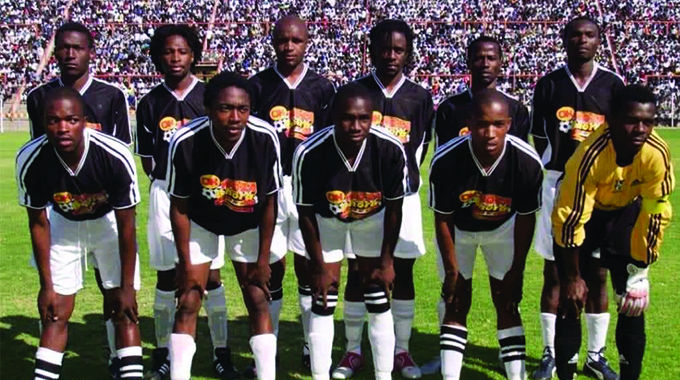
Today, Mwanza is a church minister, occasionally visiting Zimbabwe to see family, including his cousin Lucky Mlilo, the squash and racquets association boss. He still dreams of coaching and polishing his coaching credentials. At Bosso, he’s fondly remembered for his tactical acumen, slow motion glides past opponents, delicate crosses and an uncanny ability to read the game.
There were others too, less impactful but part of the Zambian chapter at Highlanders.
Jones Mulenga arrived in 1998 from Arcadia. Whether as an anchorman or a left back, he exhibited that gritty Zambian spirit. Another Zambian forward came at the end of 2000, intended to replace Zenzo Moyo, who had just left for Cyprus with Joel Luphahla. Though talented, he lacked Zenzo’s commanding presence and didn’t return the following season.
Later came Willie Mutukwa and Kashinga Mulunda in 2004, both failed to make an impression and were widely considered wasted signings.
The Zambians who came to Highlanders weren’t just imports; they were craftsmen, artists, soldiers of the game.
Some became household names, others flickered and faded. But their stories, grit, and artistry added valuable layers to the Highlanders legacy.
Whether it was Chilufya’s engine, Kaindu’s wing magic, Nkhoma’s flair, or Mwanza’s intelligence, Bosso fans were treated to a chapter in football that’s worth celebrating, and remembering.


 derick.khumalo