dyton mupawaenda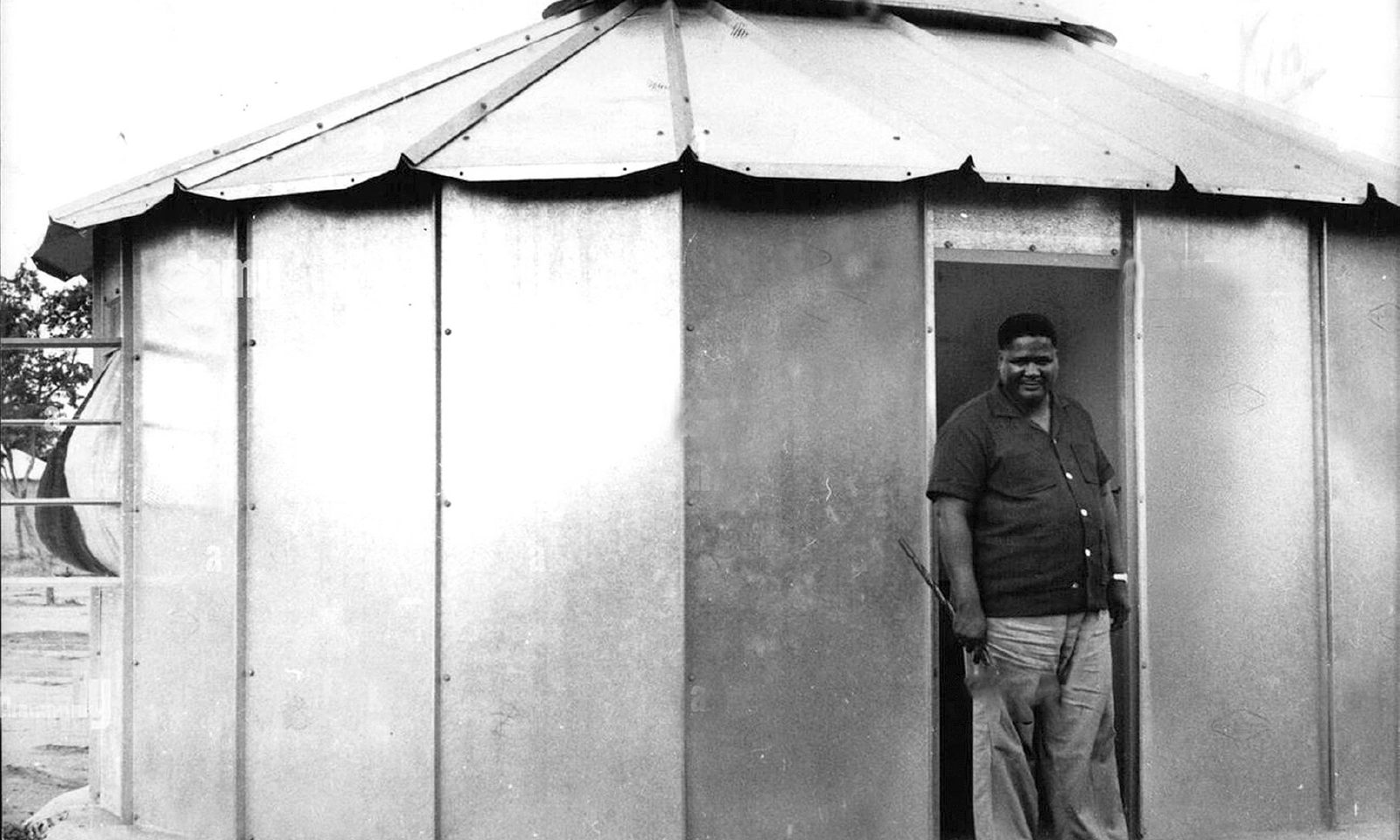
Patrick Chitumba
Midlands Bureau
THE Rhodesian government tried without success to stop the country’s nationalists from fighting for the freedom of the black majority.
They set up detention camps to hold people who inspired the masses to keep fighting but they still could not silence them.
Some of the camps — Sikombela in Gokwe South district, Whawha in Gweru and Gonakudzingwa in Chiredzi district — played a big role in the country’s struggle for independence.
Instead of breaking the nationalists’ spirits, the camps became war rooms to plan ways to overcome colonial rule.
Midlands province was a hotspot for repression and political upheaval during Zimbabwe’s fight for independence.
As a result, detention camps, which became symbols of colonial oppression, became symbols of colonial oppression.
In his autobiography, “The Story of My Life”, the late Vice President Dr Joshua Mqabuko Nkomo, who was held at Gonakudzingwa Restriction Camp, says Ian Smith could not afford to kill them, although he desperately wanted to thwart their activities.
“Ian Smith’s illegal government knew they could not break our spirit. They feared to kill us since that would alienate the few friends they had in the world. They wanted us and the cause we stood for out of the way. So, they shut us up to rot quietly in Camp 5 of the Gonakudzingwa protected area in Gonarezhou Game Reserve,” he wrote.
“There were four of us at the start: Joseph Msika, Lazarus Nkala, Stansilas Marembo and myself. About four months later, the guards discovered that Stansilas was missing; he had gone on a visit to Camp 2.
“The police, using tracker dogs, found him and he was taken away for detention at Gwelo Prison. So, the three of us remaining were together for the next nine years.”
He says the objective was to cut them off from the world.
“To make it forget us and us forget it. But that was not easy. The radios were our lifeline.
“ One was built into the top of a little bedside medicine chest that I made myself during the relatively relaxed initial period of restriction — a little Sanyo, using the same batteries as my pocket torch, so that I could buy replacements without difficulty.
“The other was hung on a pole fitted under the seat of our earth latrine and the guards never found it there,” says Dr Nkomo.
“The paths were patrolled not only by the usual wild beasts but also by our own fierce-looking dogs. It was the dogs that enabled us to keep in touch with the other prisoners. Each camp put out food for the dogs at fixed but different times of the day so they made a regular circuit of the camps.
“We fixed up little pouches behind their collars, so messages passed from one camp to another.
“It was a tragedy for us when the police shot the dogs — but that was not because of the message system, which the guards never discovered. It was because of the names we had given the animals.”
The late nationalist says the conditions in the camp were reasonably tolerable. “The food was the sort of plain diet given to African farm workers — plenty of sadza and some of the sort of low-grade beef that they called ‘boys meat’ because it was especially for black servants. In winter, the camp was cold and in summer the heat was frightful.
“The shade trees had been cut down for a kilometre around the huts, for security, and the only shade was under our grass-roofed shelter. Few used to move around it as the sun shifted,” adds Dr Nkomo.
As the years went by, he says, some of the prisoners started to grow tense, fighting over some of the silliest things.
“We were not just fighting against white people, or for our own black people, but because of our conviction that in the end, we would all have to live together in Zimbabwe.”
Zimbabwe Prisons and Correctional Service Superintendent Thandani Ndlovu, who is the staff officer ( rehabilitation and reintegration) for Midlands province, said the history and journey to an independent Zimbabwe cannot be complete without mentioning these detention camps, where nationalists were held in a bid to stop uprisings against white minority rule.
“It was also at these detention camps where the liberation struggle strategies were mooted.
“It is crucial to note that President Mnangagwa was spared from execution due to his age, and in pursuance to the liberation ethos, he approved the scrapping of the death sentence,” said Supt Ndlovu, who is also the chairperson of the research committee on detention camps and profiling of prominent figures who were detained at centres in Midlands.
He said documentation is crucial in preserving the legacy of those who suffered under colonial rule, ensuring their stories contribute to the national consciousness and inspire future generations.
“By understanding this dark chapter, Zimbabweans can better appreciate the resilience and determination that shaped their nation,” he added.
Torture
Whawha detention camp, Supt Ndlovu said, was established in February 1954 and was the largest and most infamous.
“Here, prominent nationalists, including the late former President Cde Robert Gabriel Mugabe, were held.
“This camp was also known for the brutal torture of Leopold Takawira by the Rhodesian Selous Scouts, or ‘Murder Squad’, who attempted to extract information about ZANU’s military operations,” he said.
Supt Ndlovu said Connemara detention camp, set up in February 1959, was another centre for the severe mistreatment of nationalists.
“Cde Takawira, who was tortured here, later died from his injuries in 1970 at Salisbury Prison.
“We had Gwelo Prison, known now as Box 1, which was operational since 1913 and served as both a detention and sorting centre.
“Figures such as President Mnangagwa and Cde Mugabe were held here before being moved to other facilities,” he revealed.
Supt Ndlovu said Sikombela Restriction Camp in Gokwe South was established in June 1965.
The camp primarily held ZANU nationalists, while ZAPU members were sent to Gonakudzingwa in Masvingo.
“These camps were used by the colonial regime in an attempt to suppress the growing resistance against white minority rule. However, they paradoxically became crucibles for revolutionary strategy and resilience among the detainees,” he said.
Supt Ndlovu added the research they conducted included profiles of several notable detainees.
He said Cde Mugabe, born on February 21, 1924, was detained at Whawha under Prison Number 176/64 at the age of 40.
“His transfer to Salisbury Prison marked a significant chapter in his political journey, eventually leading him to become Zimbabwe’s first post-independence (executive) President. He died in Singapore on September 6, 2019, at the age of 95 and was declared a national hero.”
Dr Joshua Mqabuko Nkomo, born on June 7, 1917, was another key figure detained at both Gwelo Prison and Whawha before being moved to Gonakudzingwa Restriction Camp.
Gonakudzingwa was situated in the Gonarezhou National Park in Chiredzi district of Masvingo province. In keeping with its name, it was an area to which all those deemed unfit to live in a society dominated by whites were banished.
Dr Nkomo died of prostate cancer on July 1, 1999 and was laid to rest at the National Heroes Acre.
Other leaders who were detained at Gonakudzingwa Restriction Camp include comrades Naison Khutshwekhaya Ndlovu, Josiah Chinamano and his wife Ruth, Joseph Msika, Jane Lungile Ngwenya, Sikhanyiso Ndlovu, Chief Mangwende, Njini Ntuta and Willie Musarurwa.
Cde Nolan Chipo Makombe, born in 1932, was detained multiple times at Whawha and other camps.
Known for composing the Chimurenga song “Nyika Yedu YeZimbabwe”, he died in 1998 at the age of 66 after suffering a stroke.
“Cde Canaan Banana was detained under Prison Number 188/78 at the age of 42. His detention at Whawha is a lesser-known part of his story before he became Zimbabwe’s first President,” added Supt Ndlovu.
“Cde Enos Nzumbi Nkala and others, including Sydney Malunga, Fletcher Dulini Ncube, Mark Nziramasanga, Robert Mubayiwa Marere, Rido Mpofu, Chenjerai Hitler Hunzvi, Sikhanyiso Duke Ndlovu and Naison Khutshwekhaya Ndlovu were also among those detained, each with their unique tales of defiance and endurance.”
The ongoing research, he said, aims to not only document these stories, but also establish a liberation struggle heritage site at Whawha, potentially turning part of Whawha Primary School into a museum.
“This site would serve educational purposes, especially with the introduction of the heritage-based curriculum in 2024, aiming to connect the youth with their historical roots and the sacrifices made for their freedom.”


 Online Reporter