


 Online Reporter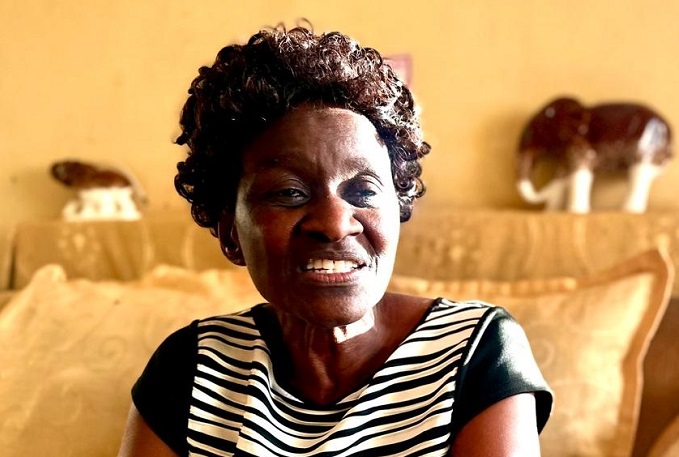
Features Editor
Yoliswa Moyo
ONE evening in January 1977, an agile young girl, perhaps naive, went about her duties as head girl of Manama Mission School as usual.
Entrusted with the responsibility of supervising other learners, this young leader thought little of segregation laws, law and order Acts or land tenure.
But where she came from, there were whispers, mumbling and disgruntlement.
The men, her father included, often slipped away to mysterious meetings whose discussions she never learnt of.
Sometimes, the murmuring was not in quiet whispers.
It was a bit louder, but still, little made sense to her.
It was not until one day in January 1977 when freedom fighters swooped on her school in an operation that would completely change the course of her life that the scales fell from her eyes.
Cde Priscilla Maplanka was the head girl of Manama Mission School in Gwanda district, Matabeleland South province, when three ZIPRA guerillas stormed the Evangelical Lutheran institution on January 30, 1977.
The guerillas got away with more than 400 learners, five teachers, three nurses and a clerk.
One of the teachers is former Deputy Minister of Home Affairs and former Member of Parliament for Zvishavane Cde Obert Matshalaga.
Among the learners were the late Cabinet Minister, Lieutenant-General Dr Sibusiso Moyo; former Air Force of Zimbabwe commander Chief Air Marshal (Retd) Elson Moyo; Matabeleland South Minister of State for Provincial Affairs and Devolution Cde Albert Nguluvhe; as well as Cde Chiratidzo Mabuwa, former Deputy Minister of Industry and Commerce in the First Republic.
On January 5, 1977, a group of ZIPRA guerrillas was first seen roaming around Manama Mission School, some 40 kilometres from the Shashe River crossing point to Botswana.
But this had not been their first appearance near the school.
“When I was in Form Two, around November, I was chosen to be the school head girl. After our end-of-year examinations that year, I was asked to remain at school as there were some learners corresponding, doing private studies. I went home for about two weeks and then back to school as I was going to be responsible for the girls at school. While we were at school that December in 1976, some freedom fighters dressed in civilian clothing came to the school. They asked why we were at school. Kanti lihlaleleni, alifuni kuya empini? We told them we were interested but were not really serious about it, we were just making conversation. They encouraged us to go for training and join the liberation struggle. Savumela phezulu, but we didn’t really mean it,” said the charismatic Cde Maplanka with gusto.
“After speaking to us, they spoke to some A-Level boys and left with them. We didn’t get to know about it until schools opened in January the following year.”
Political consciousness in the country had grown and everything was hush-hush.
However, as rumours of an impending Manama Mission exodus grew, the Ian Smith regime had deployed soldiers to guard the school.
On January 30, 1977, around 5pm, the soldiers abandoned their posts for a beer binge, and three guerrillas with AK-47 rifles were seen jumping the perimeter fence at the school dormitories as learners prepared for their evening devotions.
“In January 1977, some learners were told to go back home to get their school fees but as the head girl, I was asked to stay behind to help the Form Ones settle in. One of my duties was to supervise learners while they ate at the dining hall. On Sundays, we would go to church around 10am and then have prayers around 6pm. On that fateful day, after everyone was done eating, I asked the Form Ones to clean up the dining hall quickly as it was almost 6pm and we needed to go for prayers. While I was still asking them to clean up, I noticed people jumping over fences at the dormitories. Our dormitories were close to the dining hall. Ngisakhangele ukuthi kwenzakalani, abantu bathwele imibhobho. Nangu semile phansi kwami,” she said, still in disbelief of how everything unfolded so quickly that day.
“Lenzani khonapho? Phumani masinyane. Wena ungubani vele? Before I could even respond, someone was hitting the gong, and I hadn’t even noticed it wasn’t one of the learners. We were all ordered out of the dining hall.”
Quicker than one could say Jack Robinson, more than 400 learners had gathered at the assembly point.
As the learners gathered, one of the guerillas asked young Priscilla to show him the principal’s office.
“I walked him to the office. Sengimangele. The safe was opened and all the money was taken out. They asked me where they could find curtains to stash the money, and I showed them the hall. They went and stripped the curtains off and started packing the money away. While all this was happening, all the other learners had gathered in front of the girls’ hostels,” said Cde Maplanka, painting a vivid image of the dramatic incident.
But it was not without a fight.
Two gunshots were heard from the administration office corridor.
The gunshots left two holes, which are still visible.
The long journey
In two shakes of a lamb’s tail, the 40km journey to Shashe River, and ultimately to Botswana had begun.
“We were rounded up, facing the direction of Tuli River. We passed by getting some medicines and went with three nurses. I was carrying a cash box. Kwakutshitshwa ngingakwanisi,” said Cde Maplanka, who was just 16 years old at the time.
“At some point, I pretended to be drinking water and threw away some of the coins to make the cashbox lighter. We walked for what felt like eternity. As we walked, some Rhodesian spotter planes kept hovering over us, so we constantly had to change direction. We walked through the night and only crossed Shashe River around 6am. We were so tired but there was no time to rest. We had passed through the shops, koJapi, and got all sorts of foodstuffs. That added to the load we were carrying,” said Cde Maplanka, describing how they stacked bread and drinks for the road.
Their uniforms had started tearing and their legs could no longer carry them through the rough terrain.
“As we were crossing Shashe, the spotters appeared again; this time flying lowly. The guerillas ordered everyone to lie on the ground. The spotters kept hovering over us until they eventually flew past. We were ordered to get up, and as we did, that’s when some went back home. They remained lying down and eventually stood up to go back home,” said Cde Maplanka.
The Rhodesians would poison water sources, so the learners were not allowed to drink any kind of water.
“We arrived in Gobazhango around 1pm, without stopping to rest or sleep. We had our first meal that afternoon. But before we could really rest, we were told to start moving again. We made about two more stops before a decision to go to Selibe-Phikwe was made as the guerrillas feared for our safety. When we got to Selibe-Phikwe, we were told the Rhodesians were looking for us and it was no longer safe. We were taken to a prison and spent the night there. That was the first time we got out of our school uniforms and got a chance to take a bath,” said Cde Maplanka, expressing some form of relief, which was, however, fleeting.
“Before we knew it, we were headed to Francistown. The following morning, we heard people singing, betshaya itoyi toyi . . . we joined them. There was an address, and we were told we were no longer turning back. We agreed that we were not going back home,” said Cde Maplanka.
The naïve girl from Gwanda had been consumed by the morale of the time, which she said was palpable and felt like nothing she had ever experienced before.
“Even when we were told that our parents were coming to get us, we remained resolute. We were not turning back.”
Training
Cde Maplanka had left Manama Mission with three siblings and a cousin.
They went to Zambia for training, first arriving at Nampundwe Transit Camp, which was primarily meant for boys.
“We were grouped into companies and I was appointed platoon commander. We were given two blankets which we had to share among the six of us. We had to try and flatten the grass so that we could sleep on it. 4am impembe ikhala. We did different exercises which would leave us so exhausted. At breakfast time, you had to eat very fast otherwise you wouldn’t be able to eat properly,” said Cde Maplanka.
“One day, we were told the late Vice President Dr Joshua Nkomo was coming to visit us. We were so excited. After his visit, we were moved to Victory, a transit camp for girls.
“I was appointed detachment commander. Later on, ZIPRA Commander (Rogers) Alfred Nikita Mangena came and asked us to choose between training and going back to school. We chose training. The first 50 people that would go for training were chosen but we were not told when they would be going. We found military training quite fascinating,” said Cde Maplanka.
One day, they heard a whistle blowing and soon after a voice bellowed “Group of 50!”
“We quickly stood up, gathered our few belongings and off we went. We expected to find a camp ready for us but that was not to be. We found ourselves in the middle of nowhere around 9pm. It was just a bush with no amenities. There were no men, and we had to survive on our own. We had to set up tents, a kitchen, toilets and a square for parade.”
Sleeves had to be rolled up, all hands on deck. After all, the war knew no gender.
“We were all equals. We cleared the land, cut the grass, chopped down some trees, dug toilets. That’s when we realised there was no such thing as a job for men. Everyone can do it as long as they are willing,” she said.
This camp was to be known as Mkushi, a ZIPRA women’s wing, which was later attacked by the brutal Rhodesian forces.
The bombing of Mkushi Camp was in retaliation after ZIPRA forces downed an Air Rhodesia Viscount plane as it left Kariba for Salisbury (now Harare) in February 1978.
Cde Maplanka underwent rigorous training, both physical and ideological.
“The physical training was so difficult such that we stopped menstruating. During the war, the comrades were never given a heads up about anything, neither would they ask questions. They just always needed to be ready for anything,” she said.
The discipline inculcated during the liberation struggle still has not left her. She recalled a time when she had to reckon with the “commando pool” after missing a shot on target during a training session.
“The commando pool was a deep trench, almost equivalent to my height. In it was water, izitshwala and all sorts of grime. The stench that came from the pool was horrendous,” she said.
“I had to get into the commando pool as punishment. Soon after that, the whistle was blown and we had to go for a parade. Whenever the whistle was blown, you had to run to wherever the sound was coming from. And there I was in my dirty, wet combat, headed to the parade. I later on changed and took a bath but the smell would still not go away,” she said.
Cde Maplanka developed an interest in nursing and would eventually assist medics to attend to the wounded.
“There was a doctor and whenever he needed assistance, I would be the first one to offer help. But it would get very difficult sometimes and I would ask myself why I didn’t choose to go back home. Some would become mentally disturbed because the pressure was too much,” said Cde Maplanka.
She was among a group that was chosen to go to Libya for nurse training, a moment which filled her with so much pride that still glimmers on her face.
“Our Commander, (Rogers) Alfred Nikita Mangena, came to address us and told us we were going to Libya for further training before starting the field nursing. After training, we went back to Zambia, umumo wawusumubi. Mkushi and Freedom camps had been bombed. We arrived at Victory Camp, where the victims of the Mkushi bombing were. We were moved to Solwezi, where there were also bombardments. A mobile hospital had been set up and that’s where we would attend to the wounded,” she said.
Cde Maplanka recalls the many injured fighters she had to attend to.
“Kwakukubi. We camped at Solwezi General Hospital, where we attended to casualties. We went back to Victory Camp one day to check if we had missed any casualties after a bombardment, and while we were there, there was another swoop. I had to duck for cover in a trench until it was safe to get out. That’s when we then went back to the hospital. It was a very tough year as we could no longer stay at the camps due to the continuous attacks,” said Cde Maplanka, her mood a little dented by the dreary memory.
Advent of independence
Following the Lancaster House Agreement signed on December 21, 1979, declaring a ceasefire, it was time for Cde Maplanka and the other comrades to head back home.
The agreement led to the dissolution of the unrecognised state of Rhodesia.
“We came back with one of our commanders, Lookout Masuku, and arrived in Harare before proceeding to Sierra Assembly Point in Gweru. We couldn’t believe it when we were told izikhali phansi, buyelani ekhaya. We were so happy,” she said.
After the country attained its independence in 1980, Cde Maplanka decided to take up psychiatric nursing.
She has served as a nurse at various institutions, including Gwanda Provincial Hospital, United Bulawayo Hospitals, Tsholotsho District Hospital and Brunapeg Mission Hospital.
Turning to Heroes Day, when the country commemorates the ultimate sacrifice made by Cde Maplanka, the heroes we know and those whose names have never been mentioned, she said: “I don’t regret joining the country’s liberation struggle because it shaped me into the person I am now. I learnt that people can fit into any situation. There is no problem greater than those I experienced during the war. I am grateful to the Government that continues to recognise us, both the living and departed heroes.
“These events bring back memories of the struggle; they give us an opportunity to meet with other comrades and remind us of those who died during the liberation struggle.”



 Online Reporter