Arthur Marara
Point Blank
In the frozen heart of the Antarctic winter, where survival hangs by the thinnest of threads, the emperor penguin has perfected one of nature’s most extraordinary lessons in organisational design.
Thousands of birds gather in a formation so tight, so precisely synchronised, that from above they appear as a single living organism. They pack together until their bodies form a near-perfect shield against the wind.
The surface area exposed to the cold is minimised; the collective warmth is maximised. Any gap, any hesitation, any individual pulling away, would let the cold in and threaten the whole. The huddle works because it is seamless — a single, integrated organism where the boundary between self and collective dissolves.
This is not merely physical efficiency; it is a profound lesson in how organisations must structure themselves to survive their own harsh winters. The penguins succeed because they have eliminated every gap that would allow the external climate to penetrate. They have become, in the truest sense, a superorganism — a collection of individuals functioning as one.
The Cost of Gaps
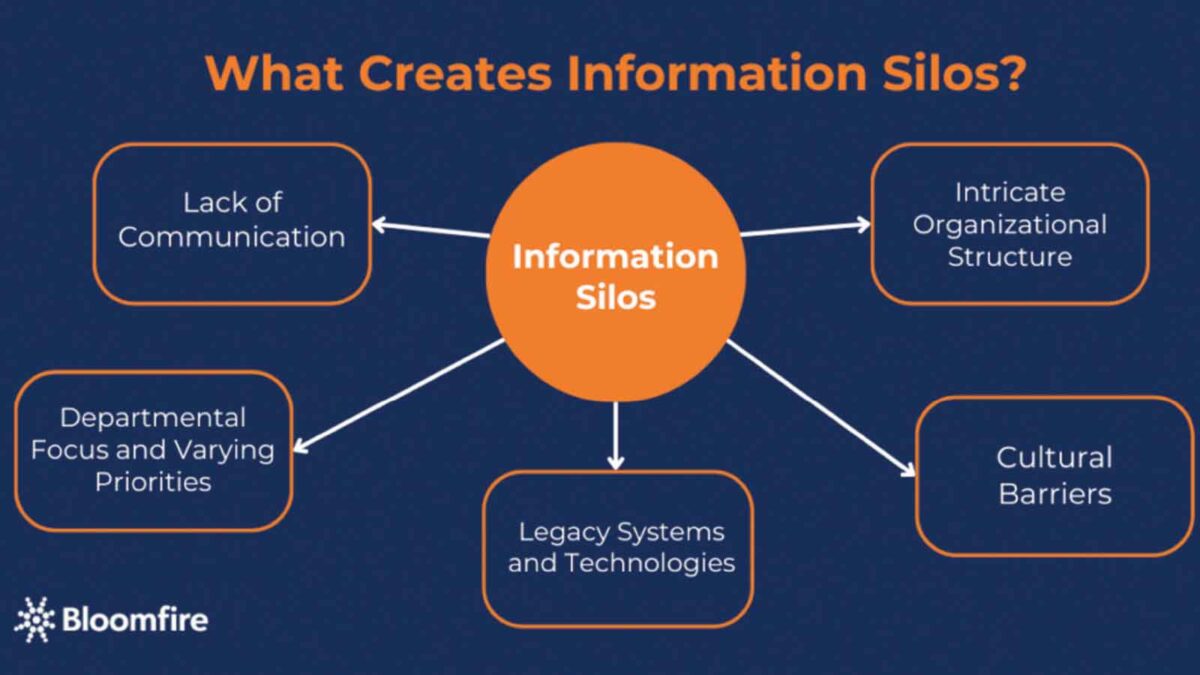
Most organisations are not seamless. They are collections of silos — departments that guard their boundaries, teams that optimise locally, individuals who prioritise their own metrics over the collective mission. Marketing operates in its own bubble, celebrating campaigns that generate buzz but not necessarily revenue. Sales chases quarterly numbers, sometimes promising what operations cannot deliver.
Product develops features that engineering struggles to implement, while customer success inherits the confusion left in the gaps between them. These gaps are not merely inefficient; they are dangerous. They let the cold in.
In stable times, silos may appear harmless. They create clarity of ownership, depth of expertise, and manageable spans of control.
But when the external climate shifts —when a disruptive competitor emerges, when a market contracts, when a crisis demands rapid adaptation — those gaps become fault lines along which the organisation fractures.
Information stops flowing. Decisions stall. Accountability fragments. The cold rushes in through every crack, and the organisation that seemed robust in calm weather disintegrates under pressure. The penguin teaches that true resilience requires eliminating the gaps.
Breaking Down the Barriers
Eliminating silo drag begins with a fundamental recognition: the organisation is not a collection of separate entities with occasional points of coordination.
It is a single system. Every function, every team, every individual contributes to a unified outcome. When marketing and sales operate with misaligned incentives, the customer experiences confusion. When product and engineering work in isolation, what ships is not what was promised. When strategy and execution are disconnected, the organisation moves nowhere with great efficiency.
Breaking down these barriers requires deliberate, structural action. It means creating shared goals that span functions, so that marketing is measured not just on brand awareness, but on pipeline contribution, and sales is measured not just on closed deals but on customer satisfaction and retention. It means building cross-functional teams that own outcomes from conception through delivery, eliminating the handoffs that create gaps in the first place. It means designing physical spaces — or, in a distributed world, digital spaces — that encourage spontaneous collaboration across boundaries, not fortification within them.
When the barriers fall, something remarkable happens.
The organisation begins to act as a single organism. Information flows freely. Decisions are made with full context. Resources move to where they are most needed, not where departmental politics dictate. The cold that once found entry through a thousand cracks now meets a seamless shield.
Aligning incentives with the whole
One of the most stubborn sources of silo drag is misaligned incentives. When a department is rewarded for its own performance regardless of its impact on others, it will optimise locally.
The sales team that closes any deal without regard to implementation complexity is behaving rationally, given its compensation structure. The product team that ships features without regard to supportability is responding to the metrics it is given. The gap is not a failure of character; it is a failure of design.
The penguin huddle offers a different model. Every penguin’s survival depends on the integrity of the whole. There is no incentive to pull away, because pulling away means death. In the same way, organisations must align incentives so that what is good for the whole is rewarded, and what harms the whole is not.
This means creating shared success metrics that cut across departments. It means compensating leaders not just for their own team’s performance, but for their contribution to cross-functional outcomes. It means building a culture where the question is not “Did my department hit its numbers?” but “Did we, as one organisation, achieve our mission?”
When incentives align, behaviour follows. The salesperson thinks twice before promising what operations cannot deliver. The product manager consults customer success before finalising a roadmap. The engineer considers not just elegant code but maintainability and user experience. The organisation begins to move as one, because the interests of each are bound to the success of all.
The seamless organisation
When the external climate turns harsh — and it always does — the organisations that survive are not those with the strongest individual departments. They are those with the most seamless unity. They are the ones that have eliminated the gaps, broken down the barriers, and aligned every part toward a single purpose.
This is not about sacrificing individuality or suppressing healthy debate. The penguin huddle is not a mindless mass; it is a dynamic system of mutual obligation. Penguins shift positions, take turns at the edge, and rely on one another without losing their individual identity. But they have internalised a truth that many organisations forget: no one survives alone.
The question for every leader is whether you have built an organisation that can close ranks when the storm hits. Are your departments a collection of fortresses, or are they one integrated shield? Do your incentives reward the whole or merely the part? Have you eliminated the gaps that let the cold in?
The penguins have answered these questions over millennia of Antarctic winters. Their lesson is simple, brutal, and essential: unity is not a virtue; it is a survival mechanism. When the temperature drops, the gaps close — or the organism perishes. There is no third option.
To be continued next week . . .
Arthur Marara is a corporate law attorney, keynote speaker, peak performance, and corporate strategy speaker. With his delightful humour, raw energy, and wealth of life experiences, he captivates audiences and inspires them to unlock their full potential. He is also a leadership expert with extensive experience in leadership development and coaching. He is passionate about developing effective leaders and empowering individuals and organisations to achieve their full potential. Through his engaging talks and workshops, he imparts invaluable insights and practical strategies that empower individuals to lead with confidence and make a lasting impact. Arthur is the author of “Toys for Adults,” a thought-provoking book on entrepreneurship, and “No One is Coming,” a book that seeks to equip leaders to take charge. Send your feedback to [email protected], visit his website www.arthurmarara.com, or contact him at +263772467255.