daniel chigunwe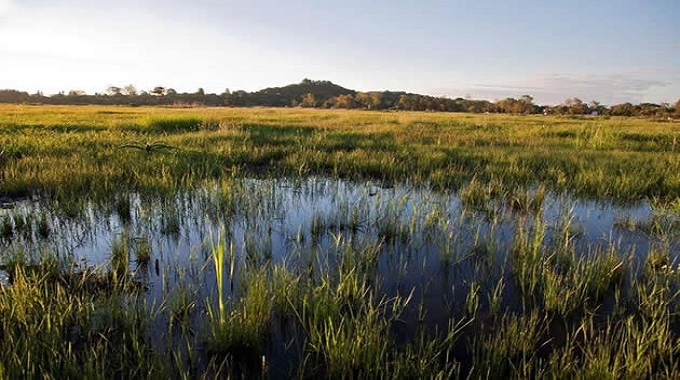
The Wetland is an ecosystem that is flooded by water, annually or seasonally, and the place where oxygen-free processes occur.
The main roles of Wetlands are water purification, water storage, processing of carbon and other nutrients, support of plants and animals. Wetlands are constructed to treat municipal or industrial wastewater, greywater or stormwater runoff, and many other causes.
So here are 10 things which you must remember while designing for Wetlands.
Conservation of ecological character
The Wetlands play an important role in the local economy and lifestyle of the people. Every wetland is unique in its way and has some key factors that drive the wetland.
So, it is very important to understand the wetlands ecosystem, the importance of the wetlands, flora, fauna, soil type, biological impact, geography, and climate. Studying all these factors will lead the designer to understand the specific needs of the wetlands.
The wetlands are located on the East of Kolkata and is spread over 12500 hectares. It plays a key role in the economy and lifestyle of local people by treating the city greywater, wastewater, and stormwater and hence it lowers the requirement of STP of the city and also helps to keep Ganga river (which flows through the heart of the city) water clean.
The vegetation and fisheries of EKW also help the city to Kolkata to get self-subsidised food. So, the EKW treats the city’s wastewater and in return gives food and employment to local people.
Recent research shows from 2002 to 2016, the waterbody has reduced from 88 percent to 19 percent, so a designer while designing for a wetland must understand how the design is impacting the wetland.
Look for an innovative approach
While designing for the wetlands, a designer must look for an alternate approach, a more sustainable and green approach, and an approach that will enhance the ecological character of wetlands, make it function better and may give an alternate source of income for the people.
The wetlands consist of two lakes, the Bhojtal (the Upper Lake) and the Lower Lake. Over the years the lakes have faced threats like reduction in water storage capacity, obstruction in smooth water flow from Upper to Lower lakes, deterioration of water quality, and many more problems.
To stop these threats steps suggested are the creation of a buffer zone between city and lakes, catchment area treatment, solid waste management, etc.
Some of the innovative steps are the promotion of organic farming in wetlands, control of idol immersion activities and control of motor boating.
Culture and lifestyle of local people
The culture and lifestyle of local people hugely matter while designing for wetlands as they are the drivers of the wetlands.
The designer must address the lifestyle, problems of the people, and understand their socio-economic condition to make the design work.
Loktak lake is the largest freshwater lake of North-east India and it is famous for its phumdis that float on the lake.
The lake helps hydropower generation, irrigation and drinking water supply. The fisherman stays on the phumdis to catch fish and it is their livelihood for generations.
So, while conserving the lake, keeping in mind the lifestyle of people and utilising phumdis, the place is made a tourist spot with well-connected roadways and where they can stay in phumdis and see the wonders of nature.
Separate conservation commissions are also made in an approach to conserve the lake from threats like soil erosions, loss of flora and fauna, etc.
Integrate the economic benefits of wetlands with urban design
Remembering all the aspects the designer must look after how the benefits of the wetlands will affect the nearby urban developments.
There are ways to include wetlands as natural infrastructure in urban planning, treat wetlands as key elements within urban water management infrastructure, and essential components in providing water resources.
The wetland covers an area of 4600 hectares which provides food and habitat for fish, shorebirds, and wildlife; maintains and improves the water quality of rivers, lakes, and estuaries, acting as a reservoir for watersheds, and protects adjacent and downstream properties of the area from potential flood damage.
The Integrated Coastal Protection Strategy aims to provide safety and create economic value for one million people.
The project combines nature-based infrastructural solutions to render the area ‘future proof’, following the Building with Nature concept. This project is done for Tacloban City and Metro Manila area and shows how to integrate the benefits of wetlands and urban economics.
Integrate the landscape of wetlands in urban design
Making a Wetlands a part of urban design is what increases its sustainability and importance and also awareness about wetlands can be made at the same time. The landscape feature will allow a large green space to the city and may be used and maintained by the public.
This is the first and unique project in the world where the wetland is made in collaboration with private and government agencies.
The disused privately owned water reservoir is converted to wetlands, housing, and other amenities.
The centre allows visitors the chance to see beautiful wetland wildlife just a short distance from central London. In 2002, the project came to be known as the Site of Special Scientific Interest for its national importance.
The design must be species-specific.
While designing for wetlands, the designer must know which species are locally available and is adapted to the climate the wetland is in.
It is also important to choose some donor wetlands from where the same species of reeds and vegetation can be brought.
Dipor Bil is a permanent freshwater lake of 4000 hectares, formed from the channel of Brahmaputra River. It is declared as wetlands by Ramsar Convention for its biological and environmental importance.
The species that are found are Ipomoea reptans, Otteliaalismoides, Lemna minor, Azollapinnata, Spirodelapolyrhiza, Eleocharis plantaginea, and many more. So, while designing for this wetlands these species must be included as per function and requirement.
Hydrodynamic design of wetlands
The designer must be aware of the hydrodynamics of the wetlands and the design. Hydraulic load rate (HLR) and Hydraulic Retention Rate are some of the important concepts when considering wetlands design and whether the wetlands are sustainable over time.
As if not properly designed then ongoing operational and management problems occur and do not provide the water quality treatment as expected.
Heart Butte Lake is located in Grant County, North Dakota, United States. This lake is developed by the United States Bureau of Reclamation. During the project, they tried to conserve flora and fauna of the place and also looked for construction of wetland in a part of the lake.
Design with ease of maintenance
Maintenance of the Wetlands is an important part of wetland designing. The maintenance must be cost-effective and must be easily accessible.
Some of the steps like access to hydraulic structures and building a track between the sediment pond and dewatering area capable of supporting large vehicles may help for better maintenance design. — re-thinkingthefuture.com



 Online Reporter