admin
admincountry in Africa, I shouldn’t be here”, was one of the thoughts going through my mind.
I knew I deserved to be at the Olympics because I had qualified. But I come from a place that doesn’t have many opportunities, a place that doesn’t have the financing that the First World countries have.
I was wrong, anyone can go to the Olympics if that is their dream and they follow through with the work it takes.
This was my first Olympics, I was 17, and my best ranking at this Olympics was 12th. I was the 12th fastest person in the world!
The Olympic Beetle had bitten me and I was heavily intoxicated.
Sacrifice, toughness and reward after
the Olympic Games in 2000
I received a scholarship to Auburn University in the United States. This facilitated better training because I was able to race against people who were either of my caliber or stronger — most of my age-group back home had quit swimming.
I was in university now and this meant studying came first because if my grades went down, I would be off the team.
I never sacrificed studying. I was able to manage my time between sport and studies. I wanted to go to Athens but I wasn’t interested in the “Wow” factor anymore — I wanted to win.
I wanted more, so I did more.
I trained harder than ever in the pool, I pushed it harder in the gym, I sweated, I suffered, I sacrificed partying, I sacrificed a social life, I sacrificed relationships, I sacrificed weekends and because of this I made it to Athens.
I didn’t want to come 12th again; I had put too much work into this.
My first Olympic medal was silver, and I was overjoyed. I pushed harder in my next event and got bronze.
This was incredible, two medals at an Olympic Games.
This gave me the confidence I needed and I put everything into my last race. Finally I got what I came for, gold in the 200m backstroke.
Words cannot do justice to the emotions you feel when you stand on the podium.
I left Athens thinking, “I can do this” but I still wanted more.
In the Beijing 2008 Olympic Games I pushed it hard and got silver in my first event. I pushed it again and got silver in my second event. I pushed it even harder and took silver in my third event.
I could have stopped there, I could have been happy with getting three silvers or four if I had that mentality in my final event, but I didn’t, I was determined to win.
I went on to win gold and break the World Record in the 200m backstroke.
It was only now, after winning gold that I understood how tough an athlete needs to be.
When I talk about toughness, I don’t mean “how big your muscles are”! I mean completely: you have to be mentally strong (focused and confident) and you have to be physically strong (aerobic and anaerobic).
This is when I also realised; everybody tries his or her best at the Olympics.
Everyone is at his or her peak physical condition and in a state of mind that is superior to any other point of time in his or her life.
Everybody that is going to be in this upcoming race is going to do their best, everybody who has just completed an event did so with their best effort. It’s not simply because you tried your best that allows you to get to the Finals, or to get onto the podium or to achieve gold, if this was the case, every athlete at the Olympics would be standing on the podium. It’s the four years of training you’ve put into this one chance you have finally received. It’s the four years of sacrifice you have given to get to where you are.
It’s the four years of readying yourself for this moment. This does not happen two weeks before a Games, it does not happen a year from the Games. It does not start four years before a Games, it starts when we are young.
Responsibility in our early years
It is the responsibility of our parents to encourage us; it then becomes the responsibility of our teachers and then, our coaches. We are forever building a foundation for the next teacher or coach.
All of this responsibility needs to be encouraged and this emanates from our sporting bodies like our city clubs, our regional clubs, our national organisations, Olympic committees and ministries.
These are the people responsible for promoting talent and providing opportunities to our athletes.
Pressure getting to an Olympics is not easy.
Once you have got to the Olympics, the added pressure of being around every top athlete in the world is immense. This makes it even more difficult to get to the semis.
You have to remain calm; you have to trust your training. You have to slow yourself down in the beginning of the race when every muscle and adrenal gland is telling you otherwise.
Then, if you have worked hard enough and think you have swum your hardest race ever, you make it to the Finals.
The pressure is huge.
Now you realise the world is watching you and your chance of getting gold has gone from 22 million:1 to 7:1.
You are going to go through the same feelings you did in the semis and your body is going to tell you the same thing it did in the semis, “Go, Go, Go”.
It feels like everybody in the crowd is shouting for you.
You know your entire country is watching and your heart is racing.
You are completely alone.
You do not have a team to lift you up if you have a bad start, you do not get a timeout when something is not going your way, and you do not get a second chance.
Swimming gives you one chance and only you as the athlete are responsible for what happens next.
Minimise stress — maximize
performance
The Olympic Staff need to minimise stress on the athlete and maximize support.
The athlete knows how important winning is so there is no need to batter the athlete with the importance. Remember the Olympics are about competition between individuals and teams, not between countries.
Choose to rather encourage them with your support and well wishes. Don’t put added stress on the athlete by making them attend stressful interviews or pointless meetings — you have got to leave them alone.
The Olympic Staff need to remain calm as this will help ensure the athlete’s state of mind remains focused.
Talking to the athletes prior to going into the (Games) Village is a good idea.
Discuss what they can expect as well as the different stresses and emotions they will be going through. This will help reduce the athlete’s anxiety, minimising their stress, keeping them focused and confident.
Positivity and support
This Olympics is going to be my toughest one to date. Not only am I older (28 years old) but this year has also seen three different circumstances affect my training schedule.
The first of which was to do with my coach in Europe. He failed to follow through with his promises. Only six months before the Olympics I had to adjust and move to the US where my old coach is based. This was a much better move because of the close relationship I have with her. This is important because of the level of trust I required and her understanding of how hard she can push me in training.
The second mishap occurred during one of my training routines in the gym: I was doing some running work and my kneecap dislocated. This was in March (four months before London 2012). I again had to make a plan to continue training and I did.
For three weeks I swam in one spot, on the end of a bunji cord with my legs tied together to prevent my knee from moving!
As the rehab and time allowed my injury to heal, the final third incident occurred – I was rushed to hospital at 3am on a Saturday morning with pneumonia.
This was in the middle of May (77 days before London 2012).
The emotions I went through taught me to adjust quickly but plan ahead. You can never expect things like this to happen but you have to ensure this does not stop you from competing. Sometimes it is unavoidable.
Ngoni Makusha is a long jumper and 100m sprinter from Zimbabwe who was expecting to do very well at London 2012 but will not make this Olympics because he ruptured his Achilles tendon in May.
He was not doing anything different, he wasn’t over training, he was doing what he always did and got injured.
This happens and this is when it is important to stick behind your athletes because if they are anything like Ngoni, they are going to recover, and come back better than before.


Online Reporter
- Herald
- October 4, 2026
- 8 views
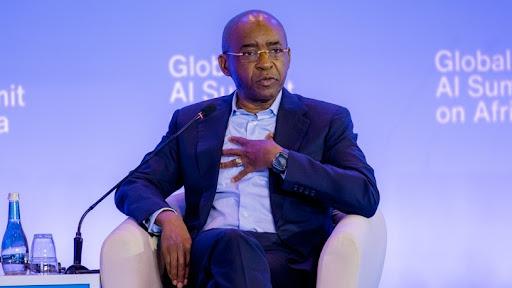
Masiyiwa’s Cassava supercomputer ranked 36th in the world
Herald Correspondent AFRICA has secured a place among global leaders in artificial intelligence computing after a Cassava Technologies supercomputer based in Cape Town was ranked 36th on the TOP500…