admin
admin
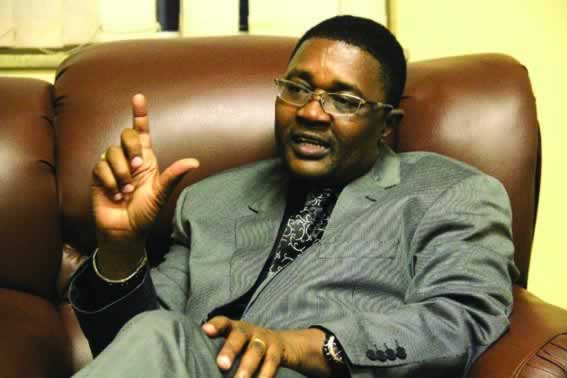
Zimbabwe and Zambia today start the long-awaited co-hosting of the 20th session of the United Nations World Tourism Organisation General Assembly in Victoria Falls. Our Features Editor Isdore Guvamombe (IG) spoke to Tourism and Hospitality Industry immediate past minister Walter Mzembi (WM) about this and other issues.
IG: The day you have been working for to co-host the United Nations World Tourism Organisation General Assembly has finally come. How does it feel?
WM: It’s like giving birth. We have been pregnant for two years that is since, September 2011 and it is almost like a baby elephant that we are giving birth to after lots of preparation, rehearsal, benchmarking with previous hosts of this exclusive honour of hosting the general assemblies.
The history is that there have only been 19 General Assemblies in the past since the inception of the UWTO. It’s a very old organisation having started as far back as 1929. However, in 1975 that is when it was formerly inaugurated under the auspices of the UNWTO with Madrid, Spain as the Headquarters.
Madrid hosted the First General Assembly and which I can almost assure you that even though I was 11 years old myself, that would not come near what we are going to showcase now so many years later.
IG: How different is our event going to be from others held before?
WM: We want to uniquely branch and set ourselves aside from other general assemblies, we are not copying what other people have done, but we are just merging and evolving with our brand of a general assembly, uniquely African as it were.
IG: How have been the preparations until the last day?
WM: The preparations? That stage is gone, whatever we have not been able to do from September 2011 to date, we could not cover now that lost ground, but on a scale of one to 10 as I shared with President Mugabe in my second last brief before he comes here, we think we are nine out of 10 in terms of what we sought to achieve in terms of preparation so that we could host the General Assembly.
IG: How has been the response of other countries in terms of sending delegates to the Victoria Falls UNWTO General Assembly?
WM: That is a very pertinent question because the success of any General Assembly is measured by the response by delegate member countries and in the books of UNWTO, which I am privy to because we are in the executive council we have 155 members, 186 is when you start including other observer states or those that are in the process of applying, and the response is 147 out of the 155 member states.
But I have no doubt we will have other people walking in to do on side registration and accreditation for this General Assembly. So it has been a huge success a record breaker not by my own admission, but by the admission of the secretary general himself Mr Taleb Rifai, who has since endorsed it as the most successful yet of the General Assemblies in terms of delegate or country turnout.
IG: Mr Rifai confided in you when he arrived on Thursday afternoon. What is his impression so far?
WM: His first impression was amazing. Obviously he was marvelling at the peace and tranquility in the country especially for a destination that is coming post-election. His views are even imposed more by my colleague minister across the border, Ms Sylvia Masebo when she came here for our golf tournament in commemoration of this event quipped to say that Zambia looked more like it was itself coming out of an election than Zimbabwe because we moved on almost 24 hours later, we could not tell that there was an election in Zimbabwe except for the competing parties collateral in the form of posters.
It is the only thing that reminds you that there was an election in Zimbabwe; it is uncharacteristic post-election destinations to be so tranquil and peaceful. This is God-given as it were because it has set the tone and the ambiance and environment for the hosting of the General Assembly.
IG: The question of how different our hosting is from previous ones, still needs clarity.
WM: It is different to the extent that we have made it people-centered. You know General Assemblies by their very nature are policy conferences but if every country seeks to do or wants to maximise to its best what issues are challenging or confronting it at any one particular time, for example if you took the republic of Korea and Kazakhstan, which successfully were the hosts for 2011 and 2009 respectively you will find that there were seeking different objectives for intending to host in their destinations.
In the case of the republic of Korea, certainly it was not the image issues, the perceptional are confronting Zimbabwe, they had other issues of enhancing their product as a destination, particularly for Korea I know that is what they were trying to achieve with the general assembly.
With Kazakhstan a whole new city had emerged and they wanted to showcase it. They were building ad infinitum without stop, but the general assembly was meant to pitch at a level where it would invite quality immigration into the country for settlement and investment.
IG: What about ours?
WM: Obviously we have perception challenges that have confronted Zimbabwe and we seek brand and global endorsements for brand Zimbabwe especially after successfully launching Zimbabwe a World Of Wonders, we had not quite gotten to that stage where we received global endorsement. The general assembly will assist Zimbabwe get the global endorsement.
IG: The ordinary person would ask, what is there for Zimbabwe? Why the hype about UNWTO?
WM: Though the opportunity is there for everyone to see, you have seen the difficulty in trying to navigate the three-kilometre carnival parade you can see that the public is very much connected to the event, but other than that here in this destination, we now have what we refer to as UNWTO rates only for designated hotels and lodges, but we have gone above the 3 000 rooms that we had set aside for the two host countries.
IG: What is there for the ordinary person?
WM: We have had to go for home hospitality were we are asking locals to give up their homes for delegates, so in this case it has actually spilled over to locals in both Victoria Falls and Livingstone where they are actually enjoying the event taking place. But more importantly, if you look at the infrastructure, you can see that roads have been upgraded, there have been hospital make-over, the shops have been spruced up, but that aside the enabler side of energy and water and sewage has really transformed the city in the past few years.
I must also refer to the two airports where the Livingstone International Airport was completed on time to international standards and our Vic Falls International Airport is also following and is going to be a US$150 million expansion upgrade of the international airport.
Tourism is only tourism when people arrive, if they don’t arrive there is no tourism to the extent that we are conscious that 51 percent of the world’s arrivals, arrive by air we have seen it fit to upgrade the Vic Falls International Airport. Going on to the issue of destination internet connectivity where both cities Livingstone and Vic Falls are now declared Cyber cities meaning that wherever you are you are on a hotspot, you can access and be accessed. And for a traveller that is their number one source of security, the ability to land in a destination to Whatsapp, to connect Facebook and to connect internet gives comfort to our visitors.
IG: Zimbabwe’s perennial critics, the British, The Americans and the Canadians are they members of the UNWTO?
WM: No they are not members of the UNWTO and they should not seek mileage out of an event that they are not substantive members we however, notwithstanding welcome their source of arrivals into the destination. The British one has not recovered that much. We are actually very happy with arrivals from US, Canada, Australia and Spain.
They are doing very well; they are doing far better than British arrivals into this destination. We are also conscious of the fact that the UK is hosting a lot of our citizens whom we are now going to target for diasporan tourism. The moment we start flights between Harare and London and Gatwick we obviously have to think outside the box and format special packages for Diasporans who want to come back home and visit places like Victoria Falls, Hwange, and Eastern Highlands.
These are almost like new products to them because they are at a stage where they are now able to plan for a holiday which they were not able to do in the past and we must plan for them. The success of any tourism plan going forward is a function of a viable middle-class. If you are planning in an economy where the middle-class is disappearing then you cannot have a successful domestic tourism product, so I am hoping post-election with our manifesto in the party Zanu PF campaigns we are able to reach a stage where we can raise a new middle class that go for domestic retreats and holidays, but also catching them young and making sure that our curriculum at primary and secondary school level begins to speak to the travel and tourism product, giving the child the exposure he/she needs through travel.
IG: Finally, having been appointed Minister a few years ago would you want this event to be your legacy?
WM: It is certainly the legacy of the one who appointed me, President Mugabe because if I had not been appointed Minister, if somebody had not spotted me, if the people of Masvingo had not given me the opportunity to serve them as constituency MP I would not have been noticed for deployment by the President.
But more importantly it is the legacy of the President himself who designated tourism as one of the four pillars joining manufacturing, agriculture and mining and going forward to support it in the way that he did when he appended his signature to the golden book of tourism meaning that he was saying I support tourism not only be designating it as a stand-alone ministry but you can’t always ask the President to fight or box in your corner. Once he has done that he has sent you to go and you must go there and fight and advocate.
Even within the limited fiscal environment and difficult political environment you must find space for that sector which you were appointed to. We cap off this legacy that you are referring to by having been in the executive council for the last four years with our assumption of the co-presidency of the 20th General Assembly which we will get on Monday morning together with Zambia and it will run to 2015 when the next hosts for the 21st session shall be receiving us, maybe Cambodia.
We are routing for Cambodia, it maybe Colombia but we are routing for Cambodia and hence when we look at the programme we see that there is a Cambodian night on the Zimbabwean side and we are hoping that it can go that route were we can assist them with the 21st session hosting.
Other than that Zimbabwe is also in the running for the chairmanship of the UNWTO African Commission. Tomorrow the meeting of the African Commission of the UNWTO which is on the Zambian side, we are hoping to emerge there with a chairman and two vice chairs and Zimbabwe is in the running for the chairmanship of the Africa Commission.
IG: What will be there for us as Zimbabwe in the African Commission of the UNWTO?
WM: We believe that we have sufficient experience and wherewithal to lead African Continental tourism politics on the back of our being in the executive council for the last four years and that experience that we have gained along the way should not be lost but should be used by Africa to place the agenda of a double-digit market share by 2020 for the tourism sector, which is generating US$1,3 trillion directly as income and as GDP part of US$6 trillion but Africa’s share is nine percent. If we assume the chairmanship, my agenda would be to drive the continent towards double digit by 2020 and we will set that agenda at the Africa Commission meeting tomorrow.


 Online Reporter