admin
admin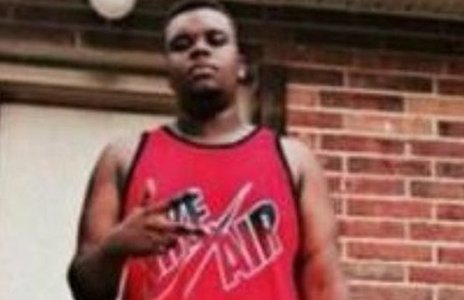
ST LOUIS. — Protests over the August 9 killing of Michael Brown, an unarmed black teenager, continue to grow as thousands of people from all over the United States descended on greater St. Louis to take part in a weekend-long series of events and marches demanding “justice” for the killing. Events in what one student called “the epicentre of the movement against police brutality” have transformed since the violence of the immediate aftermath of the shooting into a more sophisticated, but often edgy and raw, strategy where protesters are fanning out to civic events like the St. Louis Symphony Orchestra and sporting events, including this weekend’s baseball playoffs featuring the St. Louis Cardinals.
What has been billed by organisers as a “weekend of resistance” is part of an evolving protest strategy as the country awaits a grand jury verdict. A grand jury has mulled for more than two months allegations that Officer Darren Wilson shot Brown even though the teenager had his hands up in surrender. Before the shooting, Brown, police say, had punched Wilson, tried to grab his gun, and then run away.
The new wave of increasingly organised protests are also serving as a stark warning to authorities that only an indictment will be accepted by the community. City officials are taking those warnings seriously, as they’ve already laid plans to respond to any potential outbreak of social unrest.
The delay in the verdict, some critics say, is by design, to out-wait the crowd’s patience.
“Clearly the hope has been that passions would calm if the authorities put some time between the shooting and the verdict. But the opposite has happened,” writes Gary Younge, in the British newspaper, the Guardian.
Last week, protesters exchanged sharp words with baseball fans at a Cardinals game, and days earlier, protesters interrupted a performance by the St. Louis Symphony. While some in the symphony audience applauded a sung requiem for Brown, some Cardinals fans responded to the protesters by singing, “Let’s go, Darren.”
On Wednesday, fresh protests erupted after an off-duty but uniformed St. Louis policeman shot and killed another black teenager, whom police say fired at the officer before being killed.
The teenager, Vonderrit Myers, Jr. was wearing an ankle bracelet at the time, as he was awaiting trial on weapons charges, and forensics and a recovered handgun confirmed that he fired first, police say.
While there are stark differences between the Brown and Myers shootings, the sight of another young black man dead at the hands of police on the streets of greater St. Louis helped add fuel to this weekend’s planned protests, which kicked off Friday.
Charles Cooke, writes in the conservative National Review that scrutiny of police must be “relentless and thorough. ” But he adds, “Surely we cannot afford to reach a point at which it is presumed as a matter of course that all bloodshed is unnecessary . . . and that every incident in which a white police officer shoots a black citizen is indicative of latent racial animosity.”
On Friday night, there were protests in Clayton, Missouri, where Wilson would be tried if he is charged, as well as outside the Ferguson Police Department, where protesters yelled obscenities at police in riot gear. There were no arrests and no reported violence, but protesters were warned they’d be arrested for assault if they touched a police officer physically. —Christian Science Monitor


 Online Reporter