Andrew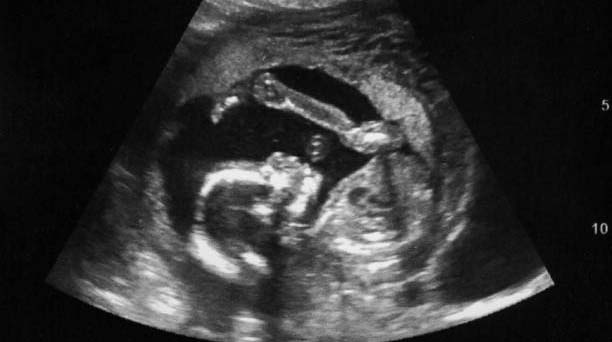
THE use of ultrasound in pregnancy was originally designed to help monitor the status of complicated or high-risk pregnancies.
Today, ultrasounds are considered a standard facet of prenatal care.
While ultrasounds can provide doctors and midwives with valuable insights into how a pregnancy is progressing, there are times when the results may either be misleading or inaccurate.
An incorrect pregnancy date
An ultrasound technician, known as a sonographer, will look for certain features during the different stages of a pregnancy to determine if things are proceeding as they should.
If the technician is unable to find that feature, it may be the sign of a problem. Or not.
For example, if a woman is seven weeks pregnant and the ultrasound does not reveal a foetal heartbeat, there may be a moment of panic but the explanation could actually be quite simple.
It is possible that the dating of the pregnancy is off, and you are not nearly as far along as you thought. In such case, the doctor or midwife may order another ultrasound in a week.
In the end, the pregnancy could be just fine, and all that is really needed a simple recalibration of the date.
Technician error
Ultrasound technology has been greatly simplified in the past decade but still requires skill to obtain an accurate result.
While most technicians have the necessary training to perform an exam, some, quite simply, are better or more experienced than others.
While there has been no actual research into this effect in obstetrics, a study into the use of ultrasound in an emergency setting showed that errors or missed diagnoses occurred in anywhere from eight to 10 percent of cases.
Obesity
Being overweight can make it difficult — and, in some cases, impossible — for a technician to get a clear ultrasound image.
This is especially concerning since obesity is associated with an increased risk of foetal birth defects (including heart and gastrointestinal abnormalities) and such pregnancy complications as pre-eclampsia and postpartum haemorrhage.
Studies have shown that obesity (defined as a body mass index of over 30kg/m2) reduces the likelihood of an accurate reading by nearly 50 percent (37 percent versus 19 percent) compared to women of normal weight. — Online Sources.



 Online Reporter