Vusumuzi Dube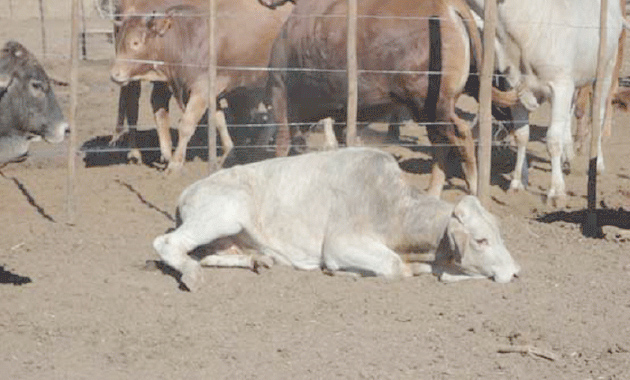
Tick-borne diseases and theileriosis have been the leading causes of animal deaths in the country over the past few years, the Directorate of Veterinary Services (DVS) has said.
In a statement to mark its state of preparedness to ensure that the livestock sector is adequately protected ahead of the approaching summer season, DVS chief director, Dr Pious Makaya said the major challenge was the increase in outbreaks of vector-borne diseases, with tick-borne infections topping the list.
“The other three major tick-borne diseases causing animal deaths are Gall Sickness, Redwater and Heartwater,” he said.
He said in order to effectively control ticks and tick-borne diseases (TBDs) they transmit, the DVS has adopted the Integrated Tick and Tick-Borne Disease Control Strategy (ITTBDCS) whose cornerstone is strategic dipping, where dipping activities are being complemented by acaricide resistance monitoring and weekly dipping in the summer season.
Under the strategic dipping approach, Dr Makaya said tick resistance profiles to specific dipping chemicals are continually evaluated to ensure effective cattle dipping.
“The use of Tick – borne Disease vaccines against Theileriosis (January Disease), Anaplasmosis (Gall Sickness) and Babesiosis (Redwater) is one of the key components in the implementation of the ITTBDCS.
“In this regard, DVS has stocked adequate dipping chemicals for the entire country to ensure weekly dipping during the summer season,” he said.
He said his department has also adequate stocks of tick grease for distribution to cattle farmers under the Presidential Blitz Tick Grease Program, to complement cattle dipping targeting one million households in the upcoming summer season.
In an effort to revamp the country’s dipping infrastructure, Dr Makaya said the directorate will also be carrying out an Accelerated Dip Tank Rehabilitation Program before the onset of the rain season.
This year, a total of 5000 dip tanks have been earmarked for rehabilitation with 396 having been completed whilst more than 350 000 doses of January Disease vaccine (BOLVAC), 100 000 doses each of the Redwater and Gall Sickness vaccines are targeted for the 2024/2025 summer season, he said.
The Directorate will also continue carrying out Tsetse fly and Trypanosomiasis disease surveillance targeting 12 500km2 in the tsetse infected and high-risk areas this summer season, said Dr Makaya.
“A total of 17 800 tsetse targets and tsetse odour sachets will be deployed 445 km long from Kariba Lakeshore in Mola to Mututa Basin in Mbire District. “A total of 4 200 square kilometers has been targeted for the progressive tsetse trypanosomiasis elimination this summer to reduce the burden to affected communities,” he said.
New Ziana



 Online Reporter