admin
admin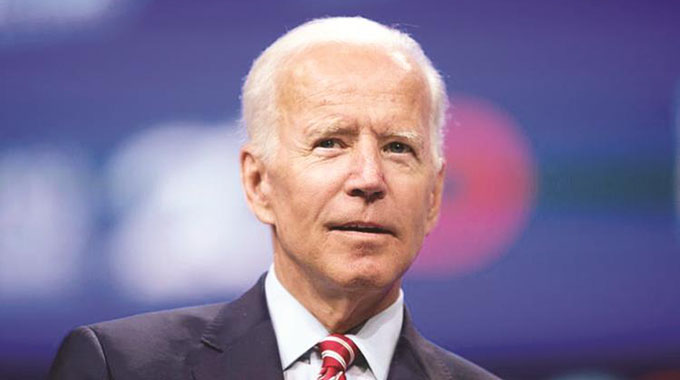
Tafara Shumba
The US House of Representatives on Saturday passed a Bill that seeks to force a Chinese company, ByteDance, to sell its stake in TikTok within a year.
According to the Bill, if the company fails to do so, it will face a ban in the US.
The US accuses the Chinese company, without evidence of course, that TikTok shares US user data with the Chinese government or tinkered with the company’s popular algorithm to influence what Americans see.
The Senate is set to vote on the bill this week as the Bill is on the fast-track to becoming law.
The US president, Joe Biden is in support of the effort and has already publicly expressed his readiness to sign the bill into law.
The intention to ban TikTok exposes in a big way, the double standard of the US. It holds other countries to high standards while not always meeting those standards itself. This has gravely undermined its credibility globally.
The US does not practise the democracy it generously prescribes and preaches to other countries.
Since the fall of the Berlin Wall, the US has been engaged in preaching and teaching democracy to other countries.
The US is currently gobbling upwards of US$600 million per year in promoting democracy across the globe. Countries such as Zimbabwe, Cuba, Iran, Russia, Syria and North Korea were sanctioned by the US over issues of democracy.
However, here is the so-called doyen of democracy trampling on the rights of over 170 million American users of TikTok.
TikTok spokesman, Alex Haurek rightly notes that: “It is unfortunate that the House of Representatives is using the cover of important foreign and humanitarian assistance to once again jam through a ban bill that would trample the free speech rights of 170 million Americans.”
If it were Zimbabwe or any other country passing a law to ban an American company over the same reasons, the US would have harshly reacted, possibly through imposing or tightening sanctions.
This hypocrisy by the US which claims to hold democracy and human rights, is not only surprising but infuriating.
A month ago, Zimbabwe busted and deported a quartet of US spies that had sneaked into the country without notifying authorities as per protocol.
Harare’s reaction, which any other country would have pursued, if not with more harshness, triggered the wrath of the US which responded by introducing a new regime of sanctions.
The US missions in countries perceived as adversaries, have been meddling in internal political affairs of the host countries to an extent of even aiding opposition parties to prevail in elections.
Nevertheless, not any of these intrusive missions got marching orders. This confirms that these countries, Zimbabwe included, are more democratic than the self-proclaimed preacher of the same.
The irony of it is that the US has its own social media companies (eg Facebook, Instagram) that collect user data, but it is only targeting TikTok.
These social media companies are pervasive. Facebook for instance, received 73 956 user data requests from federal agencies and courts in the United States during the first half of 2023.
The social network produced some user data in 88 percent of requests from US Federal authorities.
Their Patriot Act of 2001, gives the US Federal government full legal power to demand complete access to any social media’s user data.
Zimbabwe received condemnation, predominantly from the US, for coming up with laws that serve the same purpose, a prime example being the Interception of Communication Act. Surely the US must be held accountable for this nauseating double standard.
Furthermore, the US government also has its own surveillance programmes that collect data on citizens, making it hypocritical to criticise China for similar practices.
For instance, the FISA Amendments Act of 2008 (FAA) gives the National Security Agency (NSA) almost unchecked power to monitor Americans’ international phone calls, text messages, and emails — under the guise of targeting foreigners abroad. Its own data collection practices lack transparency, making it hypocritical again to demand transparency from TikTok.
The US has a tendency of manufacturing spurious excuses to justify its onslaught on targeted nations.
For instance, the issue of democracy and human rights violations were just smokescreens used to slap Zimbabwe with sanctions.
We all know that the US was angered by Zimbabwe’s bold decision to repossess land from the minority white farmers for redistribution to landless indigenous Zimbabweans.
Similarly, the intended ban of TikTok is politically motivated. The ban is driven by political tensions between the US and China, rather than genuine concerns about data privacy or security.
Banning TikTok is a form of censorship. Therefore, this contradicts the US’ stance on promoting internet freedom and open communication.
The US Internet freedom policy seeks to preserve and expand the Internet as an open, global space for freedom of expression, for organising and interaction, and for commerce across the whole range of human interests and endeavours.
While the ban could be viewed as a protectionist move to support US tech companies and limit foreign competition, the major intended beneficiaries are not even supporting it. Writing on his X blog on Saturday, Elon Musk, the owner of X, formerly twitter, had to say, “In my view, TikTok should not be banned in the US even though such a ban may benefit the X platform. Doing so would be contrary to freedom of speech and expression. It is not what America stands for.”
Many of the problems common in the US would be denounced if they took place elsewhere.
Therefore, the US must practise at home what it preaches overseas. Charity begins at home.


 Online Reporter