admin
admin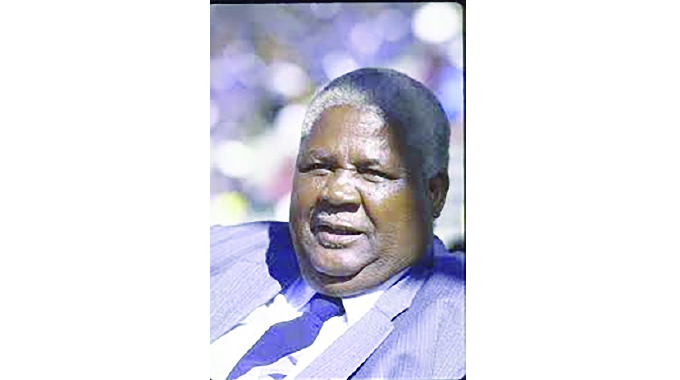
Yoliswa Moyo, Features Editor
When legendary Jamaican musician Bob Marley sang, Every man got a right to decide his own destiny during the performance of his song Zimbabwe, at the country’s Independence celebrations in 1980, those who had fought until the bitter end must have felt this surreal moment deeper than words could ever describe.
Of course they would have, after spending countless nights in the trenches and sharing a home with animals indefinitely.
Many were kept alive by divine providence, having to duck bullets at every turn and constantly looking over their shoulders in anticipation of what attack might come their way.
Often, the freedom fighters had to leave wounded comrades to continue fighting and while many years have gone by, they still live with the gory imagery of those who lost their limbs or lives right before their eyes.
They did not get the chance to give them decent burials, aggravating their agony. Instead, they had to quickly move on and continue with the cause.
It was the culmination of a dream that the black majority would choose their own government.
The liberation struggle was not for the fainthearted – many boys and girls abandoned their studies at secondary schools and the University of Rhodesia to join the war.
They were constantly pushed to the edge, with no choice but to hold on.
In his autobiography, The Story of My Life, the late Vice President Dr Joshua Nkomo says the last and bitterest stages of the liberation war was entirely unnecessary.
“By 1977, Ian Smith’s regime was doomed. The Portuguese hold in Mozambique and Angola had vanished. Even Smith’s South African backers were urging him to settle. But still he went on fighting. Militarily he was losing ground as the nationalist forces penetrated deeper into the country.
Politically, he tried to set up an internal deal which would preserve the power of the white minority but give his friends in the outside world some justification for claiming that Rhodesia was now multiracial and could therefore be recognised,” says Dr Nkomo.
He says those who fought during the liberation struggle often came from poor homes where blankets and clothes were highly prized possessions.
“When negotiations broke down, I went to the soldiers and said I had done what I could, it was up to them now. I emphasised that they were not fighting to do me a favour, nor I them; we were in it together for our country. I was doing my best to keep them supplied with material to fight with and to see it was fairly distributed. They were all volunteers who had chosen to leave home to fight; they had to be motivated, not ordered about,” says Dr Nkomo.
“We had more volunteers than we could feed, clothe and arm. There were allegations, particularly from Western journalists visiting our transit camps in Botswana that we were kidnapping young people from the schools to turn them into fighters. In fact, we tried to persuade them to stay and finish their studies, but they would not.”
Sometime in January 1977, about 400 learners from Manama Mission School in Matabeleland South province, trudged through the perilous bushes under the cover of darkness oblivious to the danger of being killed by Rhodesian soldiers as they began their pursuit to join the liberation struggle.
The Manama Mission incident was the most dramatic one in that the Rhodesian government alleged the learners were taken at gunpoint and force-marched to Botswana.
Cde Obert Matshalaga, who was the teacher on duty on this day, crossed into Botswana through Shashe River to join the struggle together with his pupils under the stewardship of Zipra guerillas.
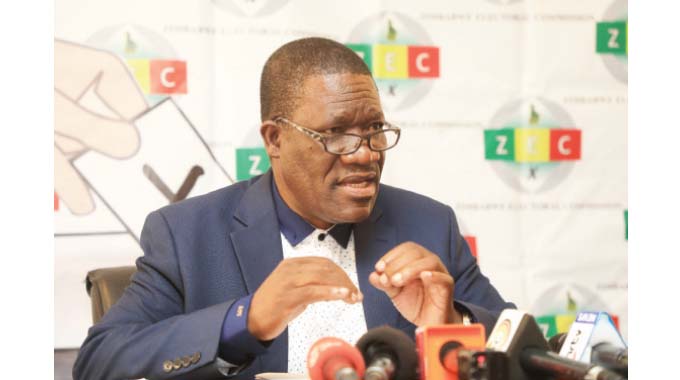
The learners, among them the late Minister of Foreign Affairs and International Relations Dr Sibusiso (SB) Moyo; national hero, Sampson Mpabanga; Elson Moyo, the Airforce of Zimbabwe Commander; Colonel Silibali Masera, Beitbridge East MP Cde Albert Nguluvhe and Zimbabwe Elections Commission (Zec) chief elections officer, Mr Utoile Silaigwana, had abandoned their evening studies to go for military training in Zambia via Botswana.
Cde Matshalaga decided to join his pupils in deserting the school just before nightfall on that particular day.
Those who are now in business who left Manama are Bester Dube, Naume Ncube Mthimkhulu, Ivan Bhebhe, Batetsi Noko, Rabson Tlou, Dr Robson Mutandi as well as Dr Pearson Sibanda.
In a recent interview, Cde Matshalaga said the learners were about to go for their evening studies when the bell rang.
“It was at the beginning of the term in January 1977, barely three days into a new school term. I was the teacher on duty meaning I was the overall supervisor at the school tasked with ensuring that both girls and boys stick to the operational standard activities.
“We rang the bell, which we normally did and the freedom fighters had timed that. There was commotion and I was still at my house and one of learners came running to me and shouted kuyahanjwa baba meaning ‘we have to go,’” said Cde Matshalaga, who is serving as a Commissioner for the Zimbabwe Gender Commission.
“With my dirty clothes on, I immediately bolted out of my house and joined the learners numbering 400. The biggest fear was that during the day we had spotted Rhodesian soldiers patrolling the area.”
Cde Matshalaga said they started marching out of the school yard and headed towards Tuli River, which is about 2km away from the school.
He said as soon as they crossed the Shashe River, the Rhodesian Air Force planes started circling in the sky and it was already dawn.
“The mood was electric and everybody was excited about going to war and some of the students were saying to me ‘we are now going to meet the people that you have always spoken about such as Cdes Nikita Mangena and Herbert Chitepo among others,’” said Cde Matshalaga.
“That was the time when Cde JZ Moyo had already been killed. Some of the inquisitive learners were already asking ‘who are these people that you are talking about?’ I responded by saying these were people already in the struggle to liberate the country.”
As the liberation struggle progressed, the going got tougher for the guerillas.
The cadres went for long periods without adequate food, shelter and clothing. The training was so rigorous that many women’s bodies responded by stopping menstruation.
Protection from wildlife and the elements was a matter of divine fortification.
They had to be on the lookout for landmines, poisoned water sources and poisoned clothes while protecting civilians from the enemy and engaging their adversaries.
Some cadres who came face to face with Rhodesian forces still do not want to speak of their experiences till this day.
Others suffer from varying forms of post-traumatic stress disorder because of what they saw in the trenches and wish to forget.
What a price to pay for generation upon generation to enjoy a sovereign state where they are the true masters of their destiny. What a price to pay! — @Yolisswa


 Online Reporter