Online Reporter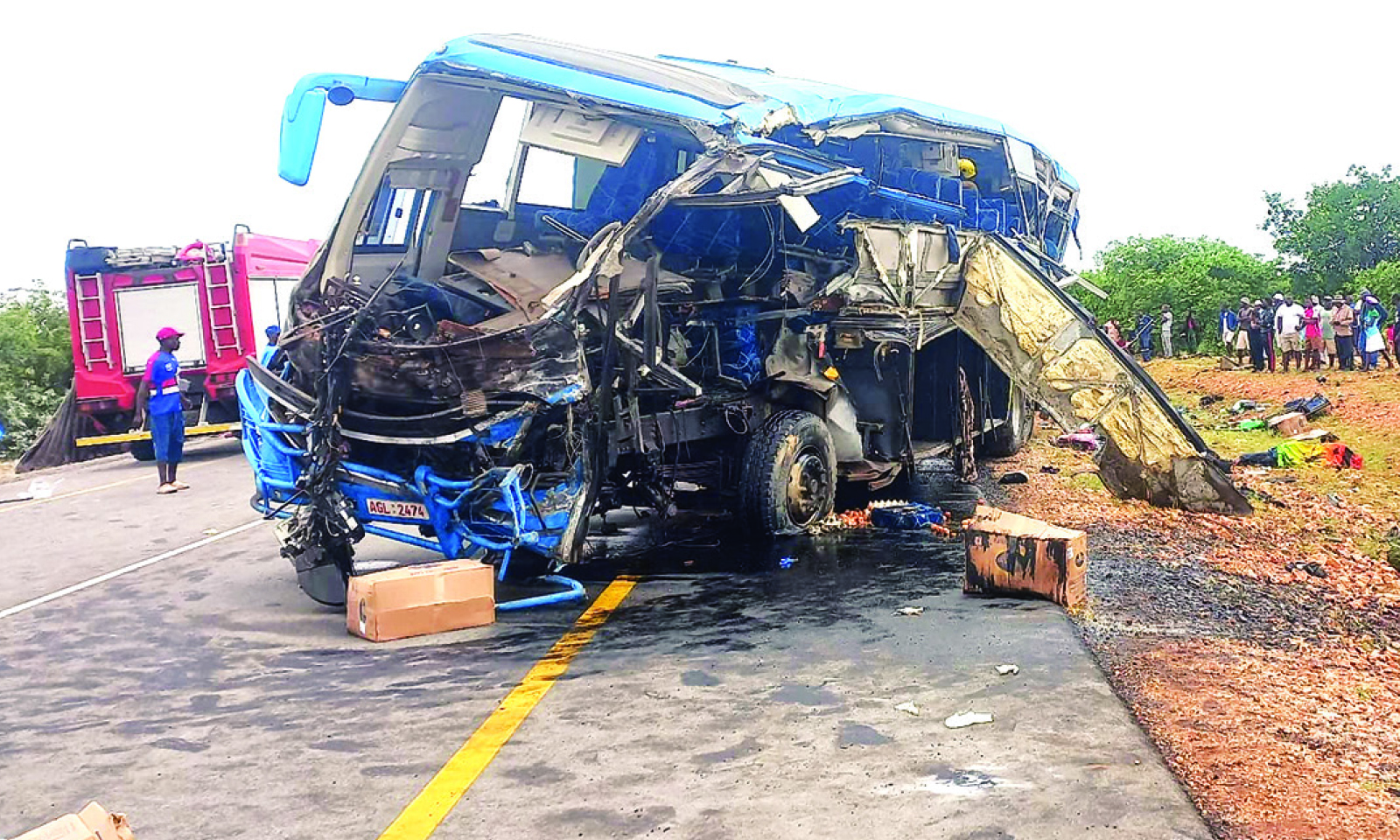
Nick Mangwana
Government Up Close
As we mourn the lives recently lost and injured in Beitbridge and in other recent accidents involving public transport, it is clear that a pressing issue demands our attention: human error.
The roads in Zimbabwe have become a battleground, where drivers engage in a deadly game of chance, prioritising competition over caution. The consequences are devastating, and it is time we confront this crisis head-on.
The statistics are staggering. Accident after accident, the toll of human error mounts.
Drivers, fuelled by a desire to outdo one another, push the limits of speed and safety.
The results are predictable: mangled metal, shattered lives, and a nation in mourning. It is a grim reality that we can no longer afford to ignore.
At the heart of this problem lies a culture of recklessness. Public transport drivers often under pressure to meet schedules or compete with rival operators, take unnecessary risks.
They speed, overtake, and disregard the most basic rules of the road. The consequences are dire, and the innocent pay the price.
But human error is only half the story. Lack of effective enforcement of rules and laws in existence has created a culture of impunity on our roads.
Drivers know that they can flout the rules with relative ease, and the chances of facing meaningful consequences are slim. This lack of accountability has bred a culture of complacency, where drivers feel free to disregard the law.
Kombi drivers have earned a notorious reputation for their reckless and lawless behaviour on the roads.
They seem to operate in a Wild West-like mentality, where the rules of the road are mere suggestions.
With alarming frequency, they drive contra-flow, veer onto dual carriage islands, and even venture off-road, leaving a trail of destruction in their wake.
Their vehicles, battered and bruised, tell the tale of a carefree attitude towards safety and responsibility.
The immature behaviour of kombi drivers is a menace to society, putting countless lives at risk.
Their blatant disregard for traffic laws and safety protocols has prompted Government to take drastic measures.
The recent regulation stipulating that only drivers over 30 years old with at least five years of driving experience can operate public transport vehicles is a clear indication of the severity of the problem.
By setting this benchmark, the authorities aim to weed out the reckless and irresponsible elements that have come to define the kombi driving culture.
The menace of mushikashika, informal vehicles that operate as taxis, also poses a significant threat to road safety in Zimbabwe.
One of the most alarming aspects of mushikashika is their tendency to overload passengers, often with disastrous consequences.
It is not uncommon to hear of a mushikashika being involved in a crash, only to discover that a vehicle designed to carry five people had an astonishing 14 casualties.
What is even more disturbing is that we have checkpoints as police have embarked on an operation to curtail their wanton behaviour but strangely, these vehicles often pass through multiple roadblocks, suggesting a lack of effective enforcement or corruption by a minority of the police officers on the road.
This blatant disregard for safety protocols puts countless lives at risk, making Mushikashika a ticking time bomb on Zimbabwe’s roads.
So, what is the solution? First and foremost, we need a renewed focus on good driving practices.
This means emphasising defensive driving, adhering to speed limits, and respecting the rules of the road.
Drivers must understand that their actions have consequences, and that the lives of their passengers and other road users are in their hands.
But good driving practices alone are not enough.
We also need sensible enforcement of our road rules. There is an increased visibility of law enforcement on our roads, which is commendable, but there are questions around if some of them are genuinely implementing effective penalties for reckless driving, and ensuring that drivers are held accountable for their actions.
The planned introduction of police enforcement cameras in Zimbabwe is a welcome development in the quest to improve road safety and enforcement.
These cameras, which can be installed at strategic locations such as traffic lights, highways, and accident-prone areas, will provide an objective and unbiased means of monitoring and enforcing traffic laws.
By automatically detecting and recording traffic offenses, such as speeding, reckless driving, and failure to obey traffic signals, these cameras will help to reduce the subjective nature of traffic enforcement, which can sometimes be influenced by human bias or corruption.
The experience of other countries has shown that police enforcement cameras can be an effective tool in reducing traffic offenses and improving road safety.
For example, in the United Kingdom, the use of speed cameras has been credited with reducing road fatalities by up to 70 percent in some areas.
Similarly, in Australia, the use of enforcement cameras has been shown to reduce speeding offenses by up to 60 percent. In addition, these cameras can also provide valuable evidence in the event of a traffic accident, helping to establish fault and facilitate investigations.
By embracing this technology, Zimbabwe can join the ranks of other countries that have successfully harnessed the power of enforcement cameras to improve road safety and reduce traffic offenses.
The Government’s plan to implement speed limiters on buses and other public transportation vehicles is a prudent step towards reducing road accidents and promoting safety.
This initiative is backed by scientific evidence and lessons from other countries.
Studies have shown that speed limiters can significantly reduce the risk of accidents, particularly those caused by excessive speeding.
For instance, a study by the World Health Organisation (WHO) found that speed limiters can reduce road fatalities by up to 50 percent.
Similarly, countries such as Kenya, Tanzania, and Ghana have implemented speed limiter regulations, resulting in notable reductions in road accidents.
In Kenya, for example, the introduction of speed limiters in 2014 led to a 30 percent reduction in road fatalities.
By capping the speed of public transportation vehicles, Government can help prevent accidents, reduce injuries and fatalities, and promote a safer road culture.
Furthermore, we need to address the root causes of this problem.
This means providing drivers with adequate training, ensuring that vehicles are roadworthy, and implementing measures to reduce driver fatigue.
It also means addressing the pressures that drive competition among bus operators, and finding ways to promote a culture of safety and responsibility.
The culture of drink driving in Zimbabwe is a ticking time bomb, waiting to unleash its devastating consequences on innocent lives.
A visit to any public drinking place in the country reveals a disturbing trend –car parks filled to capacity, with patrons showing a blatant disregard for the dangers of drink driving.
The absence of designated drivers is stark, and it is clear that the majority of revellers have no intention of handing over their keys to a sober friend.
This reckless behaviour is not only endangering their own lives but also those of other road users.
The lack of effective enforcement only serves to perpetuate this culture of impunity.
Roadblocks, instead of being used to detect and deter drink driving, are often focused on minor infractions such as faulty reflectors or missing fire extinguishers.
The absence of breathalysers at these checkpoints is a glaring omission, allowing drivers who are clearly under the influence to slip through the net.
This skewed prioritisation sends a dangerous message – that drink driving is tolerated, even accepted.
It is a little wonder that Zimbabweans often struggle to adapt to stricter drink driving laws when they travel abroad.
By normalising this reckless behaviour, we are putting lives at risk and creating a culture that is fundamentally at odds with responsible road use.
The Zimbabwe Traffic Safety Council has to be applauded for their efforts to tackle this disease.
The utter disregard for courtesy and respect on Zimbabwe’s roads is a shameful reflection of our society’s values.
The absence of functional traffic lights or clear signage at intersections is often cited as a challenge, but it is the lack of basic human decency that is truly alarming.
Instead of exercising patience, empathy, and common sense, many road users resort to aggressive behaviour, refusing to yield to others even when it is clear that they have the right of way.
The “me-first” mentality that pervades our roads is not only frustrating but also downright dangerous, leading to unnecessary conflicts, accidents, and even violence.
It is high time we reclaim our roads and rediscover the value of courtesy, respect, and kindness towards fellow road users.
As we move forward, it is essential that we adopt a multifaceted approach to tackling this crisis.
We need to engage drivers, operators, law enforcement, and the broader public in a conversation about road safety. We need to share stories, raise awareness, and promote a culture of responsibility on our roads.
President Mnangagwa has emphasised the need for caution on the roads, particularly in the wake of the devastating BeitbridgeMasvingo Highway crash that claimed 25 lives.
He called for “extreme caution” among motorists and urged authorities to take “decisive action” to prevent further accidents.
As we reflect on the recent carnage on our roads, it is clear that a multifaceted approach is needed to address the complex issues plaguing our transportation system.
From the reckless driving of kombi and mushikashika operators to the scourge of drink driving, and from the lack of effective law enforcement to the absence of basic courtesy and respect among road users, it is time for a paradigm shift.
By implementing measures such as speed limiters, enforcement cameras, and stricter regulations, we can begin to curb the chaos on our roads.
It is equally important that we, as individuals, take responsibility for our actions and adopt a culture of safety, respect, and empathy towards others. Only through a collective effort can we transform our roads into safer, more civilised spaces that reflect the values of a responsible and compassionate society.