Online Reporter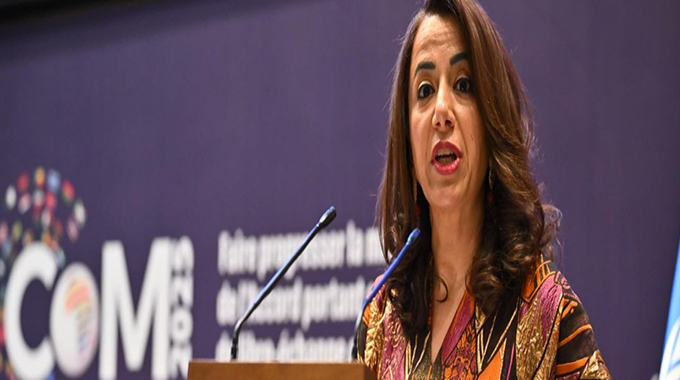
Chronicle Writer
UNITED Nations’ Economic Commission for Africa’s Deputy Executive Secretary in charge of programmes and chief economist, Hanan Morsy, has said the time to redefine Africa’s economic standing is now, as she urged the region to make a concerted effort to shape a more prosperous future for the continent.
“We stand at a crossroads,” Morsy said, highlighting the structural challenges facing Africa, including low levels of intra-African trade, persistent infrastructure gaps, and limited industrialization.
“While these obstacles are significant”, she argued that they are not insurmountable “because alongside these challenges lie opportunities”.
In a rapidly evolving global landscape shaped by shifting power dynamics and digital disruption, Africa must take a proactive role in shaping its future, with the African Continental Free Trade Area – AfCFTA as a critical instrument.
“It is our chance to redefine Africa’s economic standing, to amplify our voice on global issues, and to shape the rules of global trade and economic governance,” she said of the trade agreement.
To achieve sustainable economic growth, Africa also must prioritize investments in local manufacturing and regional value chains, she urged.
“We must invest in local manufacturing, create regional value chains, and process our resources right here at home – in pharmaceuticals, electric mobility, agri-business, and beyond. That’s how we create jobs. That’s how we build prosperity that lasts,” she added.
Noting that the future of trade is digital, Morsy called for an enabling environment for digital innovation.
“We must remove barriers to e-commerce, harmonize digital payment systems, and expedite the implementation of the AfCFTA Protocol on Digital Trade. Investing in digital infrastructure isn’t just smart—it’s essential,” she stressed.
She also called for efforts to close the infrastructure and connectivity gap, saying, “We know the figures. Africa faces an infrastructure financing gap of $170 billion per year. But we also know the solutions. We need to embrace innovative financing—public-private partnerships, blended finance, regional collaboration. We need roads, energy, and digital infrastructure that can connect our people and unlock our markets”.
Morsy further stressed championing digital transformation and trade facilitation, underscoring that the future of trade is digital, borderless and fast.
“We must remove barriers to e-commerce, harmonize digital payment systems, and expedite the implementation of the AfCFTA Protocol on Digital Trade,” she said.
“Investing in digital infrastructure isn’t just smart—it’s essential. It will drive transparency, cut costs, and open new markets for African entrepreneurs.” Morsy underscored the need to invest in building human capital for the future of work, saying Africa’s greatest asset is not under the ground, not in commodities but is “our people—our youth”.
That means scaling up education, vocational training, and skills development, particularly in industries that will define the future: advanced manufacturing, artificial intelligence, fintech, and renewable energy.
“When we empower our young people, we empower Africa,” said Morsy.
She concluded by calling for strengthening macroeconomic stability and governance saying without strong financial systems, progress stalls. “We’ve heard the calls for enhancing fiscal discipline, improving debt management, expanding access to private finance, and advancing innovative financing models—including green finance to tackle climate change and biodiversity loss,” she said.
Ms Morsy called on Africans to also speak with one voice to reform the global financial architecture and urged countries to “confront illicit financial flows and demand fair access to global capital.”
For his part, incoming Bureau Chair Zakaria el Harmiri congratulated the delegates on their insightful deliberations and called for urgent actions to bring the ideas to fruition.
“Given the environment of geopolitical instability and uncertainty as well as the new technologies and the challenges that are facing, we are sure that the AfCFTA will boost industrialization and ensure that we do work towards diversifying African economies,” he emphasised.
These emerged during the recent three-day meeting of experts, which was a precursor to the ongoing 2025 Council of Ministers Conference in Addis Ababa, Ethiopia.
Approximately 524 delegates from 40 member states alongside key partners and organizations were in attendance.
The recommendations and resolutions from the three days of deliberations were presented and accepted by the delegates. Among other issues, participants called for:
Accelerating the removal of trade barriers and improving logistics to reduce costs and enhance efficiency.
Investing decisively in our industrial and digital futures while ensuring food security and resilience to climate shocks.
Building strong partnerships—within Africa and beyond—that drive growth, sustainable development, and shared prosperity and
Strengthening macroeconomic stability and unlocking financing solutions across national, regional, and international levels.