dyton mupawaenda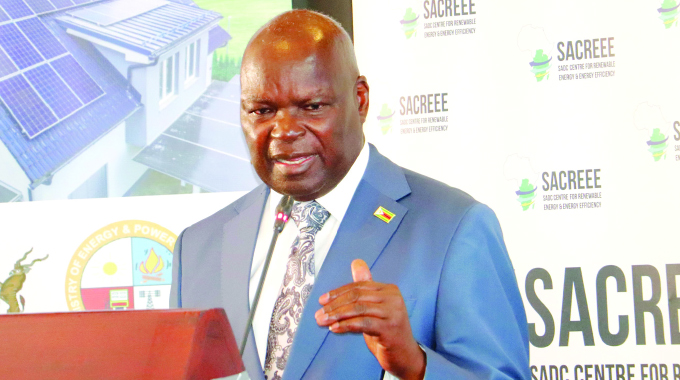
Fungai Lupande-Mashonaland Central Bureau
AS temperatures continue to soar and cities expand, Zimbabwe is entering a new era in which access to efficient cooling is no longer a luxury, but a necessity.
A recent report by the Energy and Sustainable Transition (EST) initiative on Efficient and Sustainable Space Cooling highlights how Zimbabwe can benefit economically, socially and environmentally by embracing sustainable cooling technologies.
The report was co-authored by Engineer Tecclar Chigavazira-Gwara and Engineer Samson Mhlanga, an Associate Professor at the National University of Science Education (NUST).
The report indicates that cooling systems, from air conditioners to refrigeration, already account for nearly 10 percent of global electricity consumption, and demand is expected to triple by 2050.
For Zimbabwe, which faces both rising urbanisation and periodic power shortages, the challenge is clear, how to keep citizens cool without overheating the planet.
Experts note that adopting energy-efficient technologies such as inverter air conditioners, passive building designs, and district cooling systems can cut power consumption in buildings by up to 60 percent.
This would bring immense savings to households and businesses, while easing demand on the national grid.
With Zimbabwe’s electricity supply still under strain, reducing peak demand could help stabilise the grid, lower import needs and reduce reliance on costly emergency power generation.
Sustainable cooling, therefore, aligns perfectly with the nation’s energy efficiency and renewable energy goals.
Transitioning to efficient cooling technologies is also a gateway to new green jobs.
From manufacturing and installation to maintenance and research, a local industry around sustainable cooling could employ thousands.
Universities and technical institutions could develop new curricula and research hubs dedicated to low-energy and solar-powered cooling systems suited to Zimbabwe’s climate.
The health and productivity benefits are equally significant.
Extreme heat affects vulnerable groups such as children, the elderly, and outdoor workers.
Hospitals, schools, and workplaces designed with efficient cooling systems not only enhance comfort, but also prevent heat-related illnesses.
In rural communities, reliable and energy-efficient cold storage supports food security and vaccine preservation.
Zimbabwe’s climate policies, including its Nationally Determined Contributions (NDCs) under the Paris Agreement, seek to reduce greenhouse gas emissions.
Integrating sustainable cooling into building codes, urban planning, and industrial policies can accelerate these efforts.
Government incentives for efficient appliances and awareness campaigns on energy-smart living could further drive adoption.
The EST report makes one thing clear. The future of cooling must be both efficient and sustainable.
For Zimbabwe, this is not just about comfort, it’s about energy security, job creation, and resilience in a warming world.
As the country positions itself for a green transition, Zimbabwe is also preparing to host the 2026 Sadc Sustainable Energy Week (SADC SEW) from February 23 -27 2026 at The Elephant Hills Resort in Victoria Falls.
The launch of the event took place in Harare on October 27, led by the Ministry of Energy and Power Development in partnership with the SADC Centre for Renewable Energy and Energy Efficiency (SACREEE) and the SADC Secretariat.
Running under the theme “Driving Regional Economic Growth through Clean Energy and Energy Efficiency,” the 2026 SADC SEW will bring together over 500 delegates, including energy ministers, investors, innovators, and regional institutions.
Energy and Power Development Minister July Moyo described the event as a platform for action, innovation, and collaboration, noting that clean energy is the “backbone of development and a catalyst for prosperity.”
The week-long event will include ministerial sessions, exhibitions, the 9th SOLTRAIN Conference, technical site visits, and the SADC SEW Awards recognising excellence in innovation and energy access.
The 2026 programme will explore six key themes:
1. Policy and governance for regional harmonisation.
2. Universal access and a just energy transition.
3. Financing and innovation, including energy minerals.
4. Grid interconnectivity and cross-border power trade.
5. Energy efficiency and competitiveness in industry.
6. Emerging solutions such as artificial intelligence, carbon trading, and critical minerals.
SACREEE Executive Director Mr Kudakwashe Ndhlukula said the event will build on frameworks like the Sadc Protocol on Energy (1996) and the Africa Single Electricity Market (AfSEM), while supporting the Dar es Salaam Declaration (2025), which aims to electrify 300 million Africans through national Energy Compacts.
As Zimbabwe prepares to showcase its commitment to clean energy, sustainable cooling emerges as a critical pillar in the broader energy transition.
Both initiatives reflect the nation’s drive to reduce emissions, boost innovation, and enhance climate resilience.
From cooling homes and hospitals efficiently to hosting regional dialogues on energy cooperation, Zimbabwe is demonstrating that the path to prosperity is paved with sustainability, innovation and regional solidarity.


 Online Reporter