admin
admin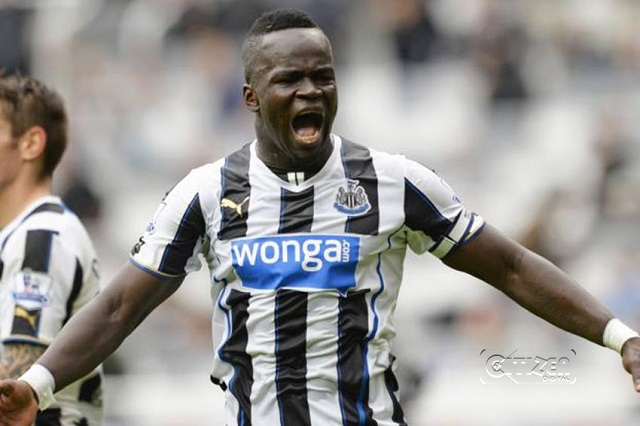
The sudden death of Cote d’Ivoire midfielder Cheik Tiote on Monday increased the number of high-profile African players who have collapsed and died while playing football, almost all of them suffering a form of cardiac arrest.
There has been no official confirmation of the cause of the former Newcastle United player’s fatal collapse while training with his Beijing Enterprises club in China but the circumstances are similar to those in which many other players have died.
Samuel Okwaraji was the first major casualty of a dramatic on-field death in Africa, collapsing while playing for Nigeria in a World Cup qualifier against Angola in Lagos in 1989.
An autopsy showed the 25-year-old, who was a law student and on the books of VfB Stuttgart in Germany, suffered congestive heart failure. He had an enlarged heart and high blood pressure.
His death left the continent shocked but there was a much wider audience in France in 2003 when Cameroon midfielder Marc-Vivien Foe fell in the centre circle 15 minutes from the end of Cameroon’s Confederations Cup semifinal with Colombia in Lyon.
Medics spent 45 minutes trying to restart Foe’s heart before he was pronounced dead. His autopsy found the Olympique Lyonnais player suffered from hypertrophic cardiomyopathy, a hereditary condition which increases the risk of collapse during exercise.
An award handed to the best African player in France’s top-flight Ligue 1 was named after Foe.
Other African internationals to die from heart attacks while playing were Amir Angwe and Endurance Idahor of Nigeria and Tunisian centre back Hedi Berkhissa, who collapsed during a friendly for his club Esperance against French side Lyon.
Zambia’s Chaswe Nsofwa died during a club match in Israel in 2007 while last year Cameroonian Patrick Ekeng collapsed and died playing for Dinamo Bucharest in Romania.
In April, former Gabon defender Moise Brou Apanga suffered a heart attack training with his club FC 105 Libreville and died.
Nigerian Nwankwo Kanu’s career was halted for nine months not long after he returned with a gold medal from the 1996 Olympics when Inter Milan’s doctors found a heart defect.
Surgery in America to replace an aortic valve allowed the Nigerian striker to resume his career the next year.
Inter’s medical team also found Senegal’s Khalilou Fadiga had an irregular heartbeat after the club signed him and told one of the stand-out players of the 2002 World Cup to quit.
But Fadiga carried on playing after joining Bolton Wanderers in 2004 where he had a defibrillator fitted after a collapse in the warm-up before a game at Tottenham Hotspur.
The quick thinking of a doctor in the crowd at the London club’s White Hart Lane stadium in 2012 saved the life of another Bolton player, Congolese-born Fabrice Muamba. He fell to the ground just before halftime but survived despite his heart having stopped beating for 78 minutes. — Reuters.


 Online Reporter