

 admin
admin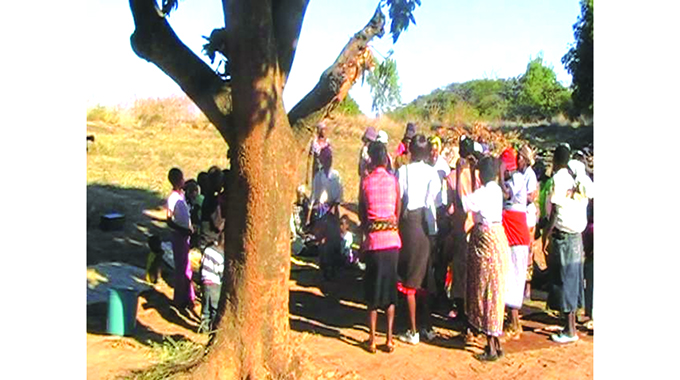
Isdore Guvamombe
Saturday Lounge Reflections
The sun somehow started setting slowly and tentatively as if to bid the day farewell with the softness of wool. Its silhouette mothball slowly buried itself into the world yonder, without much ado.
The village was agog with the news of the new marriage and this evening the bride was expected home. True to tradition, on such occasions villagers gathered, to receive the bride.
Around 7pm, the bride’s entourage, mainly comprising of her aunties and herself arrived by the gate and sat down, heads aligned faces down, like zebras have prayers.
That posture announces the need to get paid. After the first payment, they did a few steps and sat down again in that postures.
Village women and girls sang “Tauya naye muroona nemagumbuze” danced and ululated. The entourage repeated the ritual again and again, again and again, until they got into the kitchen hut.
All this time, bride was not unveiled. She covered her body and face with a light blanket and yet everyone knew who she was.
Rib-cracking jokes were thrown at her but she never laughed. A lot was said to provoke her but she never responded.
Villagers took turns to throw cash at the entourage until the main officiant was happy that they had paid enough to deserve to see the bridge’s face.
Thereafter, the bride was unveiled and Lo and Behold! . . . she was a cracker . . . a paragon of beauty.
The light shown at her face and she had smooth velvety yellow skin that naturally attracted good comment.
It was clear her fake hair was long to waistline and had no streak of grey as it slipped through the edges of her head wrap. Her eyes were sharp. Between the eyes was a hint of a frown.
And, all she did was pass a simple, but non-committal smile as villagers showered jokes. After the grand entrance into the village it was time to live the marriage life to the fullest.
Moon after moon passed without falling pregnant.
Two years passed. Timoti, her husband had tried every trick and she did too, to get pregnant. At drinking binges, elders often gave Timoti the drags, to strengthen his back and enhance his manhood. Nothing happened.
The village, being the village, always give a time frame to new couples for pregnancy. It is not a written rule, but it never escapes the minds of many.
They always throw an eye to the bride’s tummy.
They also look for signs of vomiting, dislike of certain food, surging emotions.
After almost two years together, the window period was certainly over for all and sundry in the village. It was inexplicable how Fari had failed to get pregnant. She looked fine but was also getting worried.
Elderly village women, in post mendicancy, started approaching Fari, who by now had gotten vulnerable and gullible. She was very worried too.
Soon the village women did their tests and passed her fit and fine for pregnancy. The problem, they all concluded was with her husband.
On the other hand, village old men, with cotton tuft hair had always doubted Timoti’s fertility.
The signs, they said, were telling, ever since he was young. They were sure he was the problem.
They condemned him for failing so many masculine tests.
Back in the village, in the proverbial land of milk, honey and dust or Guruve, every family has a main officiant, usually the son to the oldest daughter or sister, who pulls the strings when things get really muddy.
It could simply be the oldest nephew. Here I use the word nephew loosely, to avoid its implied English meaning and give it a Shona cultural context.
Soon the main officiant, Gift, who apparently was more gifted in diplomacy and sweet and sleek tongue entered the matrix of Timoti and Fari’s marriage.
After lengthy negotiations Fari agreed to the secret arrangement with Timoti’s young brother Batsirai. Soon Timoti was kept busy and given errands that took most of his time away from home.
Meanwhile, Timoti was also getting a lot of concoctions from village elders.
Indeed, soon Fari fell pregnant and the signs were telling.
On time she gave birth to a baby boy and Timoti named her Munyaradzi, for he had brought the much needed peace into what could have been a turbulent marriage.
Two years later a second child was born using the same modus operandi.
Timoti, enjoyed the streak and felt macho.
Another two years later, a girl Rutendo was born and she brought not only the joy but the balance.
Meanwhile, Batsirai had also fathered four more children with his own wife but his affairs with his brother’s wife was a deep secret.
About three decades later, Timoti’s children had done extremely, well, of course with the help of their mother’s side.
Their uncles who had long been into the Diaspora got jobs for them in foreign land and soon they started developing their parents’ home.
Batsirai noticed how fast the boys were now developing and how his children with his own wife had done nothing meaningful.
Soon Timoti had a seven-roomed-house build and a state of the art furniture brought in. Soon his home was connected to the national electricity grid.
Soon, his children invested heavily in home entertainment. And, obviously, Timoti became the talk of the village.
Fari now an old woman tried to influence her children to also help Batsirai but they could not understand her reasoning. They ignored and continued pampering her and Timoti with goods and developments.
Batsirai was hurt and tried as much as possible to keep away.
He was really hurt. He knew the children were his. Gift, the main officiant, had died long back and was no longer there to solve the problem.
Timoti was now living large and was not in very good books with Batsi, not because of the affair but he picked up that Batsi was jealousy of his developments and his children.
The matter came to the crux when Timoti’s children bought him a truck and employed a driver for him.
Batsi is now mooting letting the cat out of the bag. He is sure he is going to be in trouble. To be or not to be is the question is his mind.



 Online Reporter