Raymond Jaravaza, [email protected]
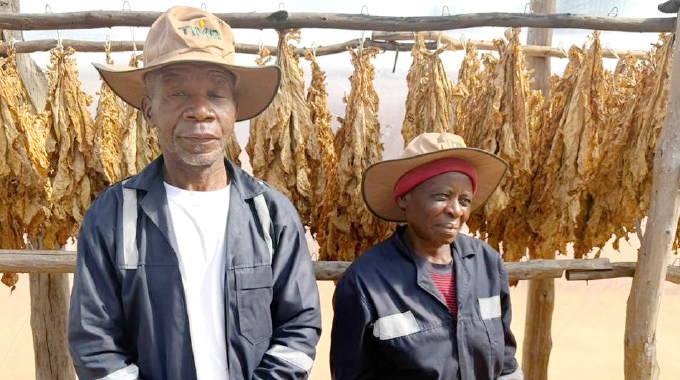
WHAT started as a small experiment has turned into a life-changing venture for Mr Rueben Khumalo and his family in Greenfields Village, Mangwe District, as more farmers in Matabeleland South embrace tobacco farming as a reliable source of income.
Mr Khumalo began growing tobacco on just 1 hectare last season as a way of diversifying from traditional farming. Despite poor rainfall, he harvested 800 kilogrammes by the end of the 2024/25 season. Encouraged by the results, he has since expanded his crop and now expects to produce about 30 bales this season.
He is part of a growing number of small-scale farmers — now about 394 from Mangwe and Bulilima districts — who are turning to tobacco farming in a region traditionally known for cattle ranching and subsistence crop production.
Tobacco has long been associated with the Mashonaland provinces and, to a lesser extent, the Midlands. However, its introduction in Matabeleland South in 2023, through a pilot project at Syringavale Farm in Ward 11, Marula, is steadily changing farming patterns in the dry region.
Frequent droughts have made it difficult for many communal farmers to rely solely on maize and livestock, prompting them to seek alternative ways to earn a living. For many, tobacco is now proving to be that alternative.
Mr Khumalo said the decision to try tobacco farming has transformed his family’s fortunes.
“I ventured into tobacco farming because I wanted to try something new that would bring in more money outside of maize farming and cattle rearing. The first season was not bad, considering that we received minimal rain and my tobacco fetched good prices at the tobacco sale. Since that trial run last year, I have not looked back; in fact, I increased the number of hectares from one to three hectares.
“Tobacco farming is a very lucrative business that has changed the lives of so many villagers here in Mangwe District. At the end of the harvesting period, I expect to get about 30 bales and hopefully, my tobacco will fetch a good price at the tobacco sale.
“I will have an idea of how much my tobacco fetches when I attend the tobacco sale in Bulawayo tomorrow (today),” he said.
Although tobacco farming requires a lot of labour, Mr Khumalo believes that everyone who contributes — even family members — should be rewarded for their work.
“I have seen families torn apart when money earned from tobacco farming doesn’t reach into the pockets of other family members, so it’s important that everyone who is involved in the tobacco farming business, even at the family level, also gets rewarded for their hard work.
“I work the fields, from planting, applying fertiliser and harvesting with my wife and children and we can all safely say that tobacco farming is very lucrative and we will not stop but instead keep increasing the number of hectares each season,” said Mr Khumalo.
Another farmer, Mr Reed Sola, is also seeing promise in tobacco production.
As a first-time grower, he planted one hectare and has already delivered his first crop to the auction floors in Bulawayo.
“Most farmers who have delivered their tobacco at the sale ZITF (Zimbabwe International Trade Fair) averaged US$2.80 per kilogramme and I’m hoping my tobacco will also fetch that amount or even higher. Tobacco farming is highly rewarding and I’m happy that I am part of the farmers here in Matabeleland South Province who have ventured into producing tobacco,” said Mr Sola.
Mr Sola received a US$1 000 loan to support his crop and expects to harvest more than 1 000 kilogrammes. If prices remain at around US$2.80 per kilogramme, he stands to make a meaningful profit after repaying the loan.
Tobacco specialist Mr Rodrick Musiyiwa said the project is growing steadily, with more land now being put under production.
“We have 395 communal farmers who planted an average of half a hectare to one hectare each. As more farmers are joining the tobacco farming project, we expect to have 1 000 hectares of tobacco production next season,” said Mr Musiyiwa.
Commercial farmers are also beginning to take an interest. Mr Gary Rosenvale, who planted 26 hectares this season, believes tobacco could bring significant economic benefits to the region.
“If we can get to a stage where commercial and communal farmers can produce a combined 50 million kilogrammes of tobacco, imagine what that will do for the economies of Bulawayo and Matabeleland South provinces. We made a few mistakes in our first season, which we learnt a lot from and next season we are looking at utilising 30 hectares,” said Mr Rosenvale.
As more farmers join in and production expands, tobacco farming is slowly reshaping livelihoods in Matabeleland South — offering hope in a region long challenged by dry conditions and limited farming options.