Chronicle Editor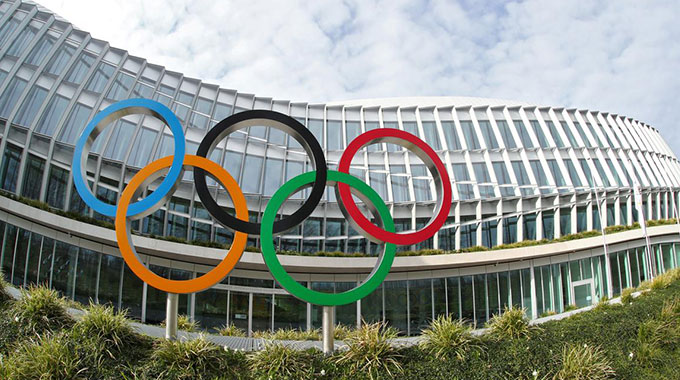
Sikhumbuzo Moyo, Senior Sports Reporter
TODAY all eyes would have been in Tokyo, Japan, where over 11 000 athletes from across the globe together with millions of fans would have been following a glittering official opening ceremony of the 32nd edition of the Olympic Games.
Without doubt the Olympic Games are the biggest multi-discipline sporting competition in the world and attract a massive following on a global scale, most of whom would be glued to their televisions, while thousands flock to the host city.
For this year’s Games that saw organisers pouring in US$5,9 billion, Japan was preparing to welcome over 600 000 visitors for the sporting extravaganza.
However, in December 2019 a ravaging catastrophe visited humankind, announcing its arrival in the Chinese city of Wuhan before spreading its deathly effect throughout the world, forcing the World Health Organisation (WHO) to declare it a public health emergency of international concern on January 30. Coronavirus, known as Covid-19, was upon humankind.
On March 11, 2020, WHO declared Covid-19 a pandemic as its devastating effects was and still is threatening the very existence of humankind, regardless of one’s standing.
All sectors, sports included, were affected and on March 17, the International Olympic Committee board announced the postponement of the Games.
The decision was supported by all the International Summer Olympic Sports Federations (IFs) and all National Olympic Committees (NOCs).
This move was taken to protect the health of the athletes and everyone involved, and to support the containment of the Covid-19 virus, to safeguard the interests of the athletes and of Olympic sport as well as safeguarding the global international sports calendar.
The Games will now be held from August 24 to September 21 next year.
According to the IOC, the new dates give the health authorities and all involved in the organisation of the Games maximum time to deal with the constantly changing landscape and disruption caused by the Covid-19 pandemic.
The new dates, exactly one year after those originally planned for 2020, also have the added benefit that any disruption that the postponement will cause to the international sports calendar can be kept to a minimum, in the interests of the athletes and the IFs. Additionally, they will provide sufficient time to finish the qualification process. The same heat mitigation measures as planned for 2020 will be implemented.
Since the first Olympic Games were held in Athens, Greece, in 1896, the Olympics have only been cancelled three times, once during the First World War in 1916 and twice during World War Two (1940 and 1944).
The modern Olympics were a result of an idea by a French educator Baron Pierre de Coubertin, who began the Olympic revival movement in 1892.
He presented his idea to an audience at an international congress in Paris in 1894, an idea that was unanimously approved and two years later the inaugural Games were held in Athens.
Well known symbol of the Olympic Games, the five rings were also created by the Frenchman to express the solidarity of the world’s five continents.
Five sport codes, climbing, surfing, skate boarding, karate as well as baseball were set to make their debut at this year’s Games, but as a result of the Covid-19 pandemic, they now have to wait for one more year.



 Online Reporter