admin
admin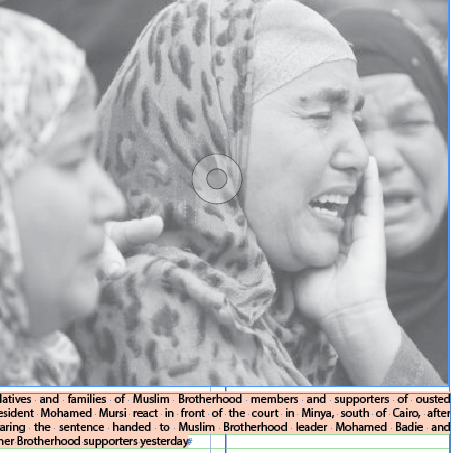
 AN Egyptian court sentenced the leader of the Muslim Brotherhood and 682 supporters to death yesterday, intensifying a crackdown on the movement that could trigger protests and political violence ahead of an election next month. In another case signalling growing intolerance of dissent by military-backed authorities, a pro-democracy movement that helped ignite the uprising that toppled Hosni Mubarak in 2011 was banned by court order, judicial sources said.
The death sentence passed on Mohamed Badie, the Brotherhood’s general guide, will infuriate members of the group which has been target of raids, arrests and bans since the army forced President Mohamed Mursi from power in July.
The movement says it is committed to peaceful activism. But some Brotherhood members fear pressure from security forces and the courts could drive some young members to violence against the movement’s old enemy the Egyptian state.
Badie was charged with crimes including inciting violence that followed the army overthrow of Mursi, who is also on trial on an array of charges.
In a separate case, the court handed down a final capital punishment ruling for 37 others. The death sentences were part of a final judgment on 529 Muslim Brotherhood supporters sentenced to death last month. The remaining defendants were jailed for life, judicial sources said.
Death sentence recommendations in the case involving Badie will be passed on to Egypt’s Mufti, the highest religious authority. His opinion can be ignored by the court.
Mass trials in the biggest Arab state have reinforced fears among human rights groups that the government and anti-Islamist judges are using all levers of power to crush opponents.
“The decisions are possibly the largest possible death sentences in recent world history. While they’re exceptional in scale, they’re certainly not exceptional in kind,” said Sarah Leah Whitson, executive director for Middle East and North Africa at Human Rights Watch.
“It seems that these sentences are aimed at striking fear and terror into the hearts of those who oppose the interim government.”
In an early reaction from a Western government, Swedish Foreign Minister Carl Bildt wrote on Twitter that the mass trials were an “outrage”. “The world must and will react!”
There have been Western reactions to Egypt’s approach to dissent. But it mostly comes in the form of statements, not action.
Egypt’s relations with the United States — the source of $1,5 billion in annual aid, most of it to the Egyptian military — have been strained in the three years since the overthrow of Mubarak.
Foreign Minister Nabil Fahmy is currently on an official visit to the United States, describing it as a trip to “redirect relations between Egypt and America”.
The United States froze some of its military aid to Egypt last October following Mursi’s overthrow and the state’s violent crackdown on his supporters.
Last week, Washington said it would deliver 10 attack helicopters to help the government in its fight against Islamist militants in the Sinai Peninsula.
Yesterday’s rulings can be appealed. Many defendants are on the run.
Nevertheless, the cases have raised new questions about Egypt’s stumbling political transition three years after an army-backed popular uprising ousted Mubarak and raised hopes of a robust democracy.
The political turmoil that has gripped Egypt and an Islamist insurgency based in the Sinai have hammered the economy, which grew by a meager 2,1 percent last year. — Reuters.



 Online Reporter