Online Reporter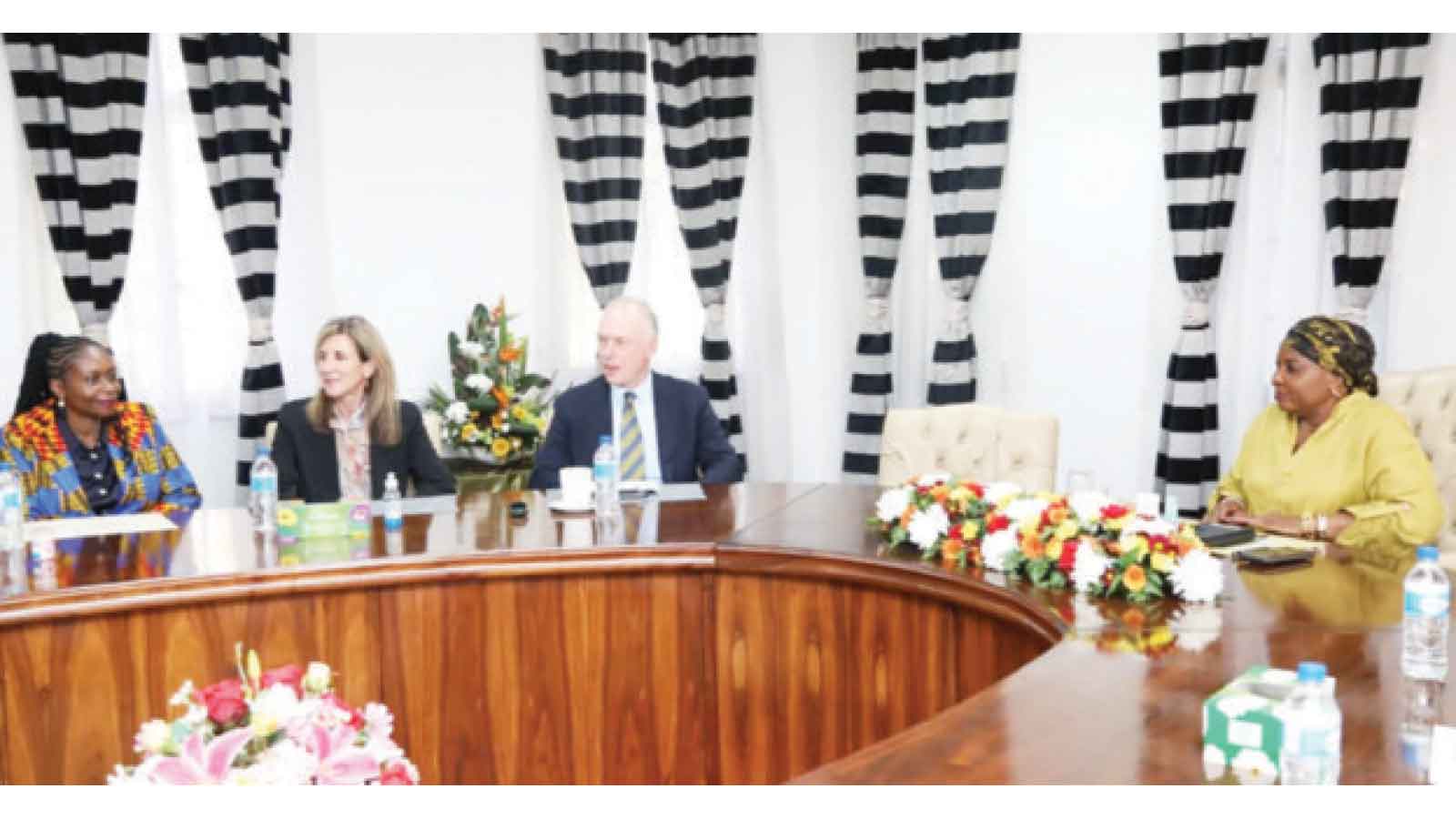
Blessings Chidakwa-Senior Reporter
A CAMBRIDGE University Press & Assessment delegation yesterday paid a courtesy call on First Lady Dr Auxillia Mnangagwa to discuss incorporating aspects of Zimbabwe’s Heritage-Based Education 5.0 model into the Cambridge curriculum to produce well-rounded learners grounded in academics, innovation and cultural values.
Zimbabwe’s Heritage-Based Education 5.0 philosophy goes beyond traditional classroom learning by placing emphasis on teaching, research, community service, innovation and industrialisation, while ensuring learners remain grounded in their cultural identity and national values.
The education model is designed to nurture learners who are academically-competent, technologically-driven, innovative and entrepreneurial, while at the same time appreciating Zimbabwe’s rich heritage, languages and history.
Dr Mnangagwa, who met a Cambridge University Press & Assessment delegation led by its chief executive, Peter Phillips, at her offices in Harare, said every Zimbabwean child should have access to quality education that blends academic excellence with strong moral and cultural values.
The Cultural and Heritage Ambassador underscored the importance of preserving Zimbabwe’s rich heritage through education and called for enhanced collaboration in developing curricula that reflect the nation’s identity, values and aspirations.
“Right now, we are fighting to catch them young. From a tender age, we want them to know who we are and how they should behave. We want boys and girls to learn how to co-exist in schools,” she said.
“We have Cambridge and ZIMSEC. You will find that we are mostly taking ZIMSEC because it incorporates our culture, heritage and history. We also want Cambridge to be part of this culture, heritage and history in its examinations. We want to marry ZIMSEC and Cambridge, so if it is workable and Cambridge can do that, we will be very happy.”
The Zimbabwe School Examinations Council (ZIMSEC) is the country’s prestigious supreme examination body.
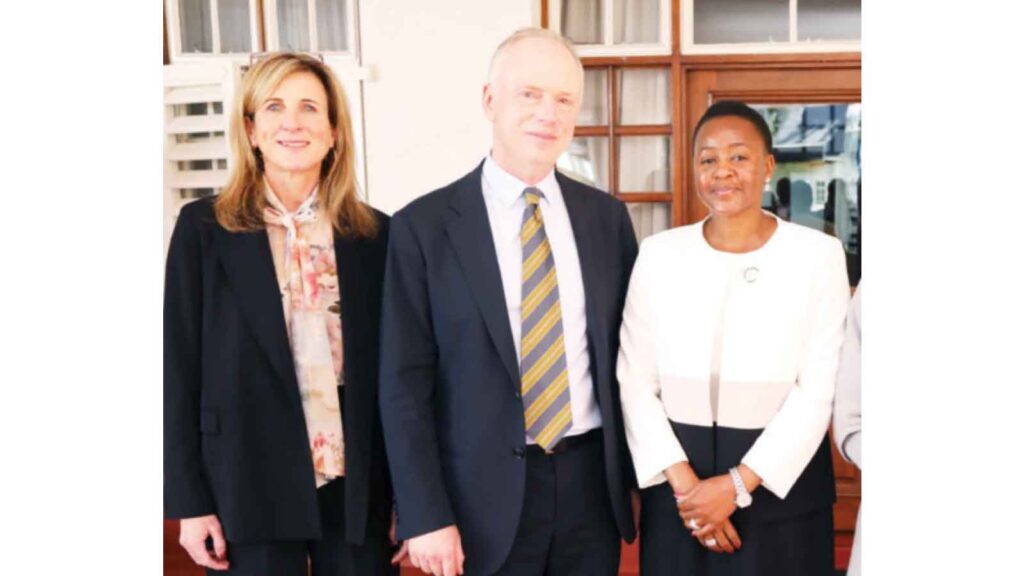
Primary and Secondary Education Deputy Minister Dr Angeline Gata (right) poses for a photograph with Cambridge University Press & Assessment chief executive Peter Phillips and managing director Louise Hendey in Harare yesterday.
Dr Mnangagwa said that while Cambridge has been in the country for a long time, incorporating Zimbabwean history into its curriculum would contribute to producing a wholesome child, with subjects such as Cambridge Shona or Cambridge Tonga.
The First Lady called for engagement between Cambridge executives and officials from the Ministry of Primary and Secondary Education and ZIMSEC to explore opportunities for integrating Zimbabwe’s heritage, history, culture, languages and indigenous knowledge systems into internationally recognised learning frameworks.
Dr Mnangagwa also took the delegation through some of her thriving programmes that promote the development of a well-rounded child, including the Nhanga/Gota/Ixhiba initiative, cookout competitions, and boys’ and girls’ camps, among several others.
The visit was reciprocal, following Dr Mnangagwa’s engagement with Cambridge University Press & Assessment in 2023 to explore educational cooperation and scholarship opportunities for vulnerable girls. During that visit, she received the Global Education Leadership Award in recognition of her philanthropic work.
In an interview after the meeting, Mr Phillips, who expressed keen interest in partnering with ZIMSEC, said the deliberations focused on areas of collaboration that would ensure key components of Zimbabwe’s heritage-based curriculum are accommodated alongside internationally recognised Cambridge learning programmes.
“We have had really helpful discussions and conversations with the First Lady to discuss the ways in which we can work together collaboratively to make sure that the key aspects of the heritage-based curriculum are ones that we can think about alongside the work that we do in Cambridge,” he said.
Mr Phillips, who said similar models had been rolled out in other nations, expressed confidence that Cambridge and Zimbabwe could identify areas of convergence that support the country’s vision of producing globally competitive citizens without losing their cultural roots.
“I am optimistic that we will find ways that we can find key aspects of the heritage-based curriculum to work within and alongside Cambridge. So, for example, with local languages or with Zimbabwean history, and so on,” he said.
Mr Phillips’ remarks underscore the growing international recognition of Zimbabwe’s Heritage-Based Education 5.0 framework, which seeks to create a balanced learner capable of excelling both locally and globally.
Deputy Minister of Primary and Secondary Education Dr Angeline Gata, who accompanied the Cambridge delegation, said a meeting was being organised between them and ZIMSEC so that, in all aspects of the curriculum, they strengthen the Zimbabwean heritage component.
“This will be our heritage studies, languages and Zimbabwean history in their subjects, so that we raise a Zimbabwean who is deeply rooted in our culture, deeply rooted in our Zimbabwean heritage, deeply rooted in our Zimbabwean history,” she said.
Dr Gata said Zimbabwe did not have that aspect of heritage in learning, in the education system, but it was incorporated through the guidance of Cultural and Heritage Ambassador Dr Mnangagwa.
“She is the champion of that. I would say many things that we are having now in terms of the heritage and cultural aspect, the history aspect, are coming from Her Excellency and her guidance. She focuses on that so much. So, in Cambridge, we would like to see the aspect of our heritage, we would like to see the aspect of our history, we would like to see the aspect of who we are as Zimbabweans.
“So, for you coming to pay a courtesy call on Her Excellency, to us she is ‘Denhe roruzivo’; she is the masterpiece of our knowledge, of our indigenous knowledge, for the young and even the older ones,” she said.
The engagement between Cambridge University Press & Assessment and the First Lady highlights the potential for partnerships that marry international educational standards with Zimbabwe’s heritage-driven development agenda.
The discussions also reflect Zimbabwe’s determination to ensure that global education systems complement, rather than replace, the country’s Heritage-Based Education 5.0 philosophy, which places Zimbabwean values, history, languages and indigenous knowledge systems at the centre of learning.