Online Reporter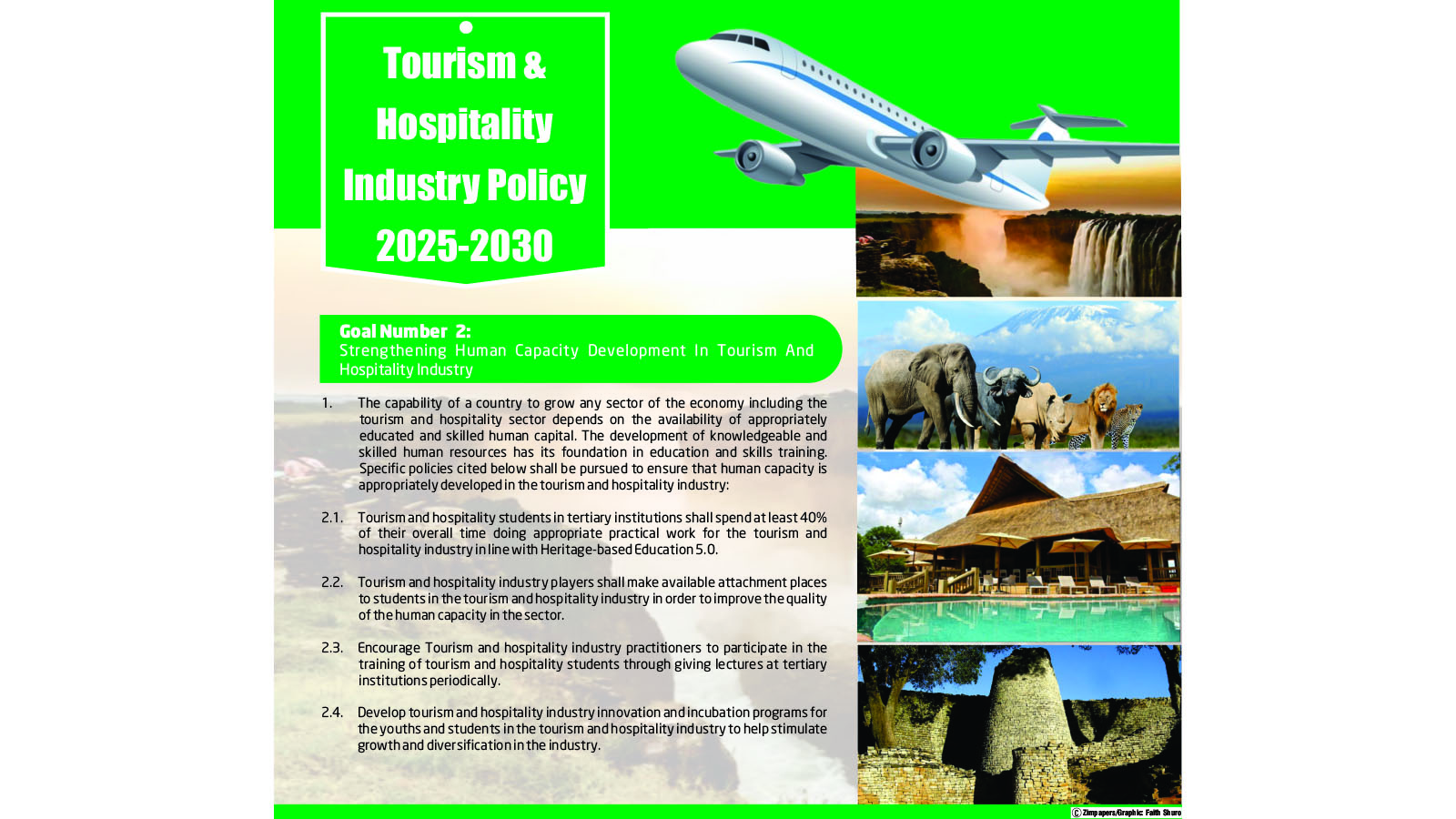
Nqobile Bhebhe
Zimpapers Business Hub
THE luxury traveller’s story about Zimbabwe is usually about an unforgettable experience: drifting on the Zambezi as the sun melts into the horizon, waking up to the thunder of Victoria Falls or savouring fine wine amidst elephants in the Hwange National Park.
Yet, behind these postcard moments lies an industry truth that could determine whether Zimbabwe’s high-end tourism continues to flourish — the ability to attract, align and retain the professionals who make those magical experiences happen.
As global travel rebounds in 2025, guest demand is not the challenge, talent supply is, players in the sector say.
The Covid-19 pandemic dealt the sector a heavy blow between 2020 and 2022, when travel bans shut down the entire industry.
Thousands of jobs were lost, operators closed down and an exodus of skilled workers followed.
Now, as arrivals surge and bookings recover, new opportunities are arising, and a serious battle is brewing — a fierce contest for the people who bring the experience to life.
Tourism remains one of Zimbabwe’s key economic pillars and is expected to contribute significantly towards the national goal of becoming an upper middle-income economy by 2030.
The sector is critically important to Zimbabwe’s economy. It is the third-largest sector and a key pillar for economic recovery, contributing to employment creation, foreign currency earnings and poverty alleviation.
The country’s diverse natural and cultural attractions, such as Victoria Falls, the Hwange National Park and the Great Zimbabwe monument, provide significant opportunities for growth and wealth creation.
Zimbabwe aims to grow its tourism sector to US$10 billion by 2030, having already surpassed its previous US$5 billion target for 2025.
This growth is being driven by the new 2025-2030 Tourism and Hospitality Industry Policy, which focuses on heritage-based tourism, MICE (meetings, incentives, conference and exhibitions) tourism, eco-tourism and cultural tourism.
The policy sets an ambitious vision for growth, with human capital as a decisive pillar.
“The capability of a country to grow any sector of the economy, including the tourism and hospitality sector, depends on the availability of appropriately educated and skilled human capital.
“The development of knowledgeable and skilled human resources has its foundation in education and skills training,” the policy notes under its human capital strengthening pillar.
Practical measures include requiring tourism and hospitality students in tertiary institutions to spend at least 40 percent of their training in hands-on industry placements under the Heritage-based Education 5.0 framework, it adds.
“Tourism and hospitality industry players shall make available attachment places to students in the tourism and hospitality industry in order to improve the quality of the human capacity in the sector,” the policy adds.
It further encourages practitioners to lecture periodically at tertiary institutions and to develop innovation and incubation programmes for the youth in the industry, stimulating growth, diversification and entrepreneurial skills.
For Zimbabwe’s tourism sector, this is more than policy paperwork; it is a lifeline to close the skills gap that has become the sector’s Achilles’ heel, players say.
Elite lodge managers, highly trained chefs and expert safari guides are no longer chasing vacancies.
They are weighing offers with the same discernment that guests use to choose a five-star property.
“It is not just about filling a position,” said Bulawayo-based hospitality consultant Mr Ian Noble.
“It’s about alignment, leadership style, brand purpose and career vision. If those do not connect, you would not keep your best people.”
“Top talent today values leadership mentorship, professional development budgets, quality accommodation, sustainability credentials and education allowances just as much as a competitive salary.”
In hotels, skilled front office staff set the tone from check-in efficiency to personalised concierge services.
On safaris, guides with deep wildlife knowledge transform a standard drive into a masterclass in conservation and safety.
“From a business standpoint, losing a general manager or senior guide costs far more than recruitment fees.
“It disrupts team chemistry, erodes guest loyalty and can wipe out years of repeat business — losses that can run into millions,” said Mr Noble.
“Talent is the infrastructure you cannot see, but it’s the most expensive to replace.
“In an era of online reviews and social media influence, visitor satisfaction directly impacts destination reputation.
“Skilled personnel transform ordinary interactions into memorable experiences that drive repeat visits and word-of-mouth promotion.
“Well-trained guides, hotel staff and artisans become cultural interpreters, deepening visitors’ appreciation of Zimbabwe’s heritage while preserving authenticity.
“Also, staff equipped with communication skills and decision-making authority can resolve service issues instantly, turning potential negative reviews into positive recovery stories.”
Mr Noble said the Covid-19 pandemic demonstrated how quickly tourism can collapse.
He said cross-trained, adaptable staff who help businesses pivot during disruptions were a key component of workforce planning.
Wild Net Safari operations manager Ms Brenda Phiri said chefs trained in both local and international cuisines would elevate Zimbabwe’s culinary standing, while meticulous housekeeping teams uphold the impeccable standards guests expect.
“Guests might come for the Victoria Falls, but they come back for the people. A skilled guide, a warm welcome, a flawless dinner service — that’s what turns a visit into a lifetime memory,” she said.
“Therefore, a steady pipeline of well-trained professionals provides high-quality service that underpins the high-value status.”
Ms Phiri notes that competition is no longer confined to Africa.
Resorts in Dubai, the Maldives and Europe are aggressively recruiting African talent with lucrative packages, global mobility and creative autonomy.
The new tourism policy also aims to reverse this trend by embedding students in operational environments, fostering mentorship from seasoned professionals and creating innovation hubs to encourage entrepreneurship.
Industry experts say operators must also tailor market strategies, from offering revenue-sharing to senior managers who generate new business, to providing “inspiration budgets” for staff to visit hotels globally for benchmarking, and partnering with chefs to shape brand identity, not just menus.