Online Reporter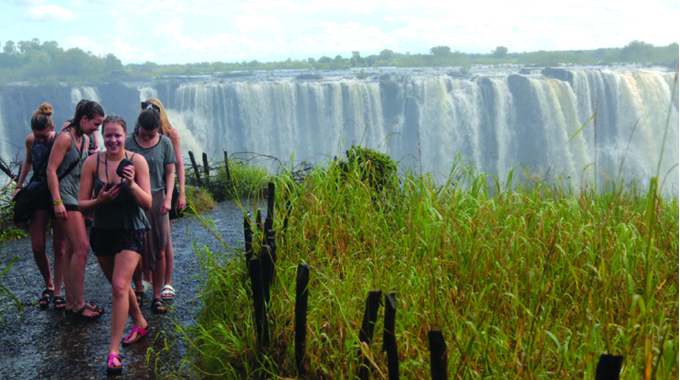
Alexander Rusero
Ranga Mataire
For far too long, Zimbabwe was spoken about rather than spoken with.
The country’s story in global media and diplomatic circles was flattened into a caricature of crisis, controversy and political toxicity.
Tourism suffered not because Zimbabwe lacked attractions. Few countries rival its natural beauty, cultural depth and warmth of its people.
The Zimbabwean brand was held hostage by stereotypes, outdated political narratives and an adversarial posture that made engagement difficult.
Today, that narrative is visibly shifting. Zimbabwe’s recent boom in tourism is not accidental; it is the product of deliberate soft power diplomacy, strategic re-engagement and a recalibration of how the state presents itself to the world under the Second Republic.
Tourism numbers do not rise on scenery alone. They rise when perception changes. They rise when borders feel welcoming, when diplomacy reassures investors and travellers, and when a country’s story is told with confidence rather than defensiveness.
Zimbabwe’s re-emergence as an attractive destination reflects a growing appreciation within government that soft power deployment in form of culture, hospitality, image and credibility, is as important as hard economics.
This is where the Second Republic’s diplomatic tact has quietly, but decisively altered Zimbabwe’s global posture. The diplomatic outreach has been very deliberate with President Mnangagwa leading from the front as the Chief Diplomat.
The President has rallied Zimbabwean diplomats worldwide to attract investment, boost tourism, and enhance trade opportunities. He has instructed that all the country’s diplomats will in future sign performance contracts with a view to acknowledging and recognising the best performing missions, based on clearly stipulated criteria and measurable outcomes.
In his address on November 6, President Mnangagwa told Zimbabwe’s Ambassadors at State House in Harare that diplomats need upscaling of the country’s economic diplomacy currently being championed by the Second Republic.
At the centre of this shift has been a more pragmatic and less confrontational approach to international relations. The Second Republic has pursued re-engagement not as a slogan, but as a method, restoring dialogue, reopening channels, and projecting Zimbabwe as a country open for business, tourism and partnership.
Gone is the megaphone diplomacy that thrived on rhetorical confrontation and ideological rigidity. In its place is a calmer, more strategic tone that recognises that sovereignty is not diminished by engagement, but strengthened by it.
Tourism has become one of the most visible beneficiaries of this recalibration. Zimbabwe’s destinations – Victoria Falls, Hwange, Mana Pools, Matobo, the Eastern Highlands and Great Zimbabwe never lost their magic. What was lost was confidence, access and narrative control.
That gap is now being steadily closed, thanks in no small part to the energy and visibility of Honourable Barbara Rwodzi, the Tourism Minister, whose stewardship of the tourism portfolio has brought a refreshing blend of charm, industry and international outreach.
Minister Rwodzi has not restricted tourism promotion to boardrooms and policy documents. She has carried Zimbabwe’s flag to the world, attending global tourism fairs, courting airlines, engaging tour operators, and projecting an image of warmth and expertise that resonates beyond official statements.
Her diplomacy is human, open and efficient. In an industry built on experience and perception, her presence has mattered. She embodies the message that Zimbabwe is not only open, but eager to welcome the world.
Zimbabwe’s tourism is flourishing and its global appeal as a first-class global tourism destination is demonstrated by an increase in international tourist interests. Being rated the world’s best country to visit in 2025 by Forbes Magazine was because of the tremendous work undertaken by the Ministry of Tourism and Hospitality Industry.
Another positive spin-off from Minister Rwodzi’s efforts was when she became the Vice-President of the United Nations (UN) Tourism General Assembly during its 26 sessions in Saudi Arabia. This accomplishment raised Zimbabwe’s profile as a travel destination worldwide.
Under her leadership, the Ministry revised its system for issuing tourism licences and made an unprecedented decision to reduce the sector’s taxes and levies, which is projected to substantially boost the country’s tourism industry market share both locally and internationally. Minister Rwodzi has also introduced tourism-cluster development across all 10 provinces in the country and promoted investment forums to unlock tourism-driven economic growth.
Zimbabwe managed to host the maiden United Nations (UN) Tourism Regional Forum on African Gastronomy Tourism in Victoria Falls, placing Zimbabwe as a gastronomy hub.
In the last few years, Zimbabwe played host to several high-profile celebrity visits secured by the Minister from the likes of Hollywood star Michael Douglas, American comedian and television host Steve Harvey, American comedian and actress Tiffany Haddish, former Manchester United manager Sir Alex Ferguson and Russian business mogul Roman Abramovich.
Equally central to this soft power resurgence is the role played by Foreign Affairs and International Trade Minister, Professor Amon Murwira, whose articulation of Zimbabwe’s foreign policy has helped reposition the country as rational, engaging and forward-looking.
Minister Murwira’s diplomacy is marked by clarity, intellectual confidence and consistency. He does not sell Zimbabwe through denial or grievance, but through reasoned engagement and strategic storytelling.
In doing so, he has helped neutralise long-standing misconceptions and reassured partners that Zimbabwe is serious about reforming its international image.
Soft power works best when it is coherent. Tourism promotion, foreign policy articulation and domestic messaging must align.
Under the Second Republic, there is growing evidence of such alignment.
The language of openness used by the Ministry of Foreign Affairs complements the hospitality narrative advanced by the tourism sector. Together, they signal a Zimbabwe that is confident enough to be seen, heard and visited.
However, government alone cannot carry the burden of rebranding Zimbabwe. The media, public, private and digital has a decisive role to play.
For years, Zimbabwean media has often internalised and recycled negative stereotypes, sometimes amplifying crisis narratives long after circumstances had evolved.
While critical journalism remains essential, there is a difference between scrutiny and self-sabotage. Nations do not attract tourists by endlessly advertising their problems without context or balance.
A mature media ecosystem must learn to tell complex stories responsibly. Zimbabwe’s story today is not one of perfection, but of possibility.
Media houses must consciously invest in travel journalism, cultural storytelling, destination features and human-interest narratives that showcase the country’s diversity and resilience.
This is not propaganda; it is brand consciousness. Every successful tourism destination understands that perception is shaped as much by storytelling as by policy.
Social media, too, has become a frontline in this soft power contest. In the digital age, every Zimbabwean with a smartphone is a potential ambassador, or a detractor.
Images of Victoria Falls sunsets, township cuisine, music festivals, wildlife encounters and everyday warmth do more to sell Zimbabwe than official brochures ever could.
At the same time, reckless political commentary and sensationalism on social platforms can undo years of diplomatic effort in seconds. Digital citizenship is now part of national interest.
This is where the argument becomes unavoidable, tourism and the attractiveness of Zimbabwe are no longer the responsibility of government ministries alone. They are a collective national prerogative.
Selling Zimbabwe is not a favour to the state; it is an affirmation of Zimbabweanness. When citizens speak positively about their country, host visitors with pride, and defend their national image with honesty and balance, they participate in a form of everyday diplomacy that no embassy can replicate.
Zimbabwe lost ground in the past not because it lacked substance, but because toxic politics, polarisation and old habits crowded out nuance. The Second Republic’s discarding of these old fashions, particularly confrontational rhetoric and insular diplomacy has opened space for recovery.
Tourism is now proving to be one of the clearest indicators that the world is willing to look again, listen again and visit again.
Gains in tourism and soft power must be protected through policy consistency, media responsibility and citizen participation. Every scandal exaggerated without context, every stereotype repeated uncritically, every act of hostility toward visitors chips away at progress.
Conversely, every positive experience shared, every professional engagement honoured, and every story told with balance strengthens Zimbabwe’s global standing.
Zimbabwe is rediscovering an old truth that its greatest asset is not only its landscapes, but its people and its story. Through tactful diplomacy, energetic tourism leadership and articulate foreign policy, the country is reclaiming space in the global imagination.


 leeroy