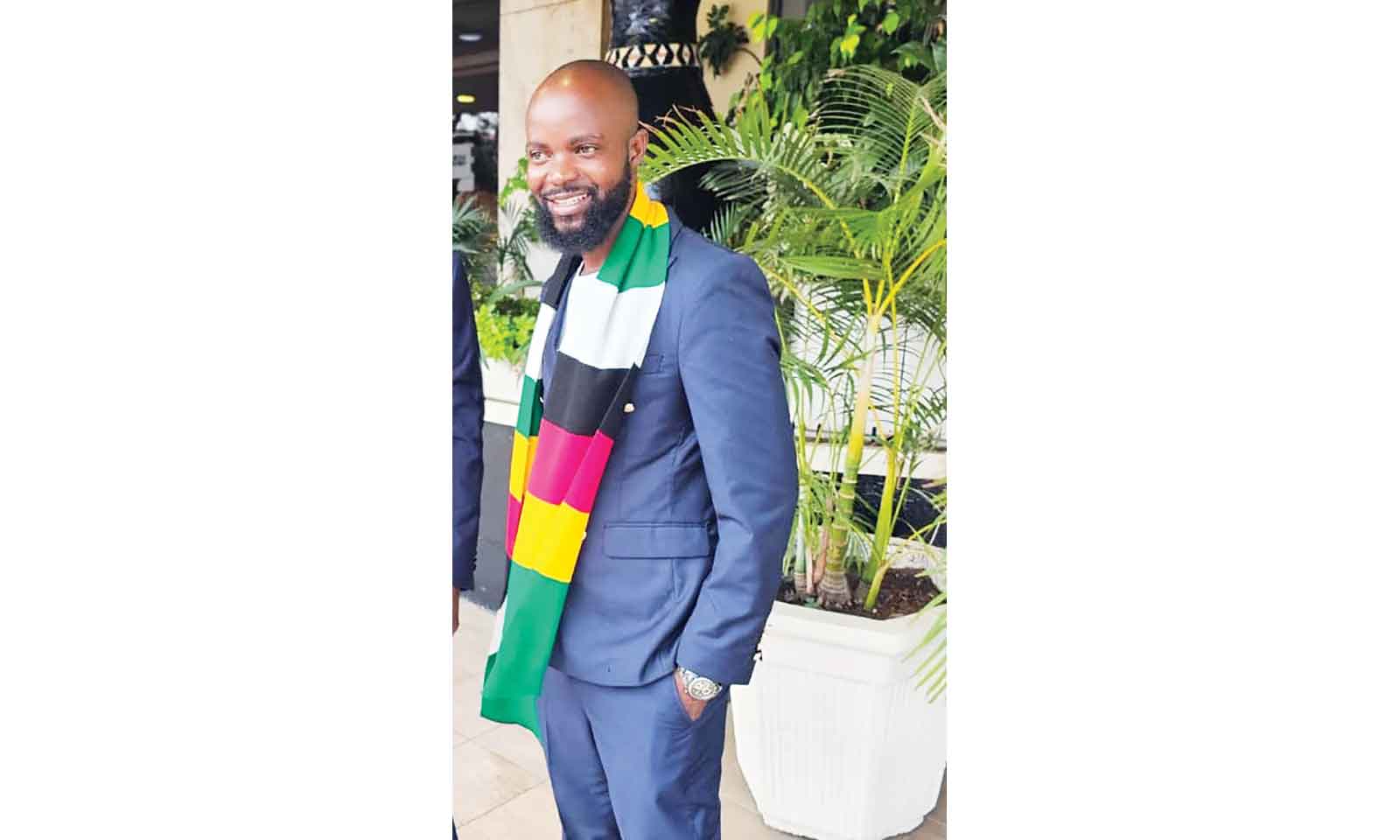
DURING the recently held Zanu PF Bulawayo Province Excellence Awards, City Centre District Youth Chairman, Cde Joseph Majoni, emerged as one of the night’s most prominent winners. Cde Majoni clinched the Best Performing Male District Chairperson award, a testament to his leadership in the province. In addition to the party recognition, he received an accolade from Boyz DzaMdara for Best Organisation in Business Development and Empowerment, highlighting his impact beyond traditional political structures. Cde Majoni has been credited with revitalising grassroots mobilisation within Bulawayo’s Central Business District and tertiary institutions, including the National University of Science and Technology and Bulawayo Polytechnic.Zimpapers Senior Politics Hub Reporter Gibson Mhaka (GM) caught up with Cde Joseph Majoni (JM) to gain insight into his success and his vision for youth empowerment in Bulawayo. Below are excerpts from the interview.
GM: Congratulations on your recent double victory at the Zanu PF Bulawayo Province Excellence Awards, Cde Majoni. Could you share your personal journey — where you were raised, your education, and the core values that shaped the man who stands as a District Youth Chairman today?
JM: I was born in Bulawayo at Mpilo Hospital and am the first-born in a family of two.
At the age of five, I left Bulawayo and attended primary and secondary school in Hurungwe, specifically at Karuru Primary and Secondary School.
During my time in primary school, I tragically lost both parents. This presented a significant challenge as I had to hustle to pay my school fees and take care of my younger brother.
Our grandmother, who was elderly and unemployed, relied on me for support. Despite these hardships, I persevered and managed to complete my O-levels.
Upon returning to Bulawayo, I started a small business buying and selling phones, which eventually led to opening a small shop in town. This venture enabled me to save enough money to attend college. I pursued a Diploma in Telecommunications Engineering with City and Guilds at Bulawayo Polytechnic.
Growing up without parents was undoubtedly tough, but my grandmother’s guidance and teachings played a pivotal role in shaping me into the person I am today.
My grandmother’s influence has been instrumental in my personal growth and I am thankful for her unwavering support.
GM: What specifically drew you to Zanu PF and why did you choose to begin your leadership journey in the City Centre District, which is often considered a challenging political landscape?
JM: I was born into a Zanu PF family, and my father, a war veteran, instilled in me a strong affinity for the party.
Although I do not know the name he used during the liberation struggle, his real name was Peter Majoni. Growing up, I was aware that many people in Mashonaland West support Zanu PF and I naturally gravitated towards the party.
As a young person, I was told that Zanu PF was my father’s party and I chose to stick with it. Although I was not actively involved in party structures initially, my journey took a significant turn in 2018 when I met Comrade Taurai Pangira, the Secretary for Finance in DCC1.
He introduced me to the party’s structures in Bulawayo, teaching me how to engage with people in the cells and mobilise support.
At that time, there was only one district in the City Centre District. I quickly rose through the ranks, becoming the Secretary for Security in the top six leadership teams.
During my second term, I was elected as the vice chairman, serving under the leadership of Cde Blessed Mushando.
When he was co-opted to the province, I automatically took over as the chairman, a position I currently hold.
GM: You clinched the Best Performing Male District Chairperson award. To what do you attribute this recognition? Was there a specific moment or project in the past year that you feel truly defined your “excellence” in leadership?
JM: I attribute this recognition to my team’s hard work and dedication.
A key factor contributing to this achievement was a specific project I led, which involved developing a chicken proposal to Finance, Economic Development and Investment Promotion Minister, Professor Mthuli Ncube for 700 chickens and feed.
I took the lead in ensuring the project’s success, and it is still ongoing in our City Centre District.
GM: The Boyz DzaMdara accolade focuses on Business Development and Empowerment. How do you bridge the gap between traditional political activism and tangible business empowerment for the youth?
JM: The accolade focuses on business development and employment, highlighting the necessity of bridging politics and business through a delicate balance.
To achieve this, one must first understand the landscape by staying informed on political trends and regulations affecting their industry.
Building relationships is equally vital, as fostering connections with both policymakers and industry leaders creates a stable foundation for growth.
By aligning goals, a business can demonstrate how its objectives support public policy priorities, while effective communication—utilising data and storytelling — is essential to influence key stakeholders.
Finally, navigating regulations requires a commitment to ensuring full compliance while simultaneously advocating for the long-term interests of the business.
GM: The CBD and colleges like NUST and Bulawayo Polytechnic are critical hubs. What is your specific strategy for “intensifying grassroots mobilisation” among students and urban professionals who might historically have been indifferent to party politics?
JM: My strategy for intensifying grassroots mobilisation among students and urban professionals in critical hubs like the CBD, NUST and Bulawayo Polytechnic involves building connections with their leadership and highlighting the benefits of being part of Zanu PF.
We emphasise the empowerment initiatives under President Mnangagwa’s leadership, which are evident and recognised globally.
When mobilising youths from universities and colleges, we focus on sharing the truth and avoiding unrealistic promises.
As the City Centre District Youth League, we have had success with projects like our chicken farming initiative, and we are exploring other ventures that can create employment opportunities for young people.
Through our connections with local businesspeople, we are able to secure jobs for youths in the city centre.
By leading by example and delivering tangible results, we aim to inspire more young people to get involved with the party and contribute to its growth.
GM: Youth employment and business bays are major talking points. How do you ensure that these projects remain sustainable rather than being once-off initiatives?
JM: Youth employment and business stalls are pressing concerns. To address these issues, we have secured opportunities in a competitive economy by partnering with microfinance companies in town that offer loans at a relatively low interest rate of 10 percent.
This initiative has helped make businesses more sustainable. Our vision is for the city council to provide more market stalls for our youths and create jobs for local businesspeople.
By doing so, we can ensure that these projects are long-term solutions rather than one-off interventions.
GM: How do your poultry projects and city-wide clean-up campaigns align with President Mnangagwa’s Vision 2030? Do you see yourself as a local implementer of the national “Nyika Inovakwa Nevene Vayo/Ilizwe lakhiwa ngabanikazi balo” philosophy?
JM: Poultry projects and city-wide clean-up campaigns align with President Mnangagwa’s Vision 2030.
This poultry initiative was sponsored by Minister, Professor Mthuli Ncube under the leadership of President Mnangagwa.
We still want more empowerment from our leadership, as they work hand-in-hand toward the Vision 2030 mantra of ‘leaving no one and no place behind, brick by brick, stone upon stone.’
The clean-up campaigns are also part of President Mnangagwa’s programmes; we conduct them every first Friday of the month to keep our community clean.
I see myself as an implementer of the national philosophy, Nyika Inovakwa Nevene Vayo/Ilizwe lakhiwa ngabanikazi balo, because I have already led successful projects and remain active in party programmes such as mobilisation and our President Mnangagwa’s clean-up campaign programme.
This year I have mobilised more than 50 youths — I think it is a good start for the first month of the year and secured jobs for youths, which contributed to me winning the Best District Male Chairperson award.
GM: What is the ultimate legacy you wish to leave behind in the Bulawayo Youth League? Beyond the awards and accolades, what do you want the “Majoni Era” to be remembered for in terms of the party’s growth?
JM: My ultimate legacy in the Bulawayo Youth League is to leave a lasting impact that will be remembered for years to come.
I want the ‘Majoni Era’ to be synonymous with party growth and development.