Online Reporter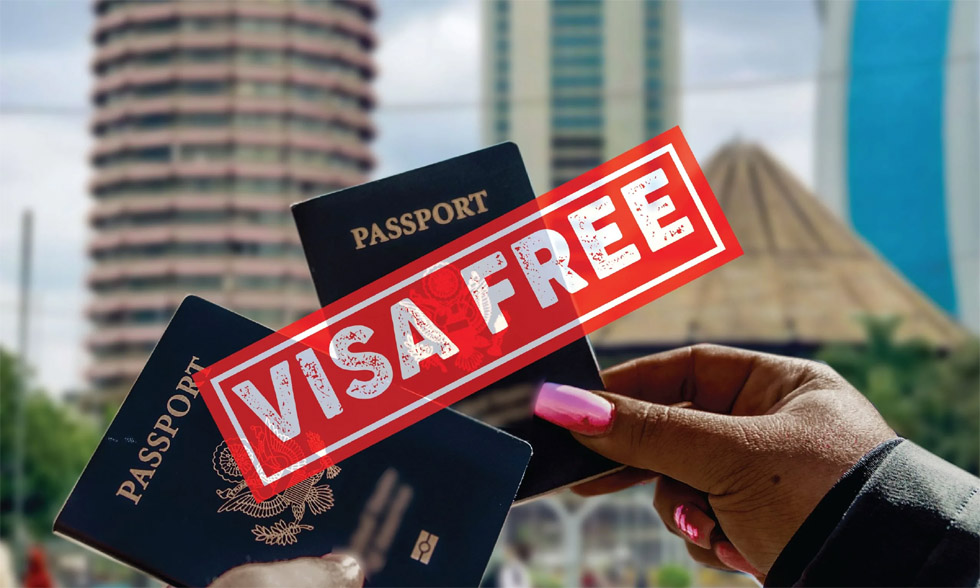
Lloyd Makonya
Correspondent
IN a fast-globalising Africa, where connectivity and mobility underpin economic transformation, Zimbabwe is steadily carving a path towards smarter border management, one that fosters trade, tourism and regional integration.
With tourism earmarked as a cornerstone of national economic recovery and growth, Zimbabwe’s visa policy has increasingly become a focal point of both opportunity and reform.
From the thundering Victoria Falls to the sacred Great Zimbabwe Monument to the mystical Eastern Highlands, the country offers an authentic African experience.
It is an experience that should be as accessible to fellow Africans as it is to the rest of the world.
Yet, the power of accessibility lies, not just in flights and roads, but in the policies that govern who can cross our borders and how easily.
The recently released Africa Visa Openness Index (AVOI) 2024, jointly compiled by the African Development Bank (AfDB) and the African union Commission (AUC), ranks Zimbabwe 22nd out of 54 African countries, with an improved openness score of 0,472.
This ranking reflects progress in enabling smoother entry into Zimbabwe for African nationals an important marker for a country that seeks to grow its tourism receipts and boost regional collaboration.
Visa openness refers to the ease with which travellers can obtain authorisation to travel to and enter a country, pending final determination by the destination country’s immigration officials.
The more visa-open a country, the easier it is for a traveller to visit that country. There are different degrees of visa openness.
A more visa-open country has a generally more liberal or relaxed visa policy for visitors, meaning that visitors either do not need a visa to enter its territory, or can obtain a visa upon arrival.
AVOI scores range from 0 to 1, where 0 applies to a country with the most restrictive visa policies that require a visa to be obtained ahead of travel by all travellers, while a score of 1 applies when a country has removed visa restrictions for all other African citizens.
The higher a country’s index score (the closer to 1), the more “visa-open” the country is and the higher it ranks on the AVOI A liberal visa regime is, not just a diplomatic gesture, but a strategic tool for economic development.
Tourism is among the fastest-growing sectors globally and for Zimbabwe, it is a vital foreign currency earner and job creator. Yet, the ease with which travellers enter the country significantly affects their decision to visit.
Recognising this, the Department of Immigration, under the Ministry of Home Affairs and Cultural Heritage, has adopted measures tomodernise and improve visa processing.
Chief among these is Zimbabwe’s online visa platform (e-visa system), which allows applicants to submit visa requests digitally eliminating the need for physical visits to embassies and reducing turnaround time.
The e-visa system has enhanced efficiency, improved traveller experience, and positioned Zimbabwe as a more accessible destination, particularly for regional tourists.
This aligns with the recently released Zimbabwe National Tourism and Hospitality Industry Policy (2025 – 2030), which identifies “facilitated access” as a key pillar to increasing arrivals, especially from Africa.
Moreover, Zimbabwe is a proud participant in the innovative KAZA Univisa arrangement, a regional visa initiative that allows travellers to visit both Zimbabwe and Zambia with a single visa, while also permitting day trips to Botswana.
This seamless cross-border travel experience is aprime example of how visa facilitation can unlock multi-country tourism circuits, extend stays and multiply economic benefits across borders.
Despite the progress, more work lies ahead. The AVOI 2024 report reveals that 47 percent of intra-African travel still requires pre-approved visas which is a barrier to mobility in a continent that seeks unity and integration through the African Continental Free Trade Area (AfCFTA).
In the AVOI 2024 report, Dr Akinwumi Adesina, the outgoing AfDB president, underscored the issue: “We cannot say we have borderless trade when we put up barriers for people to travel.”
Echoing this, Dr Joy Kategekwa, director at the AfDB’s Regional Integration Coordination Office, laments that while all countries want to benefit from tourism, “visa restrictions make it difficult for Africans tocontribute to each other’s tourism revenues.”
In this light, Zimbabwe’s moderate visa openness score should not be seen as the end, but as a stepping stone.
By expanding visa-free access to more African countries especially within SADC and COMESA, Zimbabwe can raise its AVOI score
further and attract increased intra-African travel.
Zimbabwe’s current score of 0,472 suggests that a fair number of African nationals either enjoy visa-free access or can obtain a visa
on arrival improvements that matter greatly in a competitive tourism landscape.
To enhance its competitiveness further, Zimbabwe could take cues from countries that rank at the top of the AVOI.
Rwanda, The Gambia and Benin, for instance, offer visa-free entry to all African nationals.
Their example demonstrates that visa liberalisation, when done smartly, need not come at the expense of national security or sovereignty. With robust digital systems such as e-visas and Electronic Travel Authorisations (ETAs), countries can screen visitors while still facilitating
seamless movement.
Visa openness has a direct impact on travel demand, intra-African mobility and ultimately, on tourism receipts.
In fact, research from the AfDB shows that countries with liberal visa policies tend to attract more tourists, investments and
skilled labour, all of which are critical ingredients for economic transformation.
In our quest for openness, we should note that visa openness must be balanced with national security, sovereignty and resource management.
Technology offers solutions that can ensure both safety and accessibility.
Zimbabwe’s e-visa platform, when continually upgraded, can provide pre-travel screening, biometric verification and automated processing enabling safe but welcoming borders.
Additionally, wider promotion of the KAZA Univisa and its expansion to include more member states such as Namibia and Angola, as
envisioned could transform the region into a competitive tourism bloc.
This will, not only enhance Zimbabwe’s destination appeal, but strengthen cross-border trade and cultural exchange.
Zimbabwe might also consider forging a regional visa agreement, possibly under a SADC Tourist Visa framework, to allow for multi-countrytravel much like the Schengen model in Europe. Such collaborative initiatives
would greatly boost regional arrivals and tourism receipts, especially from
countries that share common borders or heritage ties.
The Department of Immigration continues to play a pivotal role in implementing policies that align with national tourism goals, regional mobility protocols and continental integration frameworks.
As Zimbabwe pursues Vision 2030, visa facilitation should be firmly embedded within its economic diplomacy and service delivery transformation agenda. Visa openness is more than a travel issue.
It is a developmental priority. And for Zimbabwe, it is a gateway to prosperity.