admin
admin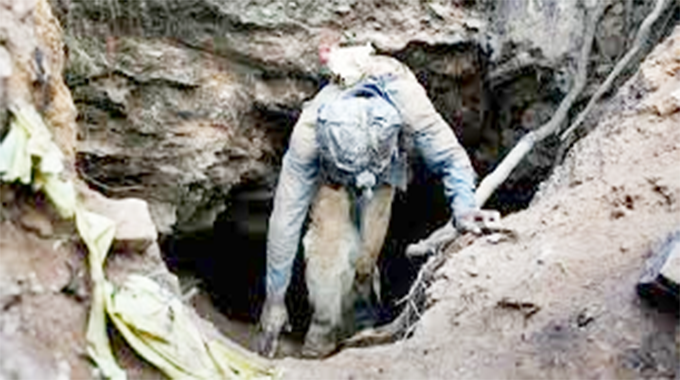
Nozipho Rutsate, Features Reporter
THEY are often referred to as amakorokoza — a name derived from the primitive nature of their mining activities which resembles one who is scavenging and naturally they don’t detest dirty.
Although the name (amakorokoza) has been replaced by a more civil one — artisanal miners — their operations have not so much changed. They are usually covered in the red sheath of dust, enduring extreme weather conditions among other life threatening risks associated with the search for the precious yellow metal.
According to mining researchers their activities are characterised by minimal use of machinery or technology; operation without legal mining title or valid contract with the title holder, low productivity, inadequate safety measures, healthcare and environmental protection, high seasonality linked to economic insecurity, their operations are very labour intensive because they mainly use rudimentary equipment like shovels, hoes, chisels, picks, buckets and wheelbarrows in their mining operations.
Despite the risks, the negative behaviour and the tag of violence that society associates them with they have remained a critical component of the mining sector — contributing substantially to the overall gold production in the country with deputy Minister of Mines and Mining Development Cde Polite Kambamura saying the artisanal gold miners have been contributing to the national fiscus in a big way.
“The Mining sector contributed US$2,9 billion in 2018 with 64 percent coming from the country’s total exports, recording a 16 percent increase from 2017, were US$2,5 billion was produced.”
He added that the mining sector was moving towards Government’s target of increasing production for 2019 to 40 tonnes from 33,3 tonnes in 2018.
Although their contribution to the national economy is undeniable which has led to their acceptance by the Government, society’s perception has not so much changed. It still sees them as rogue, unkempt and the machete stories associated with many gold mining areas have been a straw on the cracking back of a positive reputation.
They therefore remain an unwelcome society in the areas they operate amid calls by the Zimbabwe Miners Federation (ZMF) for them to forge ties with communities they operate in.
“Working with local community is important, not only in order to meet legal and voluntary social and human rights requirements but to ensure that communities benefit and are protected (including the artisanal and small-scale miners) but increasingly it is also necessary to gain the social licence,” said Zimbabwe Miners Federation President, Ms Henrietta Rushwaya.
She added, “The role of the society in the process of formalising is not to shun but support the transition of artisanal and small-scale gold miners into the formal sector through a legal, regulatory and policy framework that promotes civility, transparency, less criminality, deaths or gold wars, appreciation of the trade towards community and infrastructure development.”
Psychologists have also commented that the way artisanal and small-scale miners are socialised have also contributed to their negative responses in approach to society.
“Gold panners’ rogue, reckless and violent behaviour is a product of social construction as they are treated as the wretched and filth of the earth, which calls for society to accept them and also capacitate them on the best practices of mining as they may face the same fate of some people who leave prison and fail to get acceptance from their given societies,” said a social worker based in Bulawayo.
The Zimbabwe Economic Policy Analysis and Research Unit (Zeparu) contends that Zimbabwe’s artisanal miners face a myriad of challenges that affect productive capacity and compliance with the mining laws and environmental laws.
“The artisanal mining sector generally relies on unskilled labour for the exploration and exploitation of minerals. Given the lack of adequate geological knowledge and mine planning skills, many of their activities are chaotic and environmentally damaging and the workings themselves can be death traps due to poor designs.”
Commenting on how they (artisanal miners) survive and feel about working under these conditions, one gold panner in Shurugwi said, “This life is a gamble, you either die hungry and poor or die trying. It is painful, the working conditions are not friendly but we do not have a choice.”
The labour intensive activity is not a preserve of males only as females are also part of the matrix and they confirm exposure to the dangers associated with the mining. They use dangerous chemicals to extract the gold such as mercury and cyanide as they have no other affordable options but say they wish mining authorities and key stakeholders to assist in capacitating them to upgrade the sector.
“We know the dangers caused by inhaling and handling these chemicals with our bare hands since we have been receiving training from organisations such as Pact Zimbabwe, these include brain and nervous system damage, musculoskeletal problems, memory loss, kidney failures, abortion in women, depression among others,” said a female gold miner in Gwanda.
It is against this background that the Government is chipping in with a flexible loan facility amounting to $150 million for small-scale miners with at least $120 million having been disbursed to beneficiaries.
The Head of Gold Development Initiative Fund at Fidelity Printers Refineries, Mr Matthew Chidavaenzi said this initiative was aimed at providing financial solutions to gold mining problems.
“We hope to improve access to capital (finance) and livelihoods. We also intend to increase gold deliveries to FPR and export value for Zimbabwe. We will soon avail another $100 million towards supporting gold miners in Zimbabwe,” he added.
Stakeholders in the mining sector are however, calling for a paradigm shift in artisanal mining where the people involved are provided with a platform to learn more about the sector so as to increase production and lessen conflicts.
Eng Kambamura urged ZMF to collaborate with Chamber of Mines and Zimbabwe School of Mines to equip the artisanal and small-scale miners with the requisite knowledge.
“Provision of training to artisanal small-scale miners increases awareness of best mining practices that will reduce levels of accidents and incidents that have previously resulted in loss of lives, equipment and production time, increase awareness of existing legislation that protects miners and mine workers’ rights and improve ore extraction and metal recoveries through adoption of efficient mining and mineral processing methods. It creates a clearer understanding of the minerals marketing and how miners can protect themselves against themselves as well as support the acquisition of mining skills that increases employability in the advanced formal mining sector,” said the Eng Kambamura.
He said strides have been made with the Zimbabwe School of Mines training a total of 250 learners in 2018 compared with 141 for the whole of 2017. In line with the Government initiative, he said, the Zimbabwe School of Mines would continue to teach miners with the aim of improving the skills and knowledge of owners and workforce at the small mines so that they would interact effectively with various service providers like Ministry of Mines and Mining Development, Ema, district councils, police, suppliers and other technical service providers like mining engineers, geologists and surveyors.



 Online Reporter