We publish here the 37th post Cabinet media briefing presented by Information, Publicity and Broadcasting Services Minister Dr Zhemu Soda, in Harare yesterday.
Today, November 17, 2026, His Excellency the President, Cde Dr. E.D. Mnangagwa chaired the 37th Cabinet Meeting and the following issues, among others, were considered and approved.
1.0 ZIMBABWE NATIONAL ARTIFICIAL INTELLIGENCE CHARTER
Cabinet considered and approved the Zimbabwe National Artificial Intelligence Charter, which was presented by the Minister of Finance, Honourable Professor Mthuli Ncube, as Chairman of the Cabinet Committee on National Development. The Artificial Intelligence Charter provides a governing framework for implementing the Zimbabwe National Artificial Intelligence Strategy (2026-2030), which was launched by His Excellency the President in March 2026.
The Charter operationalises the pillars of the Artificial Intelligence Strategy with binding ethical principles and commitments which ensure that AI development and deployment in Zimbabwe remains human-centric, transparent, inclusive and aligned with national values and the Constitution.
The Artificial Intelligence Charter is a collective contract between Government, the private sector, the academia, civil society and the people of Zimbabwe, articulating shared values and principles governing the entire AI ecosystem, from research and development to deployment and use.
Furthermore, the Charter establishes robust governance architecture strategic oversight, day-to-day coordination and complaints-handling. The Artificial Intelligence Charter, therefore, strengthens ethical clarity, regulatory predictability and accountability for all AI activities in order to ensure that the pursuit of technological advancement conforms to the cultural imperatives of the philosophy of Ubuntu/Unhu and the national socioeconomic development aspirations of Zimbabwe.
2.0 PRINCIPLES OF THE NATIONAL ARTS COUNCIL OF ZIMBABWE AMENDMENT BILL, 2026
Cabinet received and approved the Principles of the National Arts Council of Zimbabwe Amendment Bill, 2026 as presented by the Minister of Sport, Arts, Recreation and Culture, Honourable, Lt. Gen. (Rtd.) A. Sanyatwe.
The principles seek to modernise the regulatory framework of Zimbabwe’s cultural and creative industries to respond to the evolving global socioeconomic dictates, technological advancements and the emerging business models in digital content creation.
The National Arts Council Act was established in 1985 and the past four decades have seen rapid evolution of the sector from traditional and non-profit into a multi-faceted million-dollar commercial ecosystem incorporating digital media creation, streaming platforms, gaming, animation, film, fashion, creative technology and international cultural trade. The resultant updated legislation will, therefore, align the regulatory framework governing the National Arts Council of Zimbabwe with trends of the evolving creative industry value chains, corporate governance and protection of intellectual property rights.
3.0 END OF 2ND CYCLE 100-DAY CYCLE REPORT OF 2026
Cabinet received and noted an End of Cycle Report on the Implementation of Priority Projects for the 2nd 100-Day Cycle of 2026, which was presented by the Minister for National Security in the Office of the President and Cabinet, Honourable L. Matuke.
The 2nd 100-Day Cycle Programme which commenced on May 25, 2026 and ended on September 1, 2026, covered a total of 211 programmes and projects which were being implemented across 27 Government Ministries, Departments and Agencies in line with the National Development Strategy 2: 2026-2030 (NDS2).
The implementation prioritised projects of high impact, citizen-centric, low risk and rapid implementation.
The nation is advised that 136 projects (64.5%) of the 211 programmes and projects implemented were on target representing 80-100%, including ICT deployment in schools, installations of manufacturing plant, secondary school infrastructure and commissioning of major highway bridges.
A total of 45 projects were within variance of completion of 61-79%, while 30 projects where below target scoring 40% and below of target completion.
Cabinet highlights that 27 projects were being implemented in previously underserved areas including Mwenezi, Binga, Mlambapele, Tsholotsho, Gokwe, Mbire, Siakobvu, Kanyemba, and Nkayi.
Fifteen of these projects were on target at above 80% of completion, 10 projects were between 61% to 79% of completion, while only 2 projects were below target of completion.
Some projects were completed and commissioned during the 2nd 100-Day Cycle Period including Manyame and Mucheke River Bridges along Harare-Masvingo-Beitbridge Road; Sable Chemical Plant in Kwekwe with a production capacity of 240 000 tonnes; a Nurses’ home at Parirenyatwa Group of Hospitals which improved staff welfare and accommodation; installation of CT-Scanners at Chitungwiza and Sally Mugabe Hospitals; and male and female barracks at Siyakobvu Police Station in Kariba District, Mashonaland West Province.
Other milestone projects that were being implemented by various Ministries, Departments and Agencies and were expected to enhance service delivery to the citizens include the New Gwanda Court Complex; and Duplex/Garden Flats in Beitbridge, Matabeleland South Province; Rangemore Phase 2 Housing Project, Bulawayo Province; Mabvuku and Msasa Traffic Interchanges along the Harare-Mutare High Way, among many other projects.
Government notes that the implementation of projects across all provinces enhances strengthening of the devolution and decentralisation agenda by capacitating the lower tiers of Government to coordinate and implement projects in their respective areas.
4.0 MEMORANDUM OF UNDERSTANDING BETWEEN THE REPUBLIC OF ZIMBABWE AND THE PEOPLE’S DEMOCRATIC REPUBLIC OF ALGERIA ON COOPERATION IN THE FIELD OF BASIC EDUCATION
Cabinet considered and approved the Memorandum of Understanding between the Republic of Zimbabwe and the People’s Democratic Republic of Algeria on Cooperation in the Field of Basic Education, which was presented by the Attorney General on behalf of the Chairman of the Cabinet Committee on Legislation.
The Memorandum of Understanding (MoU) provides the framework for cooperation between the two sister Republics to facilitate, among others, more structured exchange of expertise, promotion of innovation and provision of quality education.
More specifically, the MoU provides for cooperation in teacher and inspector professional development, curriculum innovation, digital transformation, educational infrastructure, assessment and examinations, school infrastructure development, and vocational and technology education.
Zimbabwe stands to benefit from Algeria’s expertise and experience in educational technology; Science, Technology, Engineering and Mathematics (STEM) education; and infrastructure development, while Algeria will benefit from Zimbabwe’s experience in competence-based education, teacher development and school-based assessment.
5.0 REPORT ON THE 31ST CONFERENCE OF PARTIES TO THE UNITED NATIONS FRAMEWORK CONVENTION ON CLIMATE CHANGE (COP 31): NOVEMBER 10-13, 2026
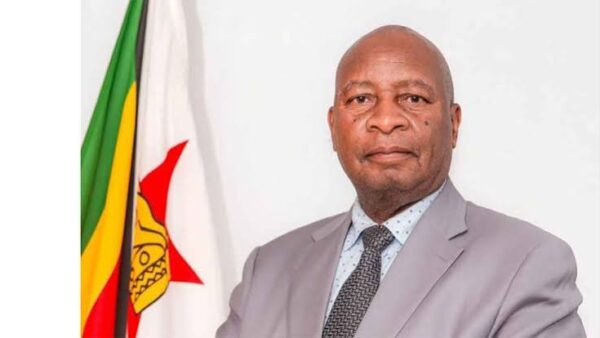
In fulfilment of its multi-lateral international obligation in the comity of nations, Zimbabwe participated in the 31st Conference of Parties to the United Nations Framework Convention on Climate Change (COP 31) held from 10th to 13th November, 2026, in the Turkish City of Antalya, as reported by Honourable Vice President Gen. (Rtd.) Dr. C.G.D.N. Chiwenga, leader of the Zimbabwean delegation.
The Conference of Parties was held under the theme “Towards a Sustainable, Resilient and Equitable Future”. It focused on, among others, implementation modalities for the Paris Agreement, advancing the updated 2035 Nationally Determined Contributions (NDCs), and addressing barriers to climate finance.
Honourable Vice President Gen. (Rtd.) Dr Chiwenga delivered Zimbabwe’s National Statement at the World Leaders Climate Action Summit; and presented Zimbabwe’s position at the High-Level Dialogue on Clean Energy Transition and Electrification, and the “35 by 35: Powering the Future” initiative.
The Vice President also held a bilateral meeting with the Vice President of Türkiye, Honourable Cevdet Yilmaz; and undertook an industrial visit to Cantek, which provides turnkey cold-chain solutions and related technologies.
In the National Statement, Zimbabwe committed to reducing per-capita emissions by 40% by 2035 through climate-smart agriculture; expanded access to energy; beneficiation and value addition of minerals at source; accelerated industrialisation; sustainable food production; wetland protection and restoration; and scaling up locally-driven climate innovations.
On the High-Level Dialogue on Clean Energy Transition and Electrification, Zimbabwe endorsed the “35 by 35: Powering the Future” initiative, which seeks to increase global electrification to 35% by 2035. The key mechanism for achieving this is the National Energy Compact, launched in 2025 to provide universal access to affordable, reliable and sustainable electricity by 2030.
During their bilateral meeting, the Vice Presidents of Türkiye and Zimbabwe agreed to deepen diplomatic and economic relations by operationalising existing institutional mechanisms. Accordingly, processes are underway for the convening of the inaugural Joint Permanent Commission on Cooperation between the two States; for concluding bilateral agreements under negotiation; for expanding cooperation between the two Sister Republics’ investment promotion agencies; and for strengthening private sector collaboration through the Türkiye-Zimbabwe Business Council.
6.0 REPORT ON ZIMBABWE’S PARTICIPATION AT THE 34TH ORDINARY SESSION OF THE AFRICA RICE CENTRE COUNCIL OF MINISTERS: ABIDJAN, COTE D’IVOIRE: NOVEMBER 4-6, 2026
Cabinet noted a Report on Zimbabwe’s Participation at the 34th Ordinary Session of the Africa Rice Centre Council of Ministers which was held in Abidjan, Cote D’ivoire from 4th to 6th November, 2026 as presented by Vice President Hon. Gen. (Rtd.) Dr. C.D.G.N. Chiwenga.
Running under the theme, “Enhancing the Competitiveness and Marketability of Rice Produced in Africa”, Zimbabwe attended the Ordinary Session in order to explore opportunities for cooperation and investment; to consider strategic options to becoming a member of AfricaRice; and to assess institutional, policy and financial commitments required to enhance positioning of rice production in Zimbabwe as a strategic pillar for food security and economic development agenda.
Deliberations at the 34th Ordinary Session reinforced rice production as not merely an agriculture activity but a comprehensive national food security strategy to be underpinned by scientific research and innovation. A key take away was that rice consumption in Africa was increasing faster than production, thus providing an alternative to Zimbabwe’s National Food Security thrust.
7.0 REPORT ON THE VISIT TO THE RUSSIAN FEDERATION BY HONOURABLE VICE PRESIDENT COL. (RTD.) DR. K.C.D. MOHADI: NOVEMBER 7-12, 2026
Zimbabwe’s Engagement and Re-Engagement drive continues to yield tangible outcomes, as presented by Honourable Vice President Col. (Rtd.) Dr. K.C.D. Mohadi, in a Report to Cabinet on his Visit to the Russian Federation from 7 to 12 November, 2026.
The Vice President led a delegation comprising the Deputy Minister of Health and Child Care and a technical team of officials under the auspices of the Agreement on Cooperation in the Field of Healthcare, Medical Education and Science signed on 20th January, 2025.
Undertaken on the heels of His Excellency the President’s engagements during his visit to Russia for the Russia-Africa Summit in October 2026, the Vice President’s visit sought to deepen appreciation of and engage the Russian pharmaceutical and healthcare industry, especially in the area of non-communicable diseases.
Through decisive action and execution of agreements, the engagement presents Zimbabwe with numerous opportunities for collaboration, capacity building, technology transfer, local manufacturing and other exchange programmes.
I THANK YOU!