
Ivan Zhakata
Herald Correspondent
Thousands of previously disconnected villagers across Zimbabwe’s 10 provinces are now within mobile phone reach following the Postal and Telecommunications Regulatory Authority of Zimbabwe (POTRAZ)’s Tower Relocation Project (TRP).
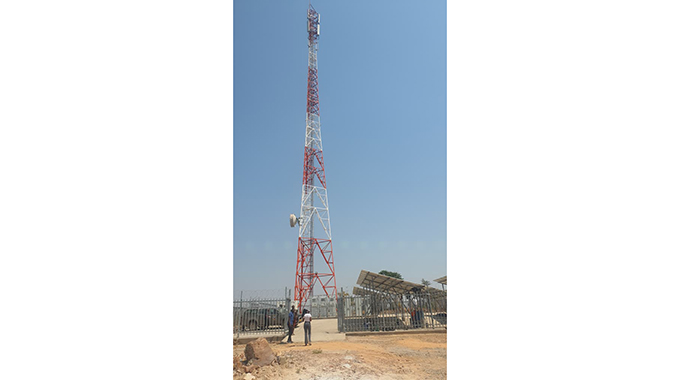
Funded through the Universal Services Fund (USF), the initiative involves dismantling underutilised base stations in urban and semi-urban areas and relocating them to underserved rural and border communities.
The towers are fitted with solar-powered systems and shared by mobile operators NetOne, Econet and Telecel, extending 2G, 3G and 4G coverage to areas that had been off-grid for decades.
In Binga’s Sinamusanga area, villagers celebrated as phone connectivity became available for the first time since 1980.
Chief Sinamusanga, born Gasta Mwimbe, praised the development.
“This project has connected our area, which had no mobile network connectivity since independence,” he said.
“People can now communicate easily, access mobile money, and even call for help in emergencies.”
The Sinamusanga tower went live on January 15 with NetOne, while Econet followed on March 25, offering a 30–40km coverage radius.
Similar towers have been commissioned in Ngwana Range, Jerera in Zaka, and in Ruwangwe in Nyanga.
However, in Nyanga near the Mozambican border, network access remains patchy with communities relying on Mozambican networks.
“We welcome the tower, but there are still challenges here because of proximity to the border. People often connect to Mozambique networks,” said Headman Misheck Mhanje of Ward 5.
In Guruve, the Nyamuseve base station has transformed connectivity, serving all three major operators under the infrastructure-sharing scheme. Villagers expressed relief after years of travelling long distances to find a signal.
“We used to walk to growth points just to send a message or make a call,” said Headman Kazunga, born Amon Gunyere.
“Now we can communicate from our homes. We thank the Government for remembering us.”
Mr Matthew Dandawo, another resident, said the project was life-changing.
“This base station will go a long way in helping our community. It has opened us up to the digital world.”
POTRAZ director-general Dr Gift Machengete said the relocation strategy was conceived after plans to build 350 new towers fell through due to funding constraints.
“So far, we have relocated 30 towers and switched them on. Another 14 will be operational soon — eight are under construction and six are already completed. This project is bearing fruit,” he said.
Dr Machengete said new technology now allows telecoms and broadcasters to co-exist on the same towers, paving the way for future collaboration with the Broadcasting Authority of Zimbabwe.
The TRP is part of the Government’s wider push to achieve a digital economy by 2030.
By expanding mobile coverage in remote and marginalised areas, officials said the programme was bridging Zimbabwe’s digital divide while ensuring equitable access to communication services.