Online Reporter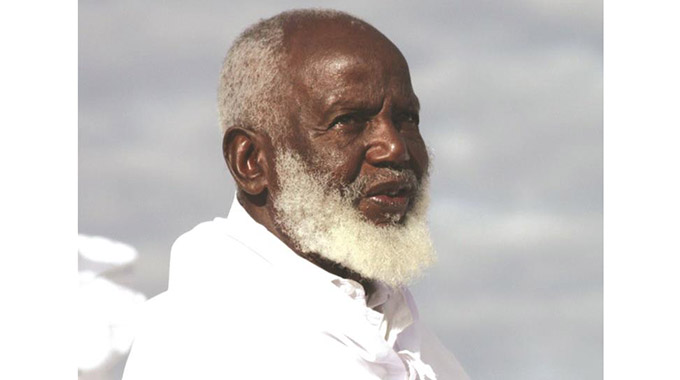
Sifelani Tsiko
Fact Check Editor
ARCHBISHOP Mwazha was among the early African independent church leaders, who included among others — Johane Marange, Johane Masowe among others, who sought to establish autonomous Christian movements that incorporated African cultural elements and addressed local concerns.
This came after this early crop of leaders saw the limitations or paternalism of Western mission-controlled churches. The churches they led were distinguished by their white robes for both men and women.
When was Rev Mwazha born?
He was born on October 25, 1918, in Chirumanzu near Mvuma just after a devastating influenza epidemic. According to his biography titled: “The Divine Commision of Paul Mwazha of Africa” and interviews in the media, Rev Mwazha says it was a Catholic priest, Father Schmidt who actually first announced his mission on earth. When he was young he fell sick and her mother gave him the name Mamvura (child of water) because she had resigned to fate that he would die. According to Shona culture traditions at the time, dead infants were buried near streams, hence the name Mamvura. In the biography, when Rev Mwazha became seriously ill soon after birth, her mother rushed to Father Schmidt at Holy Cross Mission to receive last rites at the altar. As the Catholic priest completed the rites of baptising him, Mwazha felt better suddenly.
In an interview with The Herald in 2004, Rev Mwazha said the priest shouted excitedly: “Mwana amutsirwa basa! Mwana amutsirwa basa! (The child has been raised to do God’s work).
When did he start God’s work?
When he was aged just 11, he started learning the Catholic Catechism with the assistance of his uncle named Nyamayendenga. He would recite the Lord’s prayer every morning and evening that “became the pillar of his faith in God.” In an interview in 2004, Rev Mwazha said since that time, constant prayer, visions, dreams and encounters with the Holy spirit became part of his apostolic journey.
“The Lord showed my heavenly body to me. The Lord Jesus Christ appeared to me twice in his image. He was almost real in life. It happened, as I was asleep. I was flanked by two angelic figures. We were all clad in long white cloaks and our bodies were as bright as the full moon. We seemed to float up and down in the air. We were in a temple,” wrote Rev Mwazha in his biography, when he was in Standard Two at Maswaure Methodist Church at Kwenda in Chivhu.
Mwazha — teacher, evangelist and entrepreneur
Rev Mwazha trained as a teacher and rose through the ranks to become a headmaster. He also ran four retail businesses in the 70s and early 80s. When he became a full time evangelist, he sold his four retail businesses in the mid -1980s to devote his life to church he founded in 1959.
Rev Mwazha, as one of the first Zimbabweans to establish and run a Zionist independent African church in colonial Zimbabwe, his evangelical work in the post — independence era saw his growing leaps and bound both in Zimbabwe, in southern Africa and other western countries. His followers who worship outdoors in nature and wear white garments, are now believed to be nearly seven million.
No to watching television
To buttress the gospel of self-reliance both spiritually and morally, Mwazha discouraged his followers from watching television, which he argued, corrupted their minds. He asserted that television was an instrument of Western domination. Mwazha believed strongly that television played a complex role in cultural imperialism and resistance. He said it was used to spread the dominant western cultures globally, potentially eroding local traditions.
“Our church doctrine prohibits members from watching television. This is because it corrupts our minds and in the process leaves us vulnerable to western ideas and values eventually leading to moral decay,” he was quoted saying at a Holy Communion gathering of his church at Nharikure, in Chirumanzi in 2006.
“Apart from HIV/Aids, cases of rape are on the increase because of some of the dressing habits among women. Muno muchurch yedu vanopfeka hembe refu dzakadzikama. (Our women dress decently).”
In 1998, he was quoted saying: “It is better to shed off those things that are considered by many as making life easier or more enjoyable but removes me away from my God.”
Legacy
His teachings and beliefs contains elements of cultural resistance to the colonial project. Mwazha’s ideology ties closely with the black self-reliance and the nationalist ideology of black empowerment. After independence, his church supported the Government’s thrust on land reform, self reliance and black empowerment.
He was an astute and charismatic leader who believed strongly in the gospel that encouraged faith and hard work.