Online Reporter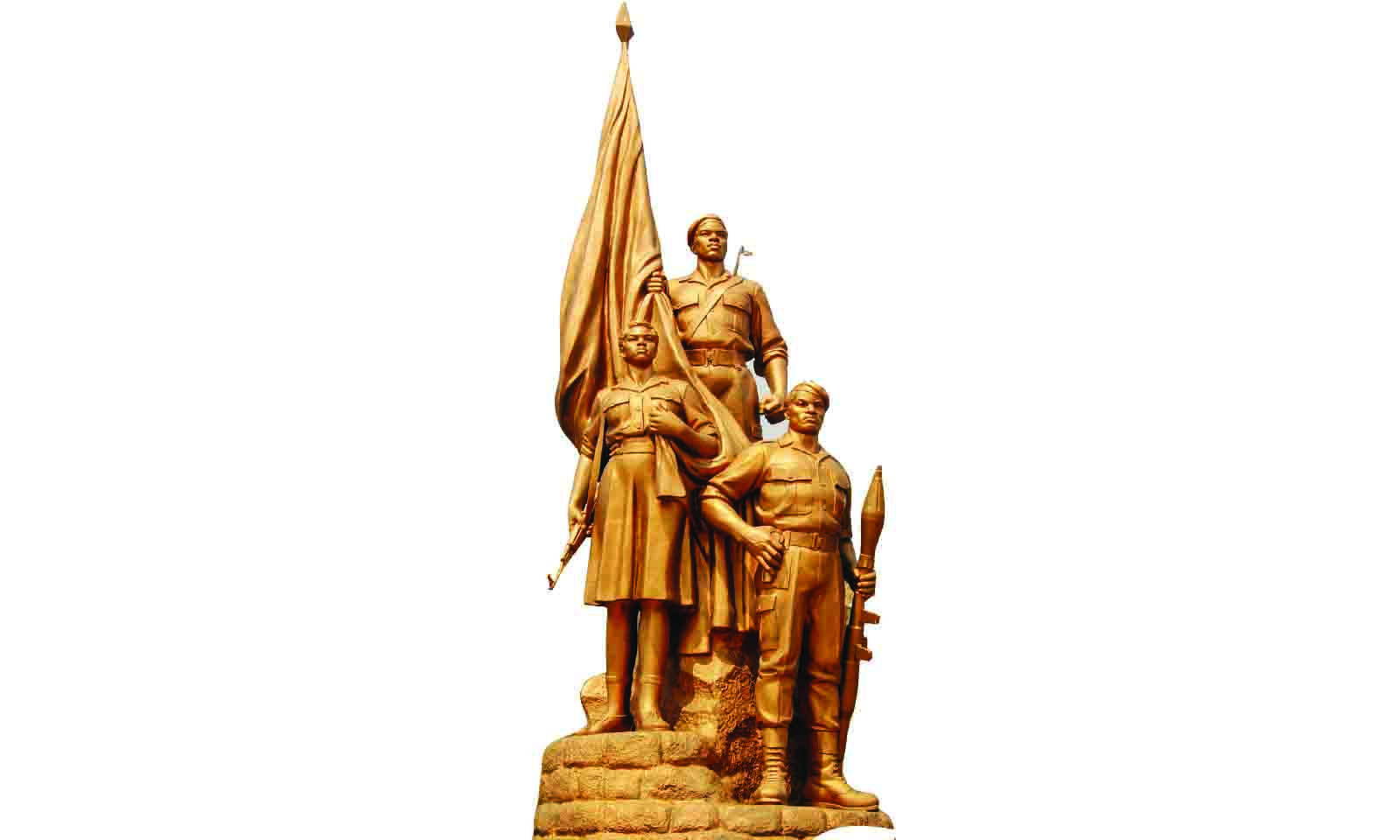
Sifelani Tsiko
Fact Check Editor
Several non-African individuals played significant roles in Zimbabwe’s struggle for independence demonstrating that the protracted struggle was not much about the colour of the skin but the struggle for equality and justice.
This especially holds when we see the number of people — closely associated with the struggle and were brave souls who fought for the independence of Zimbabwe.
The heroes made tremendous sacrifices, participated and supported liberation movements and even gave their lives for the cause.
It is important that in the post independence era they were accorded heroes’ status and made it into our mainstream history books of Zimbabwe regardless of the colour of their skin.
In this article, we are shining a light on these incredible individuals who played a crucial role in the independence of Zimbabwe.
The heroes include Joseph Luke Culverwell (Born 10.07.18, died 16.07.93), Arthur Guy Brock (Born 06.04.06 -died 28.01.95), Kantibhai Gordhanbhai Patel (Born 28.10.28 – died 10.09.11) and Guy Georgias (Born 22.06.35 – Died 18.12.15).
In addition, there were others who were accorded state assisted funerals in recognition of their role in the struggle to liberate Zimbabwe.
Guy Clutton-Brock was the first European to be declared a national hero by the Government in 1993.
His connection with Zimbabwe dated back to 1949 when he and his wife, Molly, went to work at St Faith’s Mission, an Anglican Church Mission near Rusape in what was then Southern Rhodesia.
In 1971 he was expelled by Ian Smith’s regime and deprived of his citizenship after his co- operative Cold Comfort Farm, a symbol of non-racial progress, was declared an unlawful organisation.
“I am glad to share in the fellowship of the dispossessed . . . I regard the present regime as only temporary and myself as a continuing citizen of Rhodesia, so expect to see Zimbabwe again before long. I therefore say goodbye to nobody,’’ he remarked boldly way back.
In 1957, Clutton-Brock played a pivotal role in the crafting of the constitution of Rhodesia’s African National Congress, which called for a true partnership of all inhabitants, a completely integrated society, and equal opportunities for all, and stated that advancement was possible only through “non-racial thinking and acting.’’
The ANC was banned in 1959, and Guy Clutton-Brock was detained for a month by the white settler regime. At the time, the authorities promised freedom if he agreed to leave the territory of Rhodesia and Nyasaland.
Clutton–Brock refused, won an unconditional release from prison and returned to his work in Rhodesia, Nyasaland and Botswana, though regarding Rhodesia as his home base.
He was a non–African hero who fought tirelessly against racial inequality and injustice. The life of Guy Clutton-Brock demonstrated the bigger perspective that the war against colonialism was not just for the black cause alone, but beyond for a free, just and equal society.
Joseph Luke Culverwell was born on July 10, 1918 in Johannesburg and he died on July16, 1993 in Harare. He was laid to rest at the National Heroes Acre on July 22, 1993.
He attended McKeurtan (Bulawayo) and Moffat (Arcadia, Salisbury, where there is now a street named after him) primary schools.
Then he completed his education in Cape Town and Nottingham, England.
He had an industrious teaching career of 27 years, teaching in Zambia, Kenya, Nigeria, Tanzania, Uganda, Iran and England.
He served as a sergeant in the Second World War in Ethiopia, Somalia, Kenya and Egypt and after the war he became involved with the liberation struggle with such political veterans as George Nyandoro, James Chikerema and Joshua Nkomo, actively participating in the inaugural meeting of the African National Congress of the Southern Rhodesia.
He became a member of Zapu and after it was banned joined Zanu in the 1960s, realising his ambition, formed in 1938 when he was elected secretary-general of the National Association of Coloured Peoples.
He often joked that he was a “pure Coloured”.
He was imprisoned for 18 months in 1967 by the Rhodesian Authorities for political activities, but subsequently taught in Zambia, Kenya, Tanzania, Uganda and England, supporting the liberation struggle and Zanu PF by obtaining clothes, medicines and ambulances for war liberators fighting in this country.
He also supported Zimbabwean refugees by being elected chairman and securing jobs, accommodation and scholarships for exiles.
He was a delegate both to the Geneva and Lancaster House conferences.
After independence he was made a senator and deputy Minister of Education and Culture.
In 1988 until 1992 he was made Minister of State in the President’s Office responsible for National Scholarships.
He then became Deputy Minister of Higher Education but because of his advancing age and ill health he left Parliament and Government in 1992, dying less than a year later.
Businessman and nationalist, Kantibhai Gordhanbhai Patelwas unanimously declared a national hero in 2011 for his contributions during and after the liberation struggle.
Indian born Patel played a crucial role in financing conferences held by nationalists during the liberation struggle.
He came to Zimbabwe in 1961 became involved in liberation activities, first joining PF ZAPU and later ZANU PF. Patel was elected to the ZANU PF politburo in 2004, and held a number of parliamentary offices as well.
Patel died in South Africa where he was being treated after falling at his home in Harare fracturing his skull and breaking a hip bone. He was 83.
Racial colonial policies that segregated against blacks, coloureds and Indians were a major factor that motivated Patel to be involved in political activism at an early age together with other non–African people.
“A veteran nationalist and astute politician who belonged to a rare breed of very few courageous non-African revolutionaries in Zimbabwe . . . His contributions to the liberation of this country and philanthropic work are well documented and they shall remain etched in annals of the history of Zimbabwe . . . We recall his heroic political activities in the National Democratic Party, the Zimbabwe African People’s union and the Zimbabwe African National union (Patriotic Front),” late former President Robert Mugabe said in a condolence message.
Guy Georgias, from the coloured community, was another visionary entrepreneur and shrewd businessman who was determined to see justice being delivered to all.
He will be remembered for his dauntless and uncompromising stance against racial injustice during the liberation struggle.
Georgias was a patriot and assisted ZANU PF to spearhead a number of programmes for its grassroots supporters. He supported the party morally and financially.
He was an economic empowerment crusader and anti-sanctions lobbyist, a Zanu PF Central Committee member, who was also former Economic Development Deputy Minister who single-handedly fought against the illegal sanctions imposed on Zimbabwe in the European Court to ensure economic justice.
Sen Georgias died in Harare in 2015. He was 80. He was at the National Heroes Acre.
A number of non-African linked to the struggle for independence were granted recognition by the Government for their contribution to the liberation struggle.
In 2007, accomplished writer, photographer and publisher David Martin was granted a state assisted funeral for being a true fighter for the liberation and development of a progressive southern Africa.
He was hailed for connecting organically with the freedom struggles in Zimbabwe and other southern African countries.
“I am sure his uncharacteristic level of empathy with liberation movements in the region mirrored a deep humanity which put the quest for human justice above loyalty to one’s country,” Mugabe said in a condolence message.
“Together with his partner Phylis Johnson, David offered himself for the daunting fight against apartheid and destructive destabilisation of our region.”