Feature Vusumuzi Dube
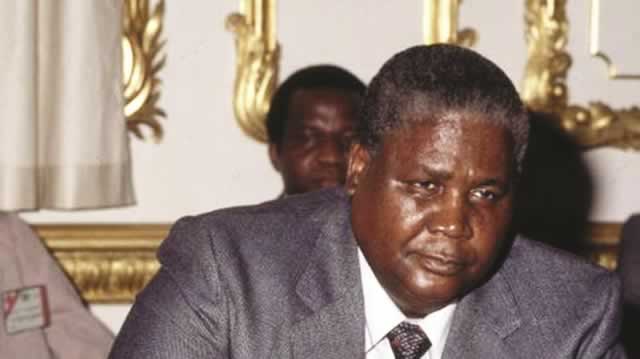
“The railway administration was not at all happy about that. But although unrecognised, the union was not actually legal, and there was nothing they could do about it.” These were the words of the late Vice President Dr Joshua Nkomo in his autobiography; Nkomo: The Story of My Life, describing his first footsteps into politics, that is, being the president of the African Railway Employees’ Association in 1948.
This was a time when the African nationalist movement was not as vibrant, with the Africans only keen on improving their working conditions rather than attaining self-rule. However, this was an important phase of the country’s political history as the workers laid the foundation for nationalism, which eventually saw the outright struggle for self-rule.
On Friday, Zimbabwe joins the rest of the world in commemorating Workers’ Day, while most can dismiss this as just being an excuse not to go to work; this is quite a significant day in recognising the importance of the worker.
International Workers’ Day, also known as Labour Day in some places, is a celebration of labourers and the working classes that is promoted by the international labour movement. It has its origins within the historical struggles of workers and their trade unions internationally for solidarity between working people in their struggles to win fair employment standards and more importantly to establish a culture of human and worker rights and to ensure that these are enshrined in international law and the national laws of those countries aligned to the International Labour Organisation.
However, the worker or rather trade unionism has an important place in the history of Zimbabwe, a place where trade union movements had a huge say on the rise and direction taken by nationalist movements in the country.
The rise of trade unionism during the early years of nationalism was crucial in organising the struggle into a formidable and credible revolution.
African political activity during the early stages of nationalism, manifested mainly in labour movements, which transformed into full-fledged political movements. It should be noted that the majority of people we regard as pioneers of nationalism have their roots in trade unionism.
One of the most influential workers’ unions back then was the Rhodesia Railway Employees Association. This was a union that had a considerable following due to the large numbers the then Rhodesia Railways employed.
The union agitated for better conditions for the African workers, and one of their major course of action was the Railway Workers strike in October 1945, signalling the workers’ determination to improve conditions of service through organised action.
It is the Rhodesia Railway Employees Association that launched the career of one of Zimbabwe’s iconic leaders, the late Vice President Dr Joshua Nkomo. Dr Nkomo started his career as the president of the Rhodesia Railways African Employees Association in 1948. After that he became president of the Federation of African Workers Union, a national office that launched him into his political career, as that very same year, he was also elected president of the Southern Rhodesia African National Congress.
In the following years, other workers’ organisations, notably the Federation of Bulawayo African Workers Union led by Cde Jasper Savanhu, the African Workers Voice Association under Cde Benjamin Burombo and the Reformed Industrial and Commercial Workers Union under the leadership of Cde Charles Mzingeli, were established, these being the official roots of nationalism in the then Rhodesia.
It is during these early stages that strikes were experienced right through the country, all led by the workers who were calling for better working conditions.
Other manifestations of African protest were the revival of the Southern Rhodesia Bantu Congress as the Southern Rhodesia African Native Congress, the Voters League and the creation of the African Methodist Church which was an African protest against both white religious and political domination.
Students also expressed their disgruntlement through strikes, like the famous Dadaya Mission strike in 1947.
However, this phase did not entail a nationalist movement as Africans were still generally thinking in terms of improving their conditions under white rule rather than attaining sovereignty and independence.
Mass nationalism eventually began with the formation of the City Youth League, in 1955 by activists such as Cde George Nyandoro, Cde James Chikerema, Cde Edson Sithole and Cde Duduza Chisiza.
One of the League’s achievements also with the workers playing a lead role was the Salisbury Bus Boycott it organised in August 1956 in protest at bus fare increases by the United Transport Company.
“The labour movement back then was quite vibrant, it led to a number of key developments in the liberation struggle and hence the country’s history. While the freedom fighters were busy on the ground, we as the labour movement were also very busy rallying support around the world.
“It is for this reason that I was part of the Zapu national executive, it was my duty to gain support from international labour movements, who in turn made considerable contribution to the struggle against the colonialists,” said 86-year-old Cde Aaron Ndhlovu during an interview held at his Kensington plot late last year.
Cde Ndhlovu was not only a key figure in the labour movement during the liberation struggle but says he is one of the two surviving Zapu national executive members when the country achieved independence in 1980. The national executive had 25 members and only Cde Cephas Msipa (former Midlands Governor) and him are still alive. Cde Ndhlovu was the Zapu national executive secretary for labour and in 1980 was offered the position of Minister of Labour, which he says he turned down due to political differences.
“I remember at one point there was something called the Master and Servant Act, things were just not conducive back then, blacks were not allowed to walk on the pavements with whites or get into hotels or restaurants with the masters. One thing which I, however, greatly despised was that we were also not allowed in the same churches as the whites.
“A fond memory in that regard was that at one point together with my colleagues we organised ourselves, went to get some reporters at the Chronicle, carrying our Bibles entered a whites-only church along 12th Avenue. What I remember is that the pastor, who saw us coming in shouted something referring to us as kaffirs. What followed was great commotion, with the whites struggling to push us out, I remember that the following day on Monday there was a huge headline that read: ‘Even in church there is discrimination’,” said Cde Ndlovu.
He revealed that among his major achievements were that in his globe-trotting expeditions he managed to source scholarships for cadres to further their education.
“To show you how important labour movements were during the struggle for independence I must remind you of the famous 1960 Zhii uprising.
I had a more than a central role. It actually started in the morning at Stanley Square at a rally organised by a number of labour movement leaders including Cde Benjamin Burombo. I was in Njube then and was told that there was violence during the rally with the workers clashing with the police, and some leaders having been arrested. I rushed to town looking for Cde Jason Moyo and Cde Edward Ndlovu.
“We went back to Stanley Square where I started addressing the crowd, it is then that the same officer came to me asking why I was now addressing the rally but by then people were now in a temperate mood with some now shouting Zhii, which means throwing a spear to attack in Ndebele. It is on that very evening that the Zhii uprisings took place,” he said.
Another notable former trade unionist, who was introduced into politics and eventually the liberation struggle is Bulawayo Provincial Affairs Minister Cde Nomthandazo Eunice Moyo.
In an interview with Sunday News she revealed that she was initially employed as a social worker at the Bulawayo City Council where she later became active in the trade union movement.
“It is during my days at the municipality that I first became active in the trade union movement, where I was a member of the Bulawayo Municipal Workers Union with the likes of Cde Masotsha Ndlovu who was also a council employee.
“After that I became a national member of the Municipal Workers Union, where I held the position of financial secretary (which up to now I fail to understand what it entailed). I met a number of trade unionists during those days, who by then were also considered as politicians, I then became a member of the integrated National Union of Trade Unions,” said Cde Moyo.
She revealed that it was during those days as a member of the National Union of Trade Unions that she began to be actively involved in the liberation struggle, where she was assisting in hiding freedom fighters, looking for clothes and food and negotiating with friendly hospitals to seek for treatment of these fighters.
“The minute I started participating in the struggle, my friends were now being questioned on our activities. I remember one of my friends once called my workplace when I had not yet got there, got the cleaner, whom she told I should not come to work as the whites were said to be coming to get me.
“The sweeper had to wait for me by the gate as there were no mobile phones by then, it is then that I decided to join the liberation struggle, which was in 1972,” said the Minister.
So as the country joins the rest of the world in commemorating international workers’ day it is important to remember that the worker is an important part of any economy and most importantly they hold a special place in Zimbabwe’s struggle for independence.