admin
admin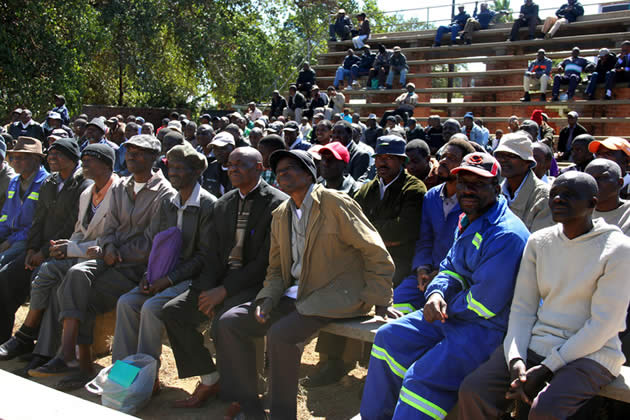

Factmore Dzobo
ACCORDING to Stanley Abramowitz, an American author, “The unions have all but abandoned the fight for decent working conditions and are now perceived as staunch defenders of the status quo. The unions are as a result increasingly looked at as enemies”. This observation aptly captures what is happening in the labour movement in Zimbabwe to date. It is believed that for all intents and purposes, trade unionism in the country has become a tool for individuals to gain some measure of political power at the expense of the people they claim to represent. The unions are failing to address the workers’ needs yet they are the workers’ representatives.
As Zimbabwe joins the rest of the world in commemorating Workers Day today, many workers in the country are unhappy about the low salaries they have been paid over a long period now. Workers Day is a day set aside worldwide for workers to take stock of what they have been through, their achievements or lack thereof. “I can’t celebrate workers day especially if an event is organised by the Zimbabwe Congress of Trade Unions (ZCTU) which is failing to represent our grievances. Right now we are paid paltry salaries by our employers and at times we go for seven months without being paid.
“The trade unions no longer effectively negotiate decent salaries for workers so whose interests are these unions serving?” said one worker who spoke on condition of anonymity. For the last decade or so, trade unions have lost their relevance and a significant number of workers find no reason to commemorate Workers Day as they feel the unions are shortchanging them. The day is fast losing its significance to the ordinary worker who lives from hand to mouth. “I’ve not been working for over a decade now, why should I commemorate Workers Day? Can I celebrate a decade of unemployment? I lost my job in 2003,” said Mduduzi Ncube of Lobengula West suburb in Bulawayo.
Moyo is among many workers with mixed feelings towards commemorating Workers Day considering the closure of industries in the city, which was once the country’s industrial hub. Recent revelations of the “salary-gate” scandal, which exposed obscene salaries earned by top executives in some companies at the expense of ordinary workers exposed the shortcomings of unions. Some chief executive officers and top managers of parastatals and public enterprises were earning salaries ranging from $40,000 to $230,000 a month yet ordinary workers earned between $150 and $250 per month.
The gap between the rich and the poor keeps widening with most workers including civil servants earning below the Poverty Datum Line pegged at $550. In Bulawayo, companies continue to close leaving thousands of workers jobless. The trend is the same countrywide and the challenge is to revive the companies. Workers feel the situation is worsened by trade unionists that are failing to represent their interests hence exposing them to exploitation by unscrupulous employers. Trade unionists are becoming self-serving, small-time politicians and businesspersons hoping to make it big some day. The ZCTU and the Zimbabwe Federation of Trade Unions (ZFTU) both seem to have lost the plot.
Their relevance, particularly that of the ZCTU is diminished by the perception that it is not acting in the best interest of workers. ZCTU, the country’s largest worker representative body’s secretary general, Japhet Moyo admitted that many workers are faced with hard times. He said it was time for workers to fight to bring their sufferings to an end.
“We do understand that many workers are suffering and this is the time for them to rise up and fight for their cause,” he said. Commenting on the workers’ misgivings, Moyo said trade unions were not employers and blamed workers for not standing up for their rights. “Trade unions are not employers and we are doing our best to fight for workers but the workers are not complementing us in this fight,” he said.



 Online Reporter