

 Online Reporter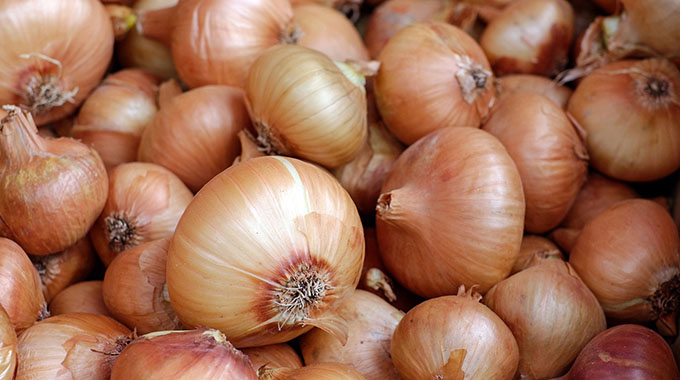
Patience Maturure
Agriculture Reporter
FRESH produce markets are facing an overwhelming surplus of onions, with over 150 tonnes reportedly being delivered daily, leaving farmers and traders in losses.
Market analyst and Knowledge Transfer Africa (KTA) chief executive officer Dr Charles Dhewa yesterday warned that the saturation could lead to financial losses for stakeholders as prices have already dropped from US$10 and above per pocket to between $6 and $9 per kilogramme.
“Onions are now being sold at reduced price, which clearly shows that there is a mismatch between consumption trends and the supply pattern,” he said.
“Farmers will lose income if they continue supplying without knowledge of the demand side. Onion production has increased beyond demand, partly because the crop is easy to grow and many seed houses are promoting several varieties.”
As one of the most popular vegetable crops in Zimbabwe and globally, onions are a staple in many households, which naturally creates a consistent demand.
Dr Dhewa also warned that with increased production driven by easier cultivation and promotional efforts from seed companies, it was crucial for farmers to align their supply with actual demand.
He challenged farmers and traders to explore alternative markets or strategies to mitigate the impact of the oversupply of onions in the market.
Agriculture experts have also proposed exploring alternative markets and strategies to navigate this excess supply, especially as local production is expected to ramp up in the coming months.
Agritex chief extension specialist, Mr Innocent Shayamano said any surge of onions on the market this period would be caused by imports and not onions produced locally.
“The planting period for onions produced locally is February to April, harvesting and marketing starts June. Any surge on the market at this period of the year is not caused by Zimbabwe’s onion producers but imports. Most onions produced locally will come through from June going forward,” he said.
In Zimbabwe, onion production has always been a viable agricultural venture. By selecting the right site, preparing the soil properly, following effective planting and crop management practices, and managing pests and diseases, farmers can achieve good yields.
Post-harvest handling and strategic marketing further contribute to the success of any onion farming enterprise. Given this ever-present demand, coupled with the relative ease of cultivating the vegetable, onion production presents an opportunity that farmers need to exploit. In Zimbabwe, production is usually done in winter.
The sowing period often runs from February to April, but can be extended in areas where there is abundant water. Onions usually thrive in temperate climates with moderate rainfall and temperatures.


 Bongani Ndlovu