admin
admin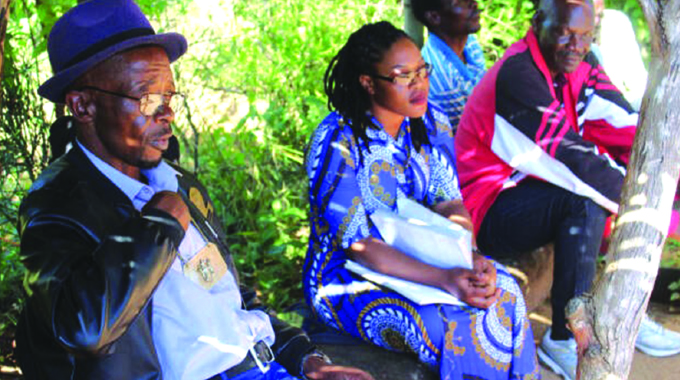
Nick Mangwana
Government Up Close
Traditional leaders, such as chiefs and headmen, have long been the cornerstone of Zimbabwe’s justice system, providing a vital link between communities and the formal legal framework.
Their courts, known as “dare,” in Shona and “idale” in IsiNdebele have a rich history of resolving disputes and promoting social cohesion. However, the increasing influence of technology and new media is transforming the way traditional leaders operate, and not always for the better.
As Zimbabwe continues to navigate the complexities of the digital age, traditional leaders have a critical role to play in harnessing technology to enhance their delivery of justice. However, it is imperative that they do so with caution, avoiding the pitfalls of sensationalism and maintaining the integrity of their courts.
According to the Zimbabwean Constitution, traditional leaders are recognised as key stakeholders in the country’s governance system.
The Constitution grants traditional leaders the authority to address conflicts, including those involving customary law and traditions. The Traditional Leaders Act further elaborates on the roles and responsibilities of traditional leaders, outlining their duties, which include promoting peace, stability, and development in their communities.
In terms of specific responsibilities, the Traditional Leaders Act grants leaders the power to settle disputes involving customary law and traditions.
They are also responsible for promoting and upholding cultural values, as well as facilitating development projects in their communities. This is all great. It is the role of cameras in their courts which is an issue.
Some traditional leaders have taken to social media platforms, such as YouTube, to broadcast their court proceedings and judgments.
While this may seem like a progressive move, it raises serious concerns about the integrity of the justice process.
Once this is done, there are high chances of prioritising sensationalism and ratings over the pursuit of justice, and thus, traditional leaders risk undermining the very foundations of their courts.
The partnership between some traditional leaders and media houses is also a cause for concern.
While collaboration with the media can help raise awareness about the importance of traditional justice systems, it can also lead to a focus on sensational and attention-grabbing cases, rather than a commitment to fair and impartial justice.
As is our custom here we are going to use examples;
The use of specific examples, such as the case of Headman Chigodora of Manicaland, serves a crucial purpose in this opinion editorial.
This is because by highlighting concrete instances of a particular issue or problem, writers can make abstract concepts more relatable and tangible for readers. Furthermore, we prefer using real-life examples as they can help to humanise an issue
A mentally ill rape victim appeared before Headman Chigodora and described in graphic detail how she was raped by one Joshua Chabodo and Freddy Mwatsutsa.
The duo has now been convicted of this crime and are serving long prison terms.
But long before this, they appeared before Chief Chigodora in the presence of the whole local community. Cameras were rolling throughout this widely publicised case. Here was a rape victim being publicly shamed.
This case highlights the need for a sensitive and victim-centred approach when dealing with vulnerable individuals in traditional courts.
Protecting the victim’s identity was crucial to prevent further trauma, stigma, and potential harm.
It can also be argued that the broadcasting of this particular case breached the laws that protect the privacy and dignity of such victims specifically, Section 11 (1) of the Data Protection Act Chapter 12:07 of 2021 which provides that: “No data controller shall process sensitive data unless the data subject has given consent in writing for such processing…..”
The Act clearly defines data as “any representation of facts, concepts, information, whether in text, audio, video, images, machine-readable code or instructions, in a form suitable for communications, interpretation or processing in a computer device, computer system, database, electronic communications network or related devices and includes a computer programme and traffic data.”
Those individuals rushing to record and post proceedings at these traditional courts would be better advised to acquaint themselves with the laws first, lest they find themselves in a spot of bother.
Given the victim’s mental health condition, it is debatable whether a traditional leader’s court was the appropriate forum to hear this case in the first place.
Traditional leaders may not have the necessary training or expertise to handle cases involving vulnerable individuals, particularly those with mental health conditions.
A more suitable approach would have been to refer the case to a specialised court.
Most likely all this was overlooked because someone thought this really made great television, but at what cost to the highly vulnerable victim?
Then we have another traditional leader in Mashonaland Central, Chief Nyamaropa, who uses vulgar language and expletives in the courtroom and talks down to everyone undermining his subjects and, in the process, the integrity and dignity of the traditional justice system.
It is common cause in Zimbabwe’s diverse customs and traditions that not a single sub-culture accepts the use of obscenities in a public forum.
Surely, if a traditional leader’s role is to safeguard our traditional values, is this one not doing the exact contrary? Such behaviour is not only unacceptable, but also creates a hostile environment for all parties involved. It can be argued that the presence of cameras and production teams is sending some of our traditional leaders down the gutter.
It is essential for traditional leaders to maintain a professional and respectful demeanour, ensuring that all individuals feel heard and respected.
By failing to do so, this leader does not only damage his own reputation, but also erodes trust in the traditional justice system as a whole.
In the African tradition, there are certain words you cannot use in the presence of polite company (vanyarikani).
The gallery at traditional courts is a mixed bag of related community members, most of whom are polite company, so there is absolutely no space for profanities.
It can be argued that the use of technology and new media is creating unrealistic expectations and pressures on traditional leaders and act as psychological triggers to play to the gallery. The desire for ratings, likes and views can lead to a focus on dramatic and confrontational cases, rather than a commitment to resolving disputes in a fair and peaceful manner.
It is essential that traditional leaders recognise the potential risks and pitfalls of unconditionally embracing technology and new media.
Rather than prioritising sensationalism and ratings, they must remain committed to upholding the principles of justice, fairness, and impartiality.
To achieve this, traditional leaders must be cautious in their use of technology and new media.
They should prioritise the integrity of their courts and the pursuit of justice over the desire for ratings and views.
This may involve limiting the use of social media and media partnerships to specific, carefully considered cases, rather than broadcasting all court proceedings.
They may also need to consider the use of experts to edit out the sensitive parts of their broadcasts that potentially break the law.
Additionally, traditional leaders must ensure that they are adequately trained and equipped to navigate the complexities of technology and new media.
This may involve partnering with organisations that provide training and support on the use of technology and new media in traditional justice systems.
Traditional leaders fall under the ambit of the Ministry of Local Government and Public Works but when they stray into broadcasting, they are in the space of the Ministry of Information, Publicity and Broadcasting Services, hence they catch our interest. We are very happy to help.
An intervention is really called for here because the effective use of technology and new media by traditional leaders requires a nuanced and cautious approach.
Priority should be on the integrity of their courts and the pursuit of justice. Right now because of the issue of sensationalism, the blow back from the public over perceived abuse of traditional courts can be said to be an existential threat to the traditional court system as we know it.
As traditional leaders increasingly take to social media to share their thoughts, opinions, and court proceedings, it is essential that they develop clear guidelines and protocols, including a social media policy, to ensure these innovations serve to enhance, rather than undermine, the integrity of traditional courts.
Such guidelines should prioritise the pursuit of justice, fairness, and due process over the desire for ratings, views, and publicity. This entails establishing clear rules and standards for the recording, broadcasting, and dissemination of court proceedings, as well as safeguards to protect the rights and dignity of all parties involved.
By establishing these guidelines and protocols, traditional leaders can harness the potential of technology and new media to increase transparency, accountability, and access to justice, while maintaining the integrity and legitimacy of traditional justice systems.
If traditional leaders are unable or unwilling to rein in their wayward colleagues who are misusing social media platforms, then there is a clear need for external intervention.
In such cases, the Broadcasting Authority of Zimbabwe (BAZ) should step in to regulate the broadcasting of traditional court proceedings and ensure that they comply with the country’s broadcasting laws and regulations.
This could involve setting standards for the content and form of traditional court broadcasts, as well as enforcing penalties for non-compliance.
By intervening in this way, BAZ can help to maintain the integrity of traditional justice systems and prevent the misuse of social media platforms for personal gain or to perpetuate injustice.
The law says that the National Council of Chiefs must second one of their members to be a member of the BAZ board. It is the expertise of this member that brings the traditional balance that is needed when they deal with some of these broadcasts from traditional courts. We acknowledge some legal lacunas that exist in the current legislative body that may need to be addressed first.
The integration of technology into traditional courts has undoubtedly demystified these institutions, providing a unique window into the lives of communities living in traditional settings. However, as we embrace this increased transparency, we must not lose sight of the fundamental principle that justice must not only be done, but must also be seen to have been done.
In other words, the use of social media in traditional courts must be balanced with the need to maintain the integrity, impartiality, and fairness of the justice process.


 Online Reporter