Online Reporter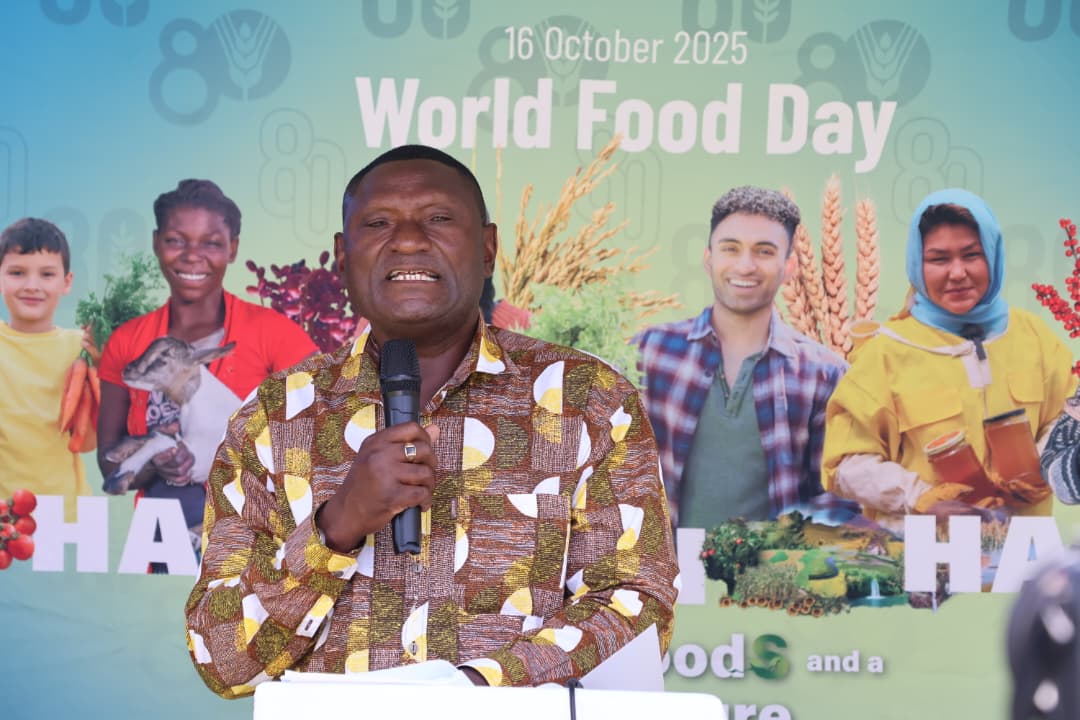
Theseus Shambare in MATOBO DISTRICT
A shift to climate-smart agriculture and the renewed push for traditional grain production is now driving Matabeleland South Province towards greater resilience and long-term food security.
Matabeleland South Minister of Provincial Affairs and Devolution, Albert Nguluvhe, made these remarks during the World Food Day commemorations currently underway at Matopos Research Institute.
Running under the theme “Hand in hand for better foods and a better future,” the event has brought together farmers, researchers, development partners and Government agencies to assess progress in transforming food systems.
Minister Nguluvhe said the province, despite recurring climate shocks, was emerging as a leader in agro-ecological adaptation through its embrace of drought-tolerant crops, climate-smart practices and water security initiatives.
“Our province, though often facing climate challenges, is a hive of activity and resilience. We are committed to working hand-in-hand with every stakeholder for a transformed agricultural landscape capable of securing a prosperous, food-secure future for all,” he said.
He highlighted the accelerated rollout of the Presidential Rural Development Programme, which has seen boreholes being drilled and equipped for village, school and youth business units across the province.
These are supporting one-hectare solar-powered drip-irrigated plots that are enabling year-round production of nutritious foods.
Under the climate-proofed agriculture programme, farmers are also shifting towards traditional grains such as sorghum and millet, which are better suited to the province’s agro-ecological conditions.
The minister said this transition was improving household food baskets and strengthening nutrition security.
On livestock production, Minister Nguluvhe said disease control and livestock growth initiatives were helping safeguard the national herd while supporting household income generation, especially for women and youth.
He added that the province was advancing the concept of agriculture as a business, with extension officers now serving as agricultural business advisors and traditional grains being linked to structured markets through value addition.
“Despite the need to expand irrigation infrastructure and reduce production costs, Matabeleland South remained united in pushing for home-grown solutions.
“The spirit of Ilizwe lakhiwa ngabanikazi balo is alive and well,” he said.